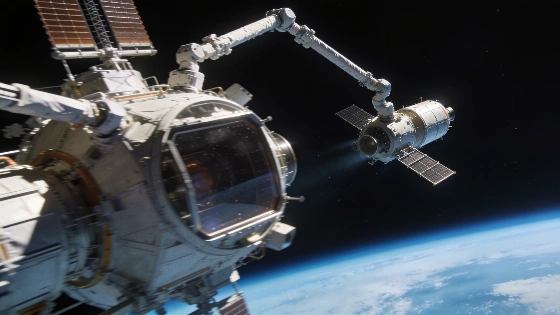
NASA's attempt to lift the Neil Gehrels Swift Observatory ended after its commercial servicing spacecraft developed communications and orientation problems, but the mission still produced valuable operational lessons for future in-space servicing.
NASA's attempt to save the Neil Gehrels Swift Observatory from atmospheric re-entry ended without changing the spacecraft's orbit. The commercial servicing vehicle built for the task reached space and approached Swift but developed communications losses and an anomaly in its attitude-control system before the planned grapple and boost were abandoned.
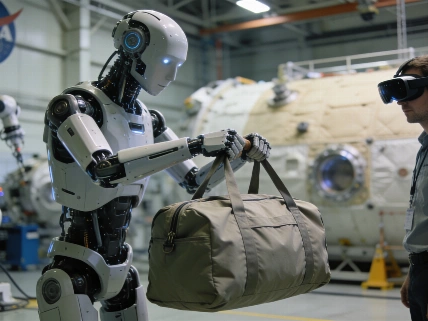
NASA and Katalyst Space eventually reduced the mission from an orbital rescue to a set of technology demonstrations. LINK was no longer expected to capture or lift Swift, while teams continued working to exercise its xenon-powered propulsion system and three robotic arms. NASA formally ended its participation on September 3, 2026. Katalyst later reported that LINK completed its shortened mission and re-entered Earth's atmosphere on September 25, effectively closing the rescue attempt; the company's LINK mission overview describes the remaining work as a technology demonstration for future robotic servicing.
That change was not a routine adjustment. LINK had been designed to meet Swift and physically alter its orbit, a demanding operation requiring reliable communications, precise attitude control, relative navigation and a successful robotic grapple. Once those capabilities became uncertain, continuing toward the original objective would have carried a different level of risk than the revised demonstrations.
The schedule also illustrates the difficulty of rapid spaceflight development. SpacePolicyOnline reported that NASA signed a $30 million contract with Katalyst on September 25, 2025, covering the development, assembly and launch of LINK. The spacecraft launched in July 2026, meaning the team had roughly ten months to move from contract award through design, integration, testing and flight operations.
Swift launched in November 2004 to study gamma-ray bursts, brief flashes produced by some of the most powerful explosions in the universe. Its instruments also enabled observations of comets and asteroids, other cosmic explosions and flares from black holes in distant galaxies. The observatory has operated in low Earth orbit for more than two decades and remains scientifically productive even as its orbital lifetime approaches its end.
Low Earth orbit is not entirely empty. Even at orbital altitudes, the upper atmosphere produces drag, and a spacecraft without propulsion gradually loses altitude. Increased solar activity intensified that drag on Swift, accelerating the process that would eventually bring the observatory back into the atmosphere. NASA's predictions placed Swift's critical altitude at about 185 miles, or 300 kilometers, in fall 2026.
Reports indicated that Swift was still expected to descend and re-enter around early November 2026, which explains the urgency of the servicing effort. LINK itself remained in orbit for less than three months before returning to Earth. Its short operational lifetime did not eliminate the value of the mission, but it sharply limited the time available for diagnosing the attitude-control problem and attempting a recovery.
The mission's central numbers explain the pressure on the teams: Swift launched in November 2004; NASA contracted Katalyst in September 2025; LINK launched in July 2026 from Kwajalein Atoll aboard a Northrop Grumman Pegasus XL; NASA concluded its participation on September 3; and the servicing spacecraft re-entered on September 25. The compressed schedule left little margin for redesign once the spacecraft was already in orbit.
While LINK was being developed, Swift's operators at Penn State changed how the observatory pointed at the sky. Beginning in December 2025, they replaced about 25% of planned science targets with pointing directions intended to reduce drag. By February, the team had switched entirely to this strategy and maintained it through late August.
The workaround required more than simply turning Swift into its most streamlined position. The observatory could not point too close to Earth, the Moon or the Sun because their brightness could heat and damage its instruments. A highly streamlined orientation could also bring the telescopes too close to the atmosphere, where collisions with particles might compromise later observations. Flight controllers therefore balanced orbital survival against thermal, mechanical and scientific constraints.
Those changes meant Swift did not carry out pointed science observations from mid-February to late August. They nevertheless kept the spacecraft above the altitude at which a servicing attempt would have become increasingly difficult, giving ground teams additional time to prepare LINK. The operational method is itself a useful result: mission controllers found a way to trade observing efficiency for orbital lifetime without treating the observatory as an inert object.
LINK's failure to raise Swift's orbit does not demonstrate that commercial spacecraft servicing is ready for routine use. It does show that Katalyst moved from a mission concept to launch and on-orbit operations in less than a year, while NASA developed accelerated approval and integration processes for an unusually compressed project. The NASA mission update records how the agency continued troubleshooting before formally ending its participation.
The attempt also exposed the dependencies that make in-space servicing difficult. A servicing craft must remain controllable after launch, maintain a communications link and navigate close to a target whose own orbit is changing. A failure in any one of those systems can prevent the final mechanical task even when the spacecraft has reached space and can still perform limited experiments. These are systems-engineering risks rather than isolated component failures, because guidance, communications, propulsion and robotic operations must work together during a narrow encounter window.
The contrast with early-universe black holes is instructive: astronomical research often advances through data collected over long periods, while spacecraft servicing is judged by a sequence of tightly coupled engineering actions. Swift's rescue attempt produced no orbital boost, but it created direct operational evidence about what a commercial servicing system and a public agency must solve under severe time limits.
NASA's experience also fits a broader pattern in space science: complex missions generate useful knowledge even when their headline objective is not achieved. Engineering teams can learn from fault detection, communications recovery attempts, attitude-control behavior and the limits of proximity operations. Similar lessons have shaped the development of autonomous spacecraft at organizations such as ESA and research programs studied across institutions including MIT.
Swift's scientific legacy therefore does not depend on the success of this final intervention. The observatory transformed gamma-ray burst research and supported studies across the solar system and distant galaxies. Its long record of observations remains more important scientifically than the outcome of a single servicing attempt. The boost mission was a partial failure in its stated objective, yet treating it as either a complete loss or a success would be equally misleading: its defensible value lies in the hardware tests, flight experience and operating methods preserved for future servicing work.
Orbital drag is the physical mechanism behind the crisis. Sparse atmospheric particles collide with a spacecraft and remove a small amount of orbital energy on each pass. The effect is gradual but cumulative, and it becomes stronger as a spacecraft descends into denser air, creating a feedback that leaves less time for a rescue. Reducing drag through spacecraft pointing can slow that decline, but it cannot replace the propulsion and control needed to perform an orbital boost.
The case also underscores why long-lived observatories require end-of-life planning well before atmospheric re-entry becomes imminent. A future servicing vehicle may need standardized grapple fixtures, reliable rendezvous sensors, fault-tolerant attitude control and interfaces designed for a spacecraft that was not originally built to be repaired. For NASA and commercial operators, the Swift campaign therefore serves as both a cautionary engineering case and a practical demonstration of how much preparation is required before robotic servicing can become routine.