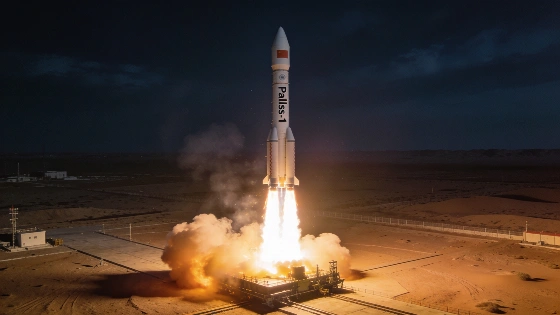
Galactic Energy's Pallas-1 rocket reached orbit on its debut flight from Jiuquan, marking a technical milestone for China's private launch sector. The mission did not attempt a first-stage landing, but aims for reusability in future flights.
China's commercial space sector has taken a visible step forward with the successful orbital launch of the Pallas-1 rocket, a privately developed vehicle designed for partial reusability. The mission, conducted by Beijing-based Galactic Energy, placed the rocket into its intended orbit but stopped short of attempting a first-stage recovery-an engineering milestone the company now targets for 2027.
Mission Details and Technical Milestones
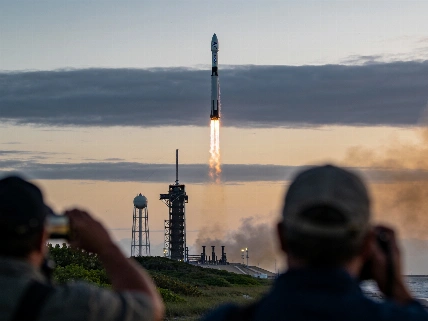
Pallas-1 lifted off from the Jiuquan Satellite Launch Center in northwest China at 10 p.m. EDT on August 31, 2026 (02:00 GMT, September 1 local time). The two-stage rocket stands 52 meters tall and is engineered to deliver up to 7,000 kilograms to low Earth orbit. Galactic Energy did not disclose the payload for this inaugural flight, focusing instead on validating the vehicle's core systems and orbital insertion capability.
The company confirmed that Pallas-1 reached its planned orbit approximately 30 minutes after launch. The first stage, which is designed for reusability, was not recovered on this flight. According to Galactic Energy, the booster is intended to be reused up to 25 times, employing hypersonic grid fins and deployable landing legs for controlled descent-an approach reminiscent of SpaceX's Falcon 9 architecture.
While the debut flight did not include a landing attempt, the company has publicly set the second half of 2027 as the target for its first recovery operation. This timeline places Galactic Energy in direct competition with other Chinese commercial and state-backed launch providers pursuing reusable technology.
Reusable Launchers in China's Commercial Sector
Pallas-1 is not the first Chinese rocket to demonstrate reusability, but it is among the earliest private-sector vehicles to reach orbit with a design focused on multiple flights. Earlier in 2026, the state-owned Long March 10B achieved a sea-based net recovery, while LandSpace's Zhuque-3 executed a landing on deployable legs. Several other Chinese companies-including CAS Space, Deep Blue Aerospace, iSpace, Orienspace, and Space Pioneer-are developing partially reusable launchers, signaling a rapid evolution in China's commercial launch landscape.
Galactic Energy's previous experience with the solid-fueled Ceres-1 rocket, which has completed 23 launches to date, provided a foundation for the more ambitious Pallas-1 project. The new vehicle combines solid and liquid propulsion, reflecting a dual-engine strategy that the company claims will support large-scale satellite constellation deployment and commercial launch services.
Despite the technical achievement, the absence of a payload announcement and the lack of a recovery attempt on this flight highlight the incremental nature of progress in reusable launch systems. The company's stated goal of 25 reuses per booster remains untested in practice, and the operational economics of such a system will depend on successful landings and rapid refurbishment cycles.
Operational Context and International Comparison
The Pallas-1 launch comes as China's private and state-backed launch providers race to match the operational flexibility and cost reductions demonstrated by established players such as SpaceX. The Falcon 9's routine first-stage recoveries have set a high bar for reusability, with dozens of successful landings and reflights. By contrast, China's commercial sector is still in the early stages of demonstrating reliable recovery and reuse, with only a handful of successful attempts to date.
Galactic Energy's focus on reusability aligns with broader trends in global launch markets, where the ability to recover and relaunch boosters is increasingly seen as essential for reducing costs and supporting high-cadence satellite deployments. However, the technical and logistical challenges of booster recovery-ranging from precise guidance to thermal protection and landing infrastructure-remain significant. The company's next major test will be to demonstrate a controlled landing, a milestone that will determine whether Pallas-1 can transition from a proof-of-concept to a commercially viable system.
As the commercial space sector expands, established agencies are also adapting their operations. NASA, for example, is preparing for a new era of commercial space stations, as reported earlier, reflecting a shift toward public-private collaboration in orbital infrastructure and crewed missions.
Limits and Next Steps
The Pallas-1 mission demonstrates that China's private launch sector can deliver a complex, partially reusable rocket to orbit, but it does not yet establish routine reusability or commercial reliability. The absence of a first-stage recovery on this flight means that the most challenging aspect of the system-controlled descent and landing-remains unproven. The company's timeline for a first recovery attempt in 2027 will be a critical test of both engineering and operational readiness.
Until Pallas-1 achieves a successful booster landing and demonstrates rapid turnaround between flights, its impact on launch economics and satellite deployment strategies will remain speculative. The technical achievement of reaching orbit with a reusable-class vehicle is significant, but the transition from demonstration to routine operations is where most new launch systems encounter their greatest obstacles.
Galactic Energy's progress with Pallas-1 is a visible marker of China's ambitions in commercial spaceflight, but the real measure of success will be the ability to deliver reliable, cost-effective, and repeatable launches. For now, the evidence supports a cautious optimism: the hardware works, the rocket flies, but the hardest engineering challenges are still ahead.
Reusable launch vehicles are designed to reduce the cost of access to space by recovering and refurbishing major components-typically the first stage of a multi-stage rocket-after each flight. Achieving reliable reusability requires precise guidance, robust thermal protection, and landing systems capable of handling the stresses of atmospheric reentry and touchdown. The process involves complex trade-offs between added mass for recovery hardware and the economic benefits of multiple flights. Demonstrating routine, low-cost reusability remains a central challenge for new entrants in the commercial launch market.