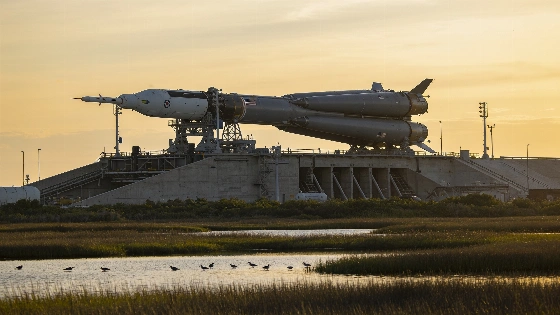
A new FAA proposal aims to accelerate commercial rocket launches and spacecraft reentries by waiving certain environmental regulations, raising questions about the balance between mission demand and environmental oversight
The Federal Aviation Administration (FAA) has released a proposal that would allow the agency to bypass several longstanding environmental regulations for commercial rocket launches and spacecraft reentries. The move is intended to address a growing backlog of space missions as demand for launch capacity surges across the United States. If adopted, the rule would enable the FAA to waive requirements under multiple federal laws, provided that public health, safety, national security, and foreign policy interests are not compromised.
Policy Changes and Scientific Implications
The FAA's proposed rule, now open for a 30-day public comment period, would affect licensing for both rocket launches and spacecraft reentries, as well as the facilities where these activities occur. The agency has identified 13 federal laws that could be set aside for certain commercial space licenses and permits. Among the statutes listed are the National Environmental Policy Act, the Endangered Species Act, the Clean Water Act, the Clean Air Act, and the National Historic Preservation Act. The FAA argues that these waivers are necessary to prevent regulatory delays that could hinder the pace of American space activity.
While the FAA maintains that essential protections for public health and national security will remain in place, the proposal has prompted concern among environmental scientists and policy experts. Peer-reviewed research has previously indicated that increased rocket launches and spacecraft reentries can contribute to atmospheric pollution and other environmental impacts. The agency's plan to streamline reviews comes at a time when commercial operators, such as SpaceX, are launching large satellite constellations and exploring new orbital infrastructure, further intensifying the use of limited U.S. spaceport capacity.
Demand Pressures and Environmental Concerns
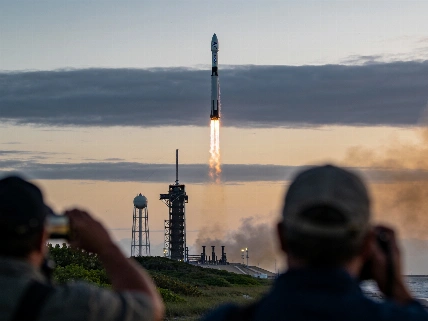
The United States is experiencing unprecedented demand for commercial launch services, driven by projects like SpaceX Starlink and the emergence of orbital data centers. Earlier this year, federal officials suggested relocating some launch operations offshore to alleviate congestion at existing spaceports. However, the environmental consequences of increased launch frequency remain a subject of active study. For example, research has shown that rocket emissions can affect atmospheric chemistry, while reentry events may deposit debris and pollutants in sensitive regions.
Recent developments in south Texas illustrate the complexity of balancing commercial space activity with environmental stewardship. SpaceX is currently negotiating a federal land swap to expand its Starship operations near the Lower Rio Grande Valley National Wildlife Refuge. This proposal has triggered legal action from conservation and tribal groups, who argue that the land transfer could degrade protected habitats. The court has yet to rule on a lawsuit filed in June, highlighting the ongoing tension between rapid commercial expansion and environmental safeguards.
Regulatory Context and Historical Precedents
The FAA's proposal builds on executive orders issued during the Trump administration, which sought to accelerate space policy reforms and streamline launch licensing. In December 2025, a directive aimed to increase the number of rocket launches and landings, while a subsequent order in August focused on expediting spaceport construction. These policy shifts have contributed to the current regulatory environment, where agencies are under pressure to accommodate both commercial innovation and environmental responsibility.
As the debate continues, the FAA's approach raises questions about the long-term sustainability of U.S. space operations. The agency's decision to prioritize launch cadence over comprehensive environmental review may set a precedent for future regulatory actions. For context, efforts to monitor and mitigate the impact of space activity on Earth's environment have also included technological solutions, such as the use of radio telescopes to track space debris in geostationary orbit-a method detailed in a recent Science Report article on orbital debris monitoring.
According to the FAA, the proposed rule would not eliminate all environmental oversight but would allow for targeted waivers when specific legal requirements are deemed unnecessary for safety or national interest. The agency has not yet specified how frequently such waivers might be granted or what criteria will guide these decisions. The outcome of the public comment period and subsequent regulatory review will determine the extent to which environmental laws continue to shape the trajectory of U.S. commercial spaceflight.
Understanding the regulatory framework for space launches requires familiarity with the National Environmental Policy Act (NEPA) and related statutes. NEPA mandates that federal agencies assess the environmental impact of major actions, including space launches, before granting approval. This process typically involves preparing detailed environmental assessments or impact statements, which can delay mission timelines but provide a mechanism for public input and scientific review. The FAA's proposal to waive certain requirements reflects a broader debate over how to balance rapid technological progress with the need for environmental protection in the era of commercial spaceflight.