ACE Robotics says its Mundo system uses hotel digital twins and local robot skills to shorten a laundry workflow. Yet its own trials put dryer unloading at 170 to 210 seconds and leave the 18.6-second figure's scope unclear
Dryer unloading took 170 to 210 seconds per cycle in ACE Robotics' trials, far longer than the company's headline figure for a complete laundry run. The two timings describe different reported measures, and the company account does not explain how they fit together.
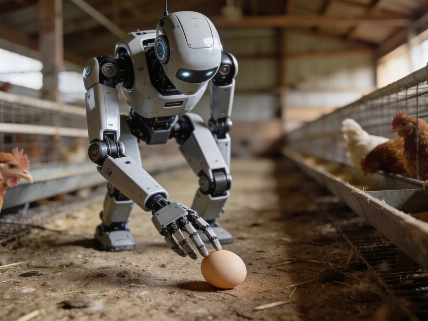
ACE Robotics says its Mundo world model helped a robot collect baskets from guest rooms, transport them to a laundry room, operate washers and dryers, and return clean clothes. The company reports a local execution time of 18.648 seconds, rounded in coverage to 18.6 seconds, compared with more than 30 minutes for a cloud-based approach. Those figures have not been independently verified.
Mundo turns photographs of hotel rooms, corridors and laundry facilities into interactive digital twins. The simulations reportedly include physical properties such as object mass and friction, enabling the robot to rehearse interactions before carrying them out in a physical setting. The distinction between modeled conditions and physical evidence also appears in an IM-3 trajectory analysis, where uncertain mass and flight-path inputs shaped estimates for fuel gauging in microgravity.
ACE Robotics splits planning between a cloud model and models running on the robot. QbitAI identified the cloud model as GPT-Astra, which explores strategies in Mundo and turns workable procedures into reusable skills. A local model retrieves those skills for execution. A system called BotAgent organizes the workflow into 53 atomic actions and 14 higher-level steps, with more than 200 possible action sequences.
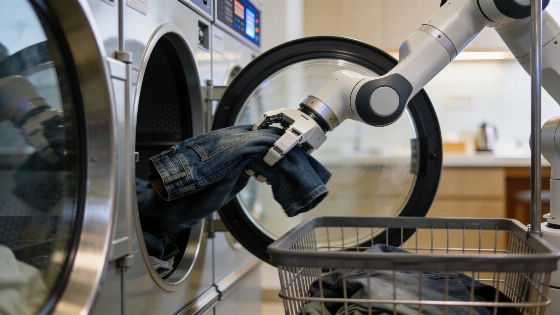
The company also reports a real-world feedback loop. After a failure, the cloud model reviews camera footage and sensor logs, then proposes changes. In one test, the robot switched to an overhead camera when its wrist camera was blocked. After jeans caught inside a dryer, it adjusted the gripper's lifting path and fingertip angles.
Across 165 dryer-unloading trials over 57 hours, ACE Robotics generated 37 improvement proposals and about 80 skill versions. The average share of jeans left inside the dryer fell from 48 percent to 32 percent; the best recorded run left 19 percent behind.
In a report published on November 12, 2026, City News Service described Shanghai-based ACE Robotics as having started deploying autonomous robots for hotel laundry duties. The reported tasks include collecting baskets, moving them through hallways, loading machines, handling laundry and delivering clean clothes.
These results describe company-reported trials, not independently verified performance. The reported 18.6-second workflow figure also sits beside unloading cycles lasting 170 to 210 seconds, and the company account does not clarify whether the timings cover comparable tasks.