North Carolina State University is adapting a Unitree G1 for floor-egg retrieval, a labor-intensive task in cage-free barns; simulations are planned before practical demonstrations, with performance targeted for early 2027
Floor eggs can make up 2% to 15% of production in some cage-free poultry houses. At a farm with around 100,000 birds, the upper end could mean 15,000 eggs to collect each day.
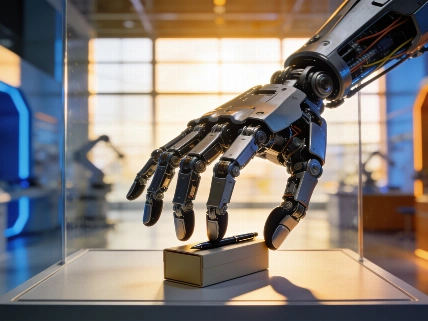
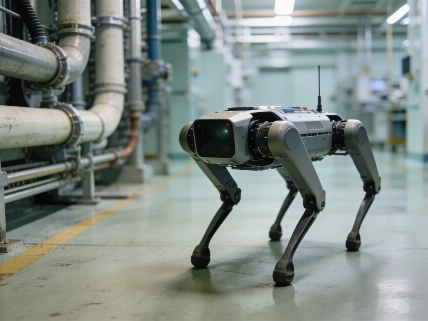
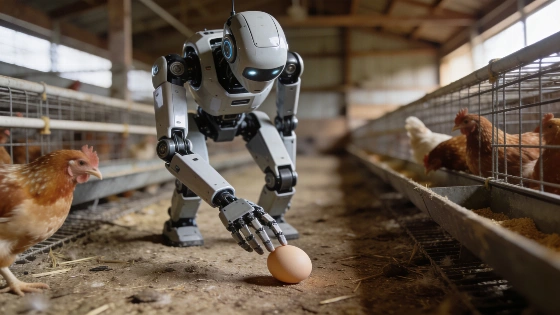
North Carolina State University is developing Howl to take on that work. The four-foot-tall humanoid uses a Unitree G1 as its base and is being designed to spot eggs outside nesting boxes, approach them and lift them with robotic hands. It remains under development; the project description does not report a farm demonstration.
Researchers are building Howl's control and response systems and using virtual reality to demonstrate manipulation tasks. Its training includes reinforcement learning and imitation learning. Egg-detection and retrieval simulations are expected before practical demonstrations, and the team aims to have the robot performing the tasks by early 2027.
Picking up an egg is a manipulation challenge: the robot must locate the object and control its hand well enough to retrieve it. A related problem in robot handling is explored in robot touch research. The project description does not report Howl's success rate or testing in a working poultry barn.
Howl is one part of the university's broader poultry-technology work. Poultry Talk is a retrieval-augmented generation system that draws on a curated collection of poultry science documents to answer industry questions. A separate project uses fixed two-dimensional and three-dimensional cameras to assess individual birds, including feather condition and body weight.
The planned early-2027 target is for Howl to perform egg-detection and retrieval tasks.