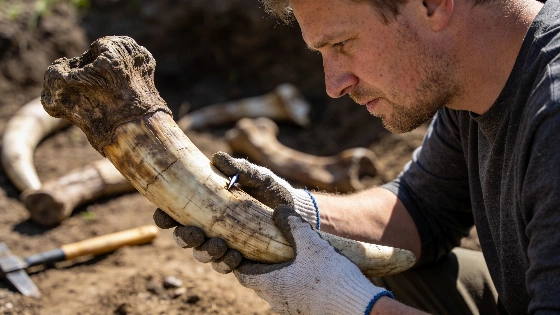
Genomic analysis of over 500 woolly mammoth remains from Eurasia and North America suggests Upper Paleolithic hunter-gatherers may have disproportionately targeted female mammoths, raising new questions about prehistoric hunting strategies
Recent genomic research on woolly mammoth remains has provided new insight into the hunting practices of Upper Paleolithic populations. By analyzing ancient DNA from 521 mammoth specimens recovered across Eurasia and North America, researchers have identified a notable difference in the sex ratios of mammoths found at archaeological sites compared to those from natural bone accumulations.
Genetic Evidence and Archaeological Context
The study, published in a peer-reviewed journal, involved sequencing the DNA of 448 previously unstudied mammoth individuals, including specimens from the well-documented Kraków Spadzista site in southern Poland. The remains analyzed date to between 30,000 and 20,000 years ago, a period when woolly mammoths were widespread across the northern hemisphere and frequently encountered by human groups.
Researchers determined the biological sex of each mammoth using genetic markers. At natural bone deposits-sites where mammoth remains accumulated without direct evidence of human involvement-approximately two-thirds of the individuals were male. This pattern is consistent with the interpretation that solitary male mammoths were more likely to die in natural hazards, such as sinkholes or landslides, leading to their overrepresentation in these deposits.
Sex Ratios at Archaeological Sites
In contrast, at archaeological sites associated with human activity, the pattern was reversed: around 70% of the mammoth remains belonged to females. This finding suggests that Upper Paleolithic hunter-gatherers either hunted female mammoths more frequently or had greater access to their remains. The reasons for this apparent bias remain uncertain, as female mammoths, like modern elephants, likely lived in matriarchal herds capable of coordinated defense, which could have made them challenging targets.
One hypothesis is that female mammoths, being generally smaller than adult males, may have been easier to hunt or process. Alternatively, the more predictable movement patterns of female-led herds could have increased the likelihood of encounters with human groups, whether for active hunting or scavenging. However, the evidence does not allow researchers to determine whether the bias reflects deliberate selection or simply greater opportunity.
Sample Size and Analytical Methods
The research team compared genetic data from 100 mammoth individuals recovered from archaeological contexts to 421 from natural bone accumulations. The large sample size and broad geographic coverage strengthen the reliability of the observed patterns, though preservation and recovery biases cannot be entirely excluded. The study also highlights the value of ancient DNA analysis in reconstructing aspects of animal behavior and human subsistence strategies that are otherwise difficult to access through traditional archaeological methods.
Woolly mammoth remains from archaeological sites are often found alongside evidence of human activity, such as stone tools, cut marks, and structures built from bones and tusks. These associations indicate that mammoths were central to Ice Age economies, providing meat, fat, hides, and raw materials for tools and shelter. The new genetic findings add a further dimension to our understanding of how prehistoric people interacted with these large mammals.
Uncertainties and Interpretive Limits
While the sex bias in archaeological mammoth remains is statistically robust, the underlying causes remain unresolved. The study cannot determine whether the pattern reflects active selection for female mammoths, differences in herd accessibility, or post-depositional processes affecting preservation. Additionally, the assumption that woolly mammoth social structure closely resembled that of modern elephants, while plausible, cannot be directly confirmed for extinct populations.
The research underscores the importance of integrating genetic, archaeological, and taphonomic evidence when reconstructing past human-animal interactions. As ancient DNA methods continue to advance, they are likely to yield further insights into the complex relationships between Ice Age humans and the animals they depended on.
Estimating the biological sex of ancient animal remains relies on identifying genetic markers specific to sex chromosomes. In the case of woolly mammoths, researchers use fragments of nuclear DNA to distinguish between males (with both X and Y chromosomes) and females (with two X chromosomes). This approach allows for sex determination even when skeletal indicators are ambiguous or incomplete. However, DNA preservation varies by site and specimen, and not all remains yield usable genetic material. As a result, sex ratio estimates are subject to sampling limitations and may not fully represent the living population or the total number of animals exploited by humans.