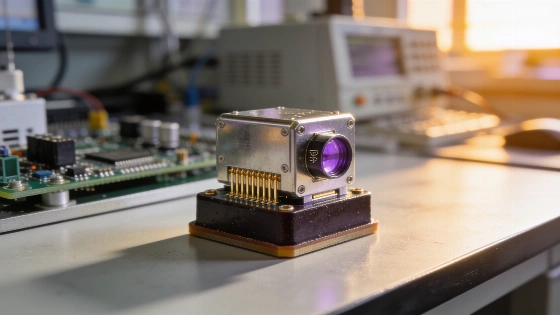
Mesa Quantum says the Playground Global-led financing will fund system integration and early field deployments. The announcement also outlines New Mexico characterization work but provides no performance data for finished units
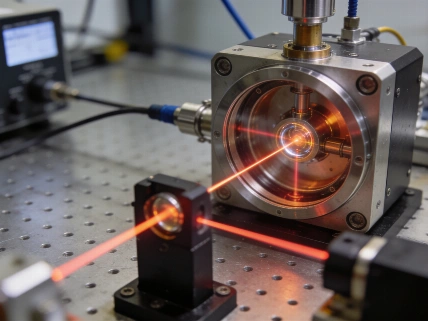
Data centers, power grids and military operations rely on satellite signals for precise timing, yet those signals can be disrupted by jamming or blocked by the environment. Mesa Quantum says it raised $11.8 million to develop chip-scale quantum timing and navigation units intended to operate when GPS is unavailable. The systems are aimed at alternative position, navigation and timing (PNT), including timing infrastructure and chip-scale quantum sensors.
Funding and evidence
The Boulder, Colorado-based company announced the seed round on September 24, 2026, with Playground Global leading. RingNine's investor listings also record Playground Global as lead and J2 Ventures as a participant. Mesa said the financing would move its work from component development toward system integration, final assembly and scaled production. The announcement describes early deployments as a goal; it does not report that field-ready units have been delivered.
The new financing brings Mesa Quantum's venture funding to nearly $16 million, following a $4 million round in 2024. FundraiseBase tracks approximately $15.5 million across two rounds. U.S. government agencies, including SpaceWERX, have separately awarded the company more than $5 million in non-dilutive funding. Those awards are not described as venture investment.
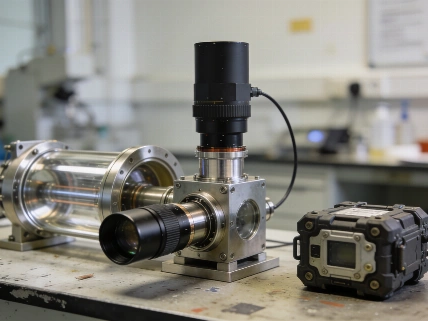
Mesa says earlier development included a Boulder R&D facility, a domestic supply chain and component tests it characterizes as beyond state of the art. The release provides no test values, measurement conditions or independent verification for that performance claim. It also gives no finished-system benchmark for accuracy, power use or operating life.
GPS-denied uses
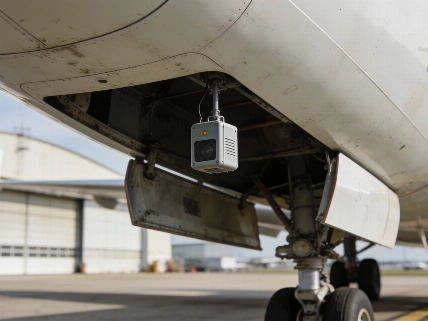
The company says the funding will support systems for defense and commercial customers. Its listed aims include scaling chip-scale atomic clocks for U.S. Air Force and Space Force missions, and developing timing stability for drone operations in GPS-denied airspace. The release specifies single-digit picosecond stability as a requirement for distributed targeting and sensor fusion; it does not say that a deployed system has met that requirement.
Holdover-the ability to keep time after GPS signals are lost-is a central challenge for these systems. IonQ's technical explainer says fielded PNT hardware commonly uses chip-scale atomic clocks for holdover and cites a CISA estimate of accuracy within 100 nanoseconds for roughly two hours under ideal conditions, or within one microsecond for much of a day. These holdover figures describe a different measure from short-term frequency stability or a picosecond-level system requirement. DARPA launched an optical-clock program in 2022 with a goal of month-long nanosecond holdover from equipment suitable for a ship or field tent, as IonQ's overview explains.
IonQ says its Vector Atomic subsidiary developed the Evergreen-05 iodine optical atomic clock, about the size of a cake box, which maintained one-nanosecond timing for 10 days on a moving platform. A separate 2026 report described a 51-day maritime trial of Vector Atomic's Evergreen-30 clock. The report listed the clock as a 3U, 19-inch rackmount system weighing about 20 kilograms, occupying roughly 29 liters and using 80 watts, with a stated holdover of 10 nanoseconds for 30 days. These are Vector Atomic figures, not Mesa system results.
Other proposed applications include space-rated clocks for low-Earth-orbit satellites, frequency references for enhanced M-Code GPS receivers and timing units for infrastructure such as telecom networks. These are intended uses, not evidence that the technology can already maintain navigation or synchronization during an attack. A previous report on processor performance benchmarks illustrates a different kind of evidence: measured hardware metrics, rather than a funding announcement.
New Mexico plans
Mesa says the financing will expand its New Mexico operations from prototyping toward characterization and production readiness. Plans include hiring technical staff and establishing operations to characterize quantum-optimized Vertical-Cavity Surface-Emitting Lasers, or VCSELs. The announcement does not give a production volume or completion date.
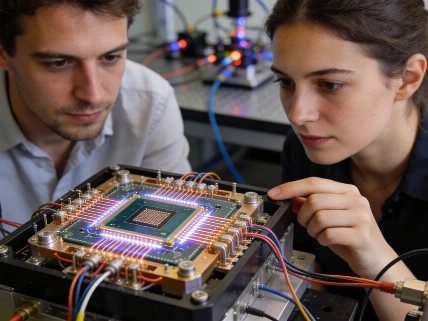
The company also describes work with Sandia National Laboratories on VCSEL and Photonic Integrated Circuit designs, with manufacturing infrastructure at the Center for Integrated Nanotechnologies. These efforts are presented as a route to transferring national-laboratory technology into commercial capability. The funding announcement supplies no results from the planned production work or technical specifications for a deployable unit.