Atom Computing says its finalized Commerce agreement can provide up to $100 million for hardware engineering and manufacturing scale-up in Boulder, separate from its reported processor milestones
Atom Computing has demonstrated sub-threshold, multi-round end-to-end quantum error correction on neutral-atom hardware. Its newly finalized agreement with the U.S. Department of Commerce funds engineering and manufacturing work, rather than announcing a new processor benchmark.
Building the infrastructure
The contract provides up to $100 million for research and development at the company's Boulder, Colorado operations. Its scope includes in-house component engineering. Parallel testbeds and supply-chain integration are also part of the program.
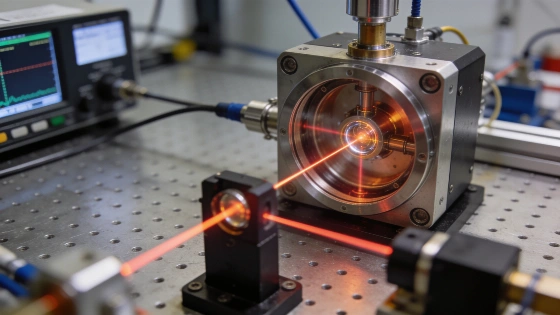
Those efforts address practical constraints in moving neutral-atom processors from research testbeds toward data-center deployments. Atom Computing identifies optical trapping stability and laser subsystems as areas requiring tighter control. Component production tolerances matter too. The company says parallel engineering infrastructure will let teams test architectural iterations concurrently instead of waiting to evaluate them one at a time.
The stated aims are shorter hardware-validation cycles and more standardized manufacturing for arrays containing thousands of qubits. The agreement supports that work; the supplied details do not establish that those manufacturing targets have already been achieved.
Separate milestones
The company's profile describes optically trapped arrays with more than 1,000 physical qubits and reports the error-correction demonstration. The available information does not give its error rates, code details or operating conditions. Those omissions limit what can be concluded about the demonstration's performance.
Sub-threshold error correction is a technical result, not by itself proof of a complete fault-tolerant computer or a commercially useful system. The funding agreement likewise describes research and development support; it does not supply independent validation of the company's hardware claims.
Atom Computing has also been selected for Stage C of DARPA's Quantum Benchmarking Initiative. The company is described as the only neutral-atom vendor at that stage, with up to $300 million in potential federal funding associated with the program. That amount is potential funding, separate from the Commerce agreement.
In 2025, Atom Computing sold an on-premises logical-qubit system for the QuNorth initiative, backed by EIFO and the Novo Nordisk Foundation. A separate report on neutral-atom integration covered a prototype milestone at Taiyi Quantum, a different company.
Commercial production
Chief Executive Officer Ben Bloom said the contract provides capital to move logical-qubit architectures toward repeatable commercial production as federal and enterprise demand for utility-scale quantum computing grows. The agreement's stated work is focused on the engineering and manufacturing capacity intended to support that goal.