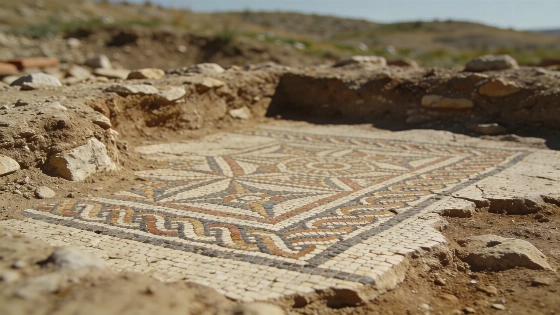
Kültepe-Kaniş is known chiefly for Bronze Age remains and Assyrian merchants' tablets. A newly reported mosaic floor and four Hellenistic cultural layers extend the site's record, though the dating method and building's function are not specified
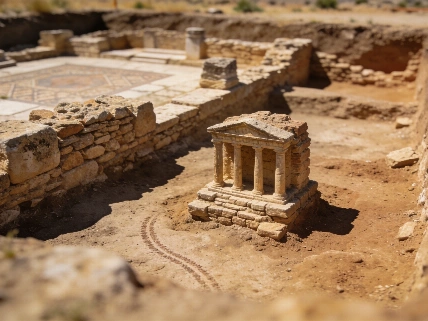
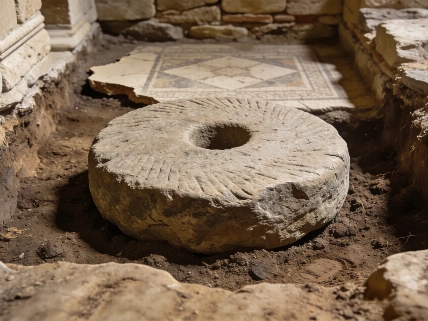
For decades, Kültepe-Kaniş has been chiefly associated with Bronze Age remains and thousands of cuneiform tablets linked to Assyrian merchants. Excavators have now identified a mosaic-floored structure from the Hellenistic period, the first discovery of its kind in the site's 78-year excavation history, which began in 1948.
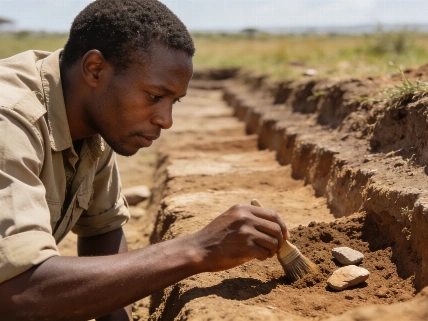
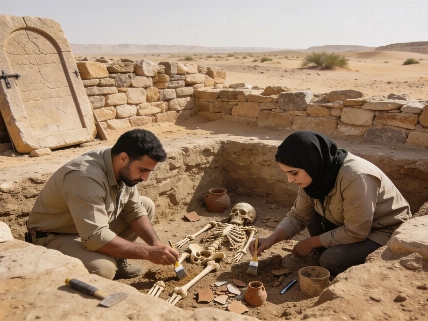
The find was made during the second season of work in a new excavation area opened in 2025 east of Warşama Palace. Led by Professor Fikri Kulakoğlu of Ankara University, the project brings together Türkiye's Ministry of Culture and Tourism, Ankara University and South Korea's National Research Institute of Cultural Heritage.
The discovery adds evidence for activity at the settlement in a later period. The Hellenistic era is generally dated from 323 to 30 BCE, spanning the centuries after the death of Alexander the Great and before Roman rule was established in the region.
Beyond the Bronze Age
Kültepe, also known as Kanesh or Kaniş, lies near Kayseri in central Türkiye. The site's best-known archaeological record comes from its Bronze Age remains and the tablets associated with Assyrian merchants. The newly reported structure places Hellenistic-period architecture within that longer history.
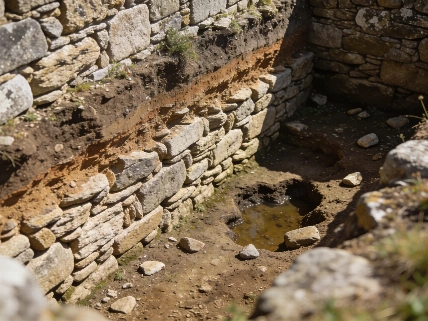
The excavation team also identified four successive cultural layers dating to the Hellenistic period. Their stratigraphic sequence provides evidence for examining changes in the settlement's architecture and use of space; it does not mean that the layers represent four separate buildings or that each was in use at the same time as the mosaic structure.
The surviving mosaic floor measures 163 by 165 centimetres, or about 1.6 metres on each side. Small mosaic fragments indicate that the original floor may have extended beyond the preserved section. The Archaeology Magazine report describes the four layers and the measured section of floor.
Turkish reporting describes a prepared base beneath the mosaic: the surface was levelled and a bedding layer made with rubble and fine earth, including small river stones, ceramic fragments and lime. The preserved measurements refer to the exposed floor section, not the full dimensions of the building.
Reading the layers
Türkiye's Minister of Culture and Tourism, Mehmet Nuri Ersoy, announced the discovery as a new addition to the archaeological record of Kültepe-Kaniş. In an English-language account of the announcement, he said the ministry was committed to bringing Anatolia's heritage to light through scientific research.
The find is part of a joint Turkish-South Korean research effort. A separate account of excavations at Posa Hill concerns a medieval palace and monastery network; its different period and site cannot provide a direct comparison for dating Kültepe's layers.
The Hellenistic remains extend Kültepe's archaeological record beyond the Bronze Age city and its famous Assyrian merchants' tablets. The four cultural layers form a sequence through which researchers can study the settlement's later architecture and use of space, while the mosaic provides a preserved section of flooring within that context.
The Hellenistic attribution places the structure within a broad period rather than giving an exact construction date. The find is a new stage in the second season of excavation at the area, and the ongoing work is directed by Kulakoğlu of Ankara University.