Yaqumo Inc. and SCREEN Holdings have launched a joint project to develop high-speed optical modules for neutral-atom quantum processors, aiming to address hardware bottlenecks and strengthen Japan's domestic quantum supply chain
Japan's New Energy and Industrial Technology Development Organization (NEDO) has awarded a national research and development grant to Yaqumo Inc., a Kyoto University and Institute for Molecular Science spin-off, to advance optical hardware for neutral-atom quantum computing. The project, launched in partnership with SCREEN Holdings, focuses on engineering and manufacturing modular optical core devices designed for use in neutral-atom quantum processors. The initiative is part of Japan's Post-5G Information and Communication Systems Infrastructure Enhancement R&D Project, which aims to reinforce domestic capabilities in quantum technology hardware.
Neutral-Atom Control Hardware
Neutral-atom quantum processors use arrays of individual atoms, typically trapped and manipulated by laser beams in free space, as physical qubits. Achieving reliable, large-scale quantum computation with this architecture requires precise optical control, rapid reconfiguration, and stable alignment over extended operation. The Yaqumo-SCREEN Holdings collaboration targets two persistent engineering challenges: the limited refresh speed of optical components and the fragmented supply chain for specialized quantum hardware.
Modular Optical Components
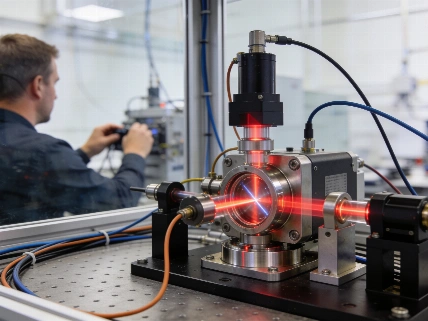
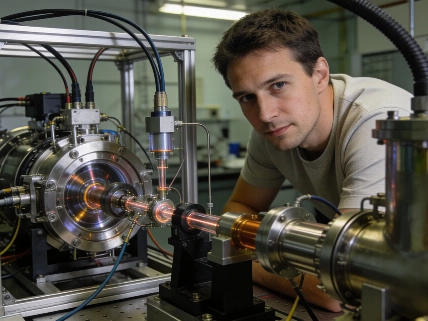
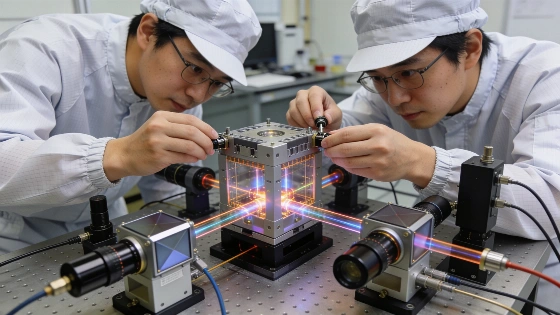
The project's technical roadmap includes the development of high-speed spatial light modulator (SLM) modules, multi-wavelength objective lenses, and environmentally robust optical sub-assemblies. SCREEN Holdings will apply its expertise in micro-scale optical control and direct imaging to produce SLM modules with increased refresh rates, enabling faster and more flexible atom addressing. The multi-wavelength objective lenses are intended to support rapid gate operations and improve two-qubit gate fidelity by delivering tailored optical fields to atom arrays. To ensure long-term stability, the optical assemblies will use low-thermal-expansion materials, reducing alignment drift during extended operation.
Another key goal is to establish standardized optical module architectures and interface specifications, allowing components to be integrated across different neutral-atom hardware platforms. The project also outlines a long-term pathway toward photonic integrated circuits (PICs) for quantum control, though such integration remains a future target rather than a demonstrated capability.
Supply Chain and Industry Context
By focusing on domestic manufacturing and standardization, the initiative aims to reduce reliance on fragmented or overseas supply chains for critical quantum hardware. Yaqumo's supply network already includes partnerships with Hamamatsu Photonics, Entropica Labs in Singapore, QC Design in Germany, and the Indian Institute of Science. The current project is led by Yaqumo CEO Kazuhiro Nakashoji and SCREEN Holdings Executive Officer Masahiko Kokubo, connecting academic intellectual property with commercial-scale optical engineering.
While the project's primary focus is on hardware development, it also reflects a broader trend in national quantum strategies to secure domestic supply chains and manufacturing capacity. Japan's investment in neutral-atom quantum technology follows recent milestones such as the deployment of a 50-qubit neutral-atom quantum computer by the Institute for Molecular Science, which integrated optical tweezer arrays and room-temperature control. For further context on Japan's neutral-atom quantum computing efforts, see this report on the launch of a 50-qubit platform: Japan's Institute for Molecular Science launches a neutral-atom quantum computer.
Technical Milestones and Remaining Challenges
The project's technical deliverables include SLM modules with higher refresh rates, multi-wavelength objective lenses, and standardized optical interfaces. However, the current announcement does not specify achieved performance metrics such as gate fidelity, refresh rate, or device yield. The roadmap toward photonic integrated circuits remains at the planning stage, with no demonstration of integrated PIC-based control for neutral-atom arrays reported. As with other quantum hardware initiatives, the transition from laboratory prototypes to reproducible, manufacturable systems remains a significant engineering challenge. The project's success will depend on the ability to deliver reliable, high-performance optical modules at scale, with stable operation under realistic laboratory and deployment conditions.
Neutral-atom quantum computing architectures offer a promising route to scalable quantum processors, but their practical utility depends on the performance and reliability of the underlying optical control hardware. The Yaqumo-SCREEN Holdings project represents a step toward addressing these engineering bottlenecks, but the gap between prototype modules and deployable, error-tolerant quantum systems remains substantial.
In neutral-atom quantum computing, physical qubits are realized as individual atoms trapped and manipulated by laser fields. The quality of quantum operations-such as single- and two-qubit gates-depends critically on the speed, precision, and stability of the optical control system. Spatial light modulators (SLMs) are used to dynamically shape and direct laser beams for atom addressing, while objective lenses focus light onto the atomic array. Any drift, misalignment, or slow refresh in these components can degrade gate fidelity and limit circuit depth. Standardizing and modularizing these optical elements is essential for reproducible device performance and for scaling up to larger, more complex quantum processors.