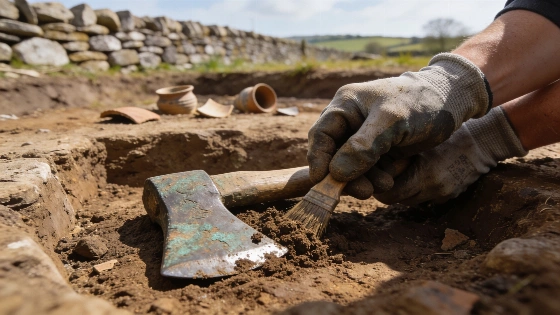
Archaeologists at Huttons Ambo have uncovered a substantial medieval building, a Bronze Age axe possibly deposited as a ritual, and wartime artifacts, offering a rare multi-period view of settlement and activity in northern England
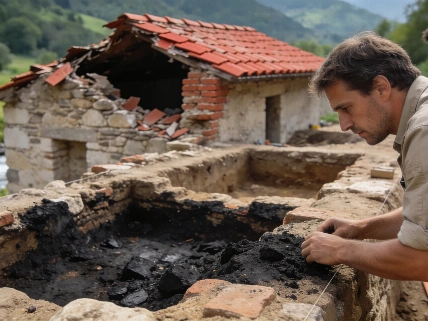
Archaeological work at Huttons Ambo in North Yorkshire has exposed a rare sequence of occupation, with finds ranging from a large medieval stone structure to a Bronze Age axe and World War II military equipment. The most substantial discovery is a stone-built building measuring approximately 4 by 3 meters, with surviving walls and floor surfaces. Its construction and associated finds suggest a high-status role within the medieval settlement, possibly linked to agricultural or administrative functions.
Multi-Period Evidence
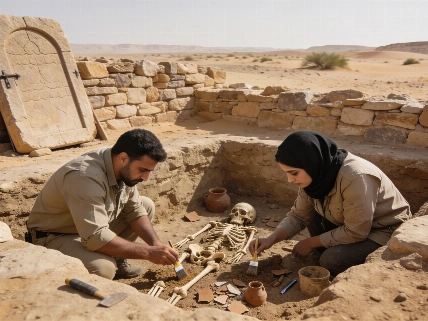
Excavations led by Ethos Heritage CIC, in partnership with the Huttons Ambo Local History Group, have now entered their fourth season. Over 70 participants, including local residents, students, and volunteers from the UK and abroad, contributed to the 2026 fieldwork. The project's international reach is notable, but its core remains rooted in community archaeology, with local engagement shaping both research and interpretation.
Material from the medieval building includes more than five kilograms of pottery, primarily dating to the 12th and 13th centuries CE, as well as butchered animal bone. The density and character of these finds indicate sustained use and suggest the building occupied a central position in the medieval village. In a separate trench, archaeologists identified a series of 12th-century pits containing locally produced pottery. While their function remains uncertain, possible interpretations include storage, refuse disposal, or small-scale craft activity. Further analysis is expected to clarify their purpose.
Beyond the medieval period, the excavation recovered a Viking-period weight, likely associated with trade or craft activity, and Roman pottery fragments. These finds, together with the medieval and modern material, demonstrate a long sequence of occupation and reuse of the landscape.
Bronze Age Axe and Ritual Deposition
One of the most striking discoveries is a Bronze Age axe, broadly dated to between 1500 and 1000 BCE. The axe's condition and archaeological context suggest it may have been deliberately deposited, rather than lost or discarded. In Bronze Age Britain, the intentional placement of metal objects in rivers, wetlands, or other significant locations is well documented and often interpreted as ritual activity. However, the specific beliefs or intentions behind such deposits remain uncertain, and the Huttons Ambo find cannot be assigned a definitive function without further evidence.
The presence of this axe raises questions about the significance of the landscape long before the medieval village developed. Its recovery adds to a growing body of evidence for complex behaviors and symbolic practices in Bronze Age Britain, but also highlights the interpretive limits of isolated finds.
Wartime Occupation and Modern Layers
Excavation at Huttons Ambo also revealed substantial quantities of World War II material, including belt buckles, cap badges, uniform buttons, and personal equipment. These artifacts are associated with the presence of Free French, Polish, American, and British troops who used the area as a training base in 1943 and 1944, ahead of the Allied invasion of France. The finds provide direct evidence of multinational military activity and temporary occupation, adding a modern chapter to the site's archaeological record.
The range of material culture recovered at Huttons Ambo now spans more than three millennia, from the Bronze Age through the medieval period and into the twentieth century. This sequence allows archaeologists to examine how different communities occupied, modified, and understood the same landscape over time. Comparable multi-period investigations, such as those reported earlier at Mit Rahina, highlight the value of long-term, stratified sites for reconstructing settlement history.
Community Archaeology and Interpretation
The Huttons Ambo project is notable for its integration of local residents, military veterans, and international volunteers. Participants gain practical excavation experience while contributing to research that directly benefits the community. The project's structure demonstrates how collaborative archaeology can strengthen local identity and provide new insight into the development of rural settlements.
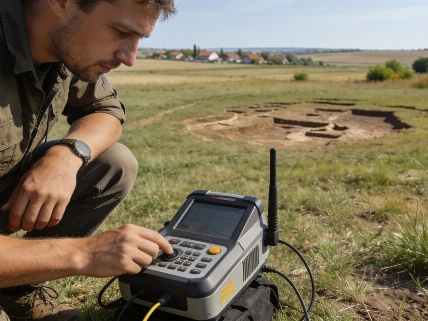
Analysis of the 2026 discoveries is ongoing. The combination of architectural remains, artifact assemblages, and stratified deposits offers a rare opportunity to reconstruct the changing use of the site. However, as with many rural excavations, interpretation is limited by the fragmentary nature of the evidence and the challenges of dating isolated finds. The Bronze Age axe, for example, cannot be securely linked to a specific activity or belief without further contextual information.
Huttons Ambo's archaeological record now documents thousands of years of human activity, but the evidence remains partial and open to reinterpretation as new data emerge. The project's success lies not in definitive answers, but in its ability to generate new questions about continuity, change, and the ways communities shape their landscapes. As more results become available, the site will continue to test assumptions about rural settlement, ritual practice, and the persistence of place in northern England.
Archaeological interpretation depends on context. The meaning of an artifact, structure, or deposit is shaped by its association with other finds, its position within the stratigraphy, and the methods used to recover and analyze it. Isolated objects, such as the Bronze Age axe at Huttons Ambo, can suggest ritual or symbolic behavior, but without secure context, their interpretation remains provisional. Stratified sites that preserve long sequences of occupation, like Huttons Ambo, are especially valuable because they allow archaeologists to trace changes in material culture, settlement organization, and land use over time. However, even in well-excavated contexts, preservation bias, disturbance, and sampling limitations mean that the archaeological record is always incomplete. Responsible interpretation requires transparency about these limits and a willingness to revise conclusions as new evidence is uncovered.