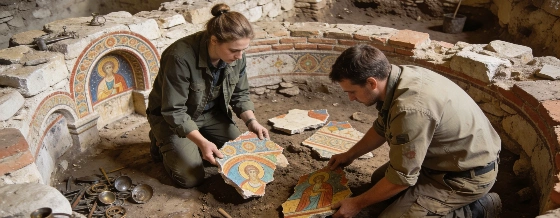
Archaeologists at the late Roman Tokod fortress in Hungary have uncovered the foundations of an early Christian church, fragments of frescoes, and a range of metal artifacts, offering new insights into religious architecture and activity at the site
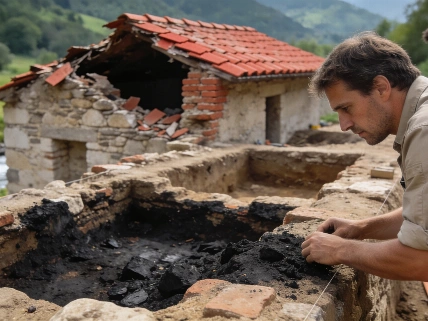
Recent excavations at the Tokod-Várberek site in northern Hungary have produced new evidence for the presence of an early Christian church within the late Roman fortress. The fieldwork, led by the Institute of Archaeology of Pázmány Péter Catholic University in collaboration with the Balassa Bálint Museum, focused on the north-eastern sector of the fort, where architectural and decorative remains were recovered in situ.
Architectural Evidence and Finds
Archaeologists identified the foundations of a ciborium-a canopy structure typically erected above the altar in early Christian churches-within the church's apse. This architectural feature, rarely preserved in situ, provides direct evidence for the internal organization of the church's sacred space. The team also documented the relationship between the vestibule and nave, clarifying the building's floor plan and construction sequence.
Excavation yielded a substantial assemblage of metal artifacts, including a fibula (ancient brooch), a jewelled ring, a coin, and a key. These objects, recovered from stratified contexts, may reflect the activities and status of individuals associated with the church and fortress. The coin, in particular, offers potential for chronological refinement through numismatic analysis, while the fibula and ring contribute to understanding personal adornment and exchange networks in the late Roman period.
Fresco Fragments and Conservation
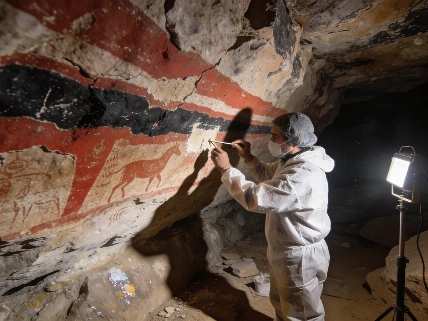
Among the most significant decorative finds were fragments of multicolored frescoes that had detached from the apse wall. Conservators carefully lifted and stabilized these pieces for further study, with the aim of reconstructing aspects of the church's interior decoration. The preservation of pigment and plaster allows for technical analysis of painting methods and materials, which may inform broader questions about artistic practice in late Roman provincial contexts.
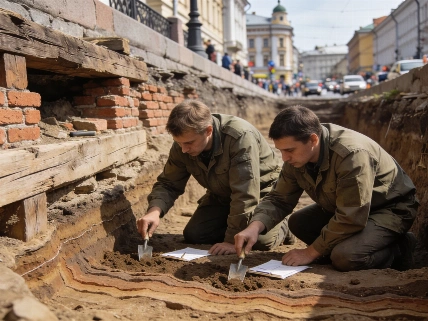
The field season involved a record number of student participants, who received training in archaeological field techniques such as stratigraphic excavation, section drawing, and photographic documentation. This hands-on experience contributes to the development of future specialists and ensures detailed recording of the site's complex stratigraphy.
Context and Chronology
The Tokod-Várberek fortress is part of a network of late Roman military installations along the Danube frontier. The presence of an early Christian church within the fort's perimeter reflects the spread of Christianity in the region during the fourth and fifth centuries CE. While the precise date of the church's construction remains under investigation, the architectural features and associated finds are consistent with late Roman ecclesiastical building traditions.
In total, the current excavation season recovered dozens of artifact fragments and architectural elements from an area of several dozen square meters. The stratigraphic relationships among the church, fortress walls, and later occupation layers are being analyzed to refine the site's occupational sequence. Some of the newly recovered objects are expected to become the focus of future academic research, including university theses and comparative studies.
Recent discoveries at Tokod-Várberek add to a growing body of evidence for religious and domestic activity within late Roman fortresses in Central Europe. Comparable research at other fortified sites, such as the analysis of bronze-casting molds and weapons at the Pyanobor settlement in Tatarstan, has highlighted the diversity of material culture and site function across the late Roman and early medieval frontiers. For example, the recovery of specialized tools and decorated pottery at Pyanobor, detailed in a recent Science Report feature, demonstrates the value of integrating artifact analysis with architectural context.
Interpreting the Evidence
While the identification of a ciborium and fresco fragments supports the interpretation of the structure as a church, alternative explanations for some architectural features remain possible pending further excavation and analysis. The chronological relationship between the church and the surrounding fortress is also subject to ongoing investigation, as is the question of whether the church served a military, civilian, or mixed community. The metal finds, though suggestive of personal and communal activity, cannot by themselves establish the identities or social roles of the individuals who used the site.
As with many late Roman sites, preservation is uneven, and some architectural elements may have been lost to later construction, reuse, or environmental processes. The research team continues to document and conserve the surviving material, with the aim of reconstructing the church's appearance and function as fully as the evidence allows.
Understanding the archaeological context of religious architecture in late Roman fortresses requires careful attention to stratigraphy, artifact association, and regional comparison. The Tokod-Várberek discoveries contribute to ongoing debates about the pace and character of Christianization in the Roman provinces, as well as the relationship between military and religious institutions in frontier zones.
In archaeological research, stratigraphy-the study of layered deposits-plays a central role in establishing the sequence of construction, use, and abandonment at a site. By analyzing the superposition and association of architectural features, artifacts, and occupation layers, archaeologists can reconstruct the relative chronology of events and identify episodes of rebuilding or reuse. Accurate stratigraphic recording is essential for interpreting complex sites like Tokod-Várberek, where multiple phases of activity are preserved within a confined area. Limitations in preservation, disturbance, or documentation can complicate this process, underscoring the importance of systematic excavation and detailed field records.