
Archaeologists have excavated over 1,000 square meters at Mytny Market in Nizhny Novgorod, uncovering medieval property lines, market structures, coins, and hundreds of artifacts that document more than 700 years of urban transformation
Six meters below the busy streets of Nizhny Novgorod, archaeologists are uncovering the outlines of medieval life and the traces of centuries of change. The ongoing dig at Mytny Market has exposed layers of property boundaries, building remains, and everyday objects, giving a direct look at how this part of the city has been rebuilt and repurposed over the last 700 years. The site sits inside the "Cultural Layer of the City of Nizhny Novgorod," a protected zone that requires full archaeological investigation before any new construction. This approach follows international standards set by organizations like UNESCO and the Max Planck Society.
The Volga Expedition from the Institute of Archaeology of the Russian Academy of Sciences began work at 2 Bolshaya Pokrovskaya Street in spring 2026. Just 200 meters from the Kremlin, the site is part of the city's medieval core. Despite later buildings, the team found cultural layers between 1 and 3 meters thick, with evidence stretching from the 1200s to the early 1900s. The main excavation covered about 900 square meters and lasted three and a half months. A final survey of the southern basement area is still underway. Over 1,200 artifacts from the 13th to 20th centuries have been recovered, according to lead researcher Alexey Sviridov at a press conference on September 14, 2026.
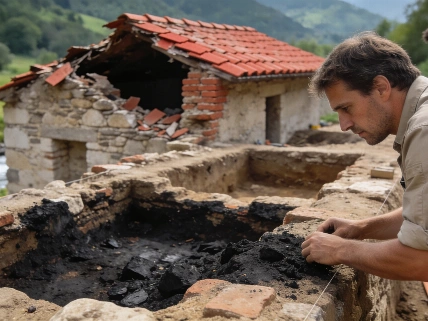
One of the largest features is a well at least six meters deep, filled with pottery, glass, and tanning waste. The upper pit is six meters across, and at the bottom, archaeologists found the remains of a wooden structure. The well seems to have been abandoned and filled in around the start of the 20th century, based on the layers above it. Deep, multi-period features like this help researchers understand how water was managed and how crafts were organized in the city, as shown in comparative studies published in Nature.
The oldest layers date to the 13th and 14th centuries, when wooden fences marked property lines. Several of these boundaries were found, and their repeated orientation suggests the street layout stayed consistent even as plots changed size. Within these properties, large pits likely served as cellars under now-lost buildings. Artifacts from this period include glass bracelet pieces, knives, cylinder locks, and devotional items, making up about a quarter of the total finds. The team's stratigraphic methods follow best practices developed at research centers like MIT and CERN for detailed contextual analysis.
The 15th century shows a sharp drop in cultural deposits, matching a known period of contraction in Nizhny Novgorod. Activity picks up again in the 16th and 17th centuries, when the city's brick Kremlin was built and urban growth resumed. Archaeologists found red-clay stove tiles-some with images of fortress assaults-along with more than 40 coins, buttons, belt fittings, and jewelry. These finds provide a solid dataset for analyzing demographic and economic changes, a method now common in urban archaeology and referenced in journals like Science and PNAS.
By the late 1700s, the area had become a market square with brick buildings. Archaeologists traced the foundation of a large structure, about 10 by 11.5 meters, identified on old maps as a stone public house at Mytny Market. Only parts of its boulder foundations and red-brick walls remain, but signs of repeated repairs and changes were recorded until the building disappeared before 1896. Nearby, a smaller brick structure-about 3.5 meters square-may have been a trading stall.
The most artifacts come from the 18th and 19th centuries, when Mytny Market was a busy commercial center. Over 100 lead trading seals were found, used to certify goods and packaging. More than 300 pieces of red-glazed smoking pipes turned up, including a 19th-century pipe shaped like a woman's head. Everyday items-knives, cutlery, tools, glassware, ceramics, coins, and clothing accessories-paint a detailed picture of market life. A section of cobblestone paving from the early 20th century marks the market's later phase. After cleaning and restoration-metal objects are conserved, ceramics are reconstructed, photographed, and catalogued-the artifacts will be transferred to the Nizhny Novgorod State Museum-Reserve (NGIAMZ) for preservation and future research.
The Mytny Market dig gives a rare look at how urban layouts can persist or change over centuries. Medieval property lines still visible beneath later market structures show how some patterns endure, even as the city grows and contracts. The gap in 15th-century deposits, followed by renewed activity, matches broader trends of decline and revival in Russian cities. The hundreds of artifacts-from devotional objects to commercial seals-help reconstruct daily life, trade, and social structure across different eras.
Excavations are still underway, and interpretations will be refined as more analysis is done. Further study of the structures and thousands of artifacts will clarify the timeline and show how Mytny Market's role changed within the city. Similar urban digs, like those described in other reports, show the value of layered deposits for understanding settlement history and economic shifts. The Nizhny Novgorod findings highlight the need to preserve archaeological contexts, even in dense city centers where centuries of history can be packed into just a few meters of soil.
Stratigraphy-the study of layers-is key to making sense of sites like Mytny Market. Each layer marks a phase of occupation, building, or abandonment, with artifacts and features helping to date and interpret activity. Careful excavation and documentation let archaeologists piece together sequences of change, spot periods of continuity or disruption, and separate original deposits from later disturbances. Keeping these relationships intact is essential for understanding how cities develop and adapt over time, a principle emphasized in research from institutions such as Harvard and the Max Planck Society.