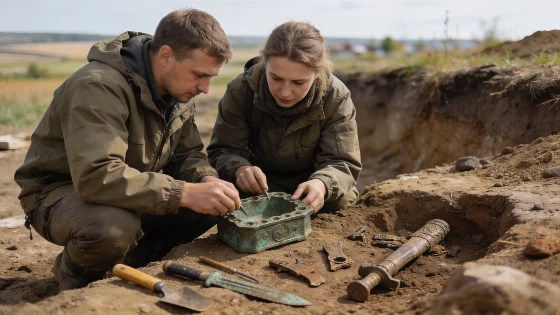
Excavations at the Kipchak Archaeological Complex in Tatarstan have revealed a bronze-casting mould, weapons, and decorated pottery linked to the Pyanobor culture, offering new evidence for debates about its origins and regional connections
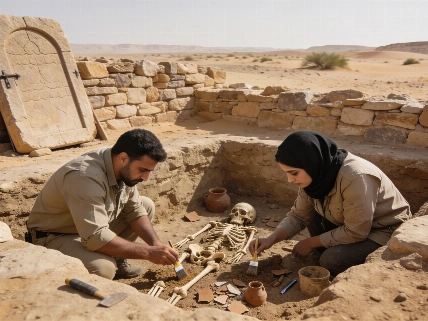
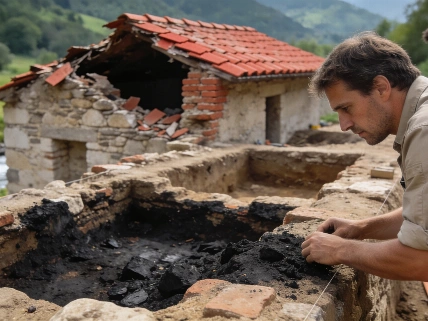
Archaeologists working at the Kipchak Archaeological Complex in Russia's Republic of Tatarstan have uncovered a set of artifacts associated with the Pyanobor culture, a distinctive archaeological tradition of the Kama region. The finds include a bronze-casting mould, bronze and iron arrowheads, a spearhead, beads, spindle whorls, animal bones, and fragments of pottery with varied decorative patterns. The assemblage was recovered from controlled excavations near the village of Minnyarovo in the Aktanysh District, where researchers targeted the earliest section of the settlement to investigate the origins of its inhabitants.
Excavation Context and Material Evidence
The Kipchak Archaeological Complex comprises three main sites: the fortified Minnyarovo settlement, the Kipchak I cemetery, and the Kipchak II burial ground. The Minnyarovo settlement is the largest known fortified site attributed to the Pyanobor culture, while the Kipchak I cemetery is notable for containing both burial mounds and flat graves, reflecting diverse mortuary practices. During the most recent field season, archaeologists excavated areas of 112 square meters and 84 square meters at the settlement and cemetery, respectively. The team, which included 36 participants from Kazan Federal University and collaborating institutions, focused on stratigraphic layers believed to represent the earliest occupation phase.
Artifacts linked to traditional Pyanobor clothing-such as clasps, temple pendants, plaques, and beads-were also recovered, alongside kitchen debris and animal remains. The presence of a bronze-casting mould and weaponry provides direct evidence for local craft production and the role of metallurgy in the community's economy and social organization. The decorated ceramics and personal ornaments contribute to ongoing debates about stylistic influences and cultural boundaries in the region.
Debates on Cultural Origins
The origins of the Pyanobor culture remain a subject of archaeological debate, with competing hypotheses regarding its development and external connections. Researchers at the Kipchak complex are comparing material culture from the site with that of neighboring groups, including the Kara-Abyz and Ananyino cultures, to clarify patterns of interaction and possible migration. During a field seminar held alongside the excavations, specialists discussed new research and alternative models for the emergence of the Pyanobor tradition, drawing on comparative analysis of clothing, pottery, and burial customs.
Imported objects found at Pyanobor sites-including Roman-style metal vessels-suggest that the region was integrated into long-distance exchange networks, possibly mediated by nomadic populations. Such evidence complicates simple models of cultural development and highlights the need for multidisciplinary approaches to reconstructing ancient population histories. The diversity of burial practices at the Kipchak I cemetery, for example, may reflect both local traditions and broader regional influences.
Regional Significance and Research Limitations
Archaeological investigation of Pyanobor sites has a long history, with systematic research dating back to the late nineteenth century. The latest discoveries at the Kipchak complex add to a growing body of evidence about settlement organization, craft production, and social life in the Kama region during the Hunno-Sarmatian period. However, the precise chronology of the Pyanobor culture remains uncertain, as most dating relies on typological comparisons and stratigraphic association rather than direct radiocarbon analysis. Preservation of organic material is variable, limiting the potential for ancient DNA or stable isotope studies that could clarify population origins and mobility.
Despite these challenges, the recovery of a bronze-casting mould and associated weaponry provides a rare opportunity to examine technological practices in situ. The combination of settlement, cemetery, and burial ground contexts allows for integrated analysis of domestic, craft, and mortuary behavior. As researchers continue to excavate and compare material from the Kipchak complex, new evidence may help resolve questions about the formation and transformation of the Pyanobor culture. Comparable efforts to map and interpret buried ceremonial structures, such as those recently documented beneath Mexico City's historic center (detailed survey of Aztec ceremonial remains), illustrate the value of multidisciplinary approaches in reconstructing ancient communities.
Understanding the archaeological significance of the Pyanobor culture requires careful attention to context, preservation, and the limits of current evidence. The latest finds at the Kipchak Archaeological Complex underscore the importance of systematic excavation and comparative analysis in addressing unresolved questions about ancient population dynamics in the Volga-Kama region.
Archaeological provenance refers to the documented origin and context of an artifact, skeleton, or feature within a site. Secure provenance is established through controlled excavation, detailed recording of stratigraphic relationships, and association with other materials. When artifacts are recovered in situ, their interpretive value is greatly enhanced, allowing researchers to reconstruct patterns of use, deposition, and cultural interaction. In contrast, objects lacking secure provenance-such as those acquired through the antiquities market or from disturbed contexts-offer limited insight into past behavior and are more vulnerable to misinterpretation. The reliability of archaeological conclusions depends on the quality of provenance information and the transparency of reporting practices.