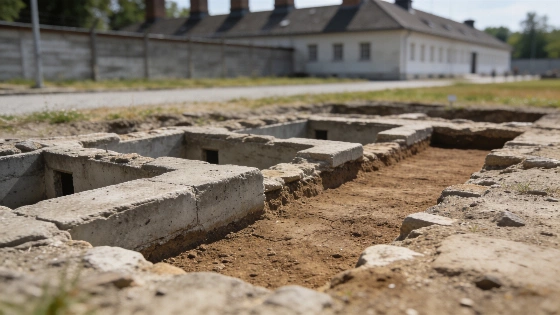
Historical research places the crematorium administration in the same complex as the dog handlers, connecting camp operations to an area where archaeologists found ash and bone fragments.
The crematorium administration and SS dog handlers occupied the same complex, linking the organization of prisoner cremations with facilities used to guard and intimidate people held at Dachau. Archaeological survey and research excavations took place beside the former crematorium area in 2026, ahead of planned redevelopment of the memorial grounds.
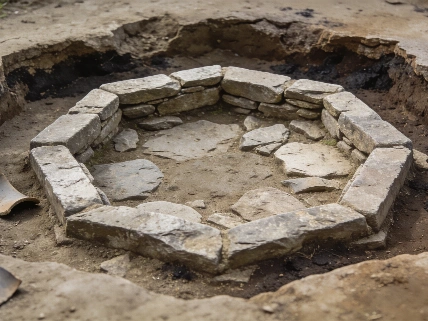
Excavations exposed well-preserved foundations for at least 35 dog kennels used by SS guard units. Archaeologists also found layers of ash mixed with slag and bone fragments at several points. The Dachau Concentration Camp Memorial Site said investigators assume the material includes human remains from the crematorium ovens; the fragments have not been conclusively identified.
Evidence in the soil
The foundations belonged to the SS dog-handler area. Dogs trained by the SS were used to guard and intimidate prisoners, who feared attacks by the animals. Memorial director Dr Gabriele Hammermann said the newly uncovered foundations expand knowledge of the compound and its role. The kennel remains add physical detail to photographs and written records that did not fully show the area's scale or layout.
Historical research places the crematorium administration within the same broader complex. The office organized and documented the cremation and disposal of prisoners' bodies. Hammermann described the crematorium and dog-handler areas as a close functional unit and places of terror.
The excavation was commissioned by the Dachau memorial and carried out by a University of Münster team in coordination with the Bavarian State Office for Monument Protection. The memorial's official announcement describes the excavation as scientific teaching and research work connected with redevelopment planning.
The distinction between material evidence and interpretation matters here. The ash contains bone fragments, while their presumed human origin remains an assessment rather than a confirmed identification. A similar caution applies to the Behbeit El-Hagar report, where the proposed identification of royal figures remains tentative.
Care and context
Hammermann said careful handling of the possible human remains required close consultation with remembrance communities, and that consultation had begun. The memorial is considering how to incorporate the archaeological findings into the site's future development, how the area should function as a place of remembrance, and how victims whose remains may be present can be commemorated.
HeritageDaily reported that the archaeological investigations were commissioned by the Freising State Building Authority with advice from the Bavarian State Office for Monument Protection. A separate academic teaching and research excavation was carried out on behalf of the Dachau Concentration Camp Memorial Site by a University of Münster team in coordination with Bavarian heritage authorities.