A remotely operated vehicle found welded volcanic deposits on the Mariana Trench's inner wall, where pressure exceeds 600 bars; supercritical water may help explain how explosive eruptions formed
At more than six kilometres below the western Pacific surface, pressure makes an explosive eruption seem improbable. Yet thin, flat layers of welded volcanic material on the Mariana Trench's inner wall point to eruptions at depths greater than 6 km. The deepest reported deposit lies about 6,148 metres (20,000 feet) below sea level near Challenger Deep, making it the deepest documented pyroclastic material found in an ocean setting.
Evidence on the trench wall
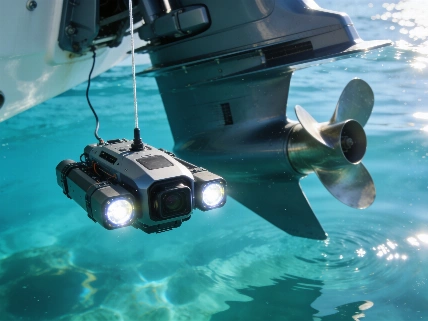
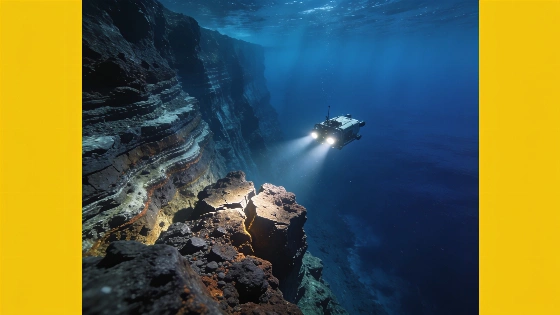
In late 2024, a team led by Robert Stern, a geoscientist at the University of Texas at Dallas, sent the remotely operated vehicle (ROV) Jason/Medea to the overriding plate southwest of Guam. The expedition surveyed roughly 550 kilometres (341 miles) of the forearc near Challenger Deep. Researchers had set out to collect geological samples in an environment where extreme pressure was expected to restrain the expansion of volcanic gases and make explosive eruptions unlikely. Instead, they recovered pyroclastic rocks, including welded tuffs, breccias and thin volcanic layers containing ash, rock fragments and volcanic glass. Stern described the result as surprising, because explosive volcanism near trenches is unusual, as Phys.org reported.
The welded textures show that fragments were still hot enough to fuse together after they arrived. Their preserved heat indicates that the material did not travel far before cooling. The rocks do not record an eruption witnessed in progress; instead, they preserve geological evidence of explosive fragmentation and hot emplacement at a depth where pressure exceeds 600 bars. Some samples contain what geologists call double breccia: rock fractured in two separate events. Stern's interpretation is that the breaks happened rapidly one after the other. An initial burst may have come from expanding supercritical fluid; a second may have occurred when the fluid flashed into steam on the seafloor.
David Pyle, a volcanologist at the University of Oxford who was not involved in the study, described the work as an example of observational geoscience. He points to other possible explanations for the fractured rocks, including thermal shock when hot melt meets cold seawater or wet sediment, and stresses created as bubbles form in rising magma. Direct observation has reshaped accounts of the past in other fields too: Horbat Burgin fieldwork uses physical remains to trace successive occupation.
Fluids under pressure
In the proposed explanation, water released from magma at such depths may become supercritical. In this state, it combines gas-like movement with liquid-like density. It does not expand as dramatically as steam: a water-dominated supercritical fluid occupies about 3% of the volume that the same mass of water would occupy as steam.
That difference may help explain how explosive activity could occur in a pressure-confined setting, but the mechanism remains uncertain. The rock fractures offer clues rather than a complete account of the eruption. The study, published in Frontiers in Earth Science on 23 November 2026, places the reported deposits among the deepest known evidence of explosive volcanism in the ocean. It extends the documented depth range for pyroclastic material while leaving the precise fragmentation process and volcanic source open for further study.
Life in the deep
The same dive series visited the Shinkai Seep Field, 5.5-5.8 km down the inner wall. It is the deepest known hydrothermal vent field on Earth. The team recovered fluid-sampling devices Japanese scientists had left there in 2016.
This low-temperature, low-energy system forms as seawater filters through mantle rock and reacts with it, producing methane that feeds local communities of life. The nearby evidence of young volcanism raises the possibility of hotter, magma-heated vents at greater depths, but the team did not report finding such vents.
Hot hydrothermal vents known as black smokers are generally found at mid-ocean ridges. Their pressurised fluids can reach 400 °C, supporting ecosystems that draw energy from chemicals rather than sunlight. The deepest black smokers reported in the source are at 4,960 m near the Cayman Islands.
Eoghan Reeves, an aqueous geochemistry researcher at the University of Bergen who was not involved in the research, says supercritical seawater has been observed in deep-sea environments. At higher temperatures, seawater can dissolve more metals from crustal rocks. Iron in the rock can also help split water, generating dissolved hydrogen that microbes can use. Such a vent at greater depth remains a possibility, not a discovery from this study.
Why this trench sinks
The Mariana Trench marks where the Pacific Plate descends beneath the Philippine Sea Plate. At its southern end, the Challenger Deep reaches almost 11,000 m below sea level. The trench forms part of a 3,000 km plate boundary stretching from near Tokyo to just beyond Guam.
Near the Challenger Deep, the plates' coupling zone is about 50 km wide, compared with roughly 150 km farther north. The weaker, narrower attachment allows the slab to sink and steepen more easily. A suspected tear in the slab may also let this section move independently of the main Pacific slab.
The volcanic evidence adds a possible contributor: hot mantle has reached close to the trench beneath the overriding plate, which is being stretched as the back-arc basin opens. These processes may further weaken the plate coupling and allow a steeper descent. Stern also says the activity could indicate that the subduction zone is extending.
Understanding supercritical fluids has implications beyond deep-sea geology. Carbon dioxide pumped underground for carbon capture and storage is also held as a supercritical fluid.