The US Naval Research Laboratory has detailed its Quantum Science Institute's operational roadmap, focusing on quantum sensing, computing, networking, and materials to address defense and maritime needs under new federal directives
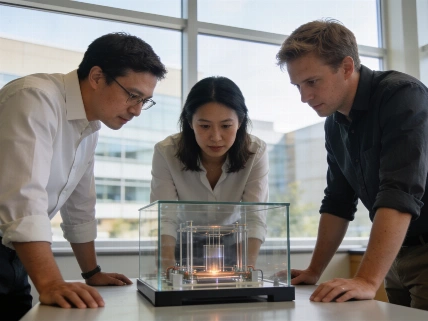
The US Naval Research Laboratory (NRL) has released a detailed outline of its Quantum Science Institute (QSI) strategy, clarifying how its research will align with national quantum policy under Executive Order 14413. Established in June 2025 as the US Navy's central quantum research hub, the QSI is tasked with coordinating quantum information science and technology (QIST) development across military, academic, and commercial sectors. The roadmap identifies four operational thrusts: quantum sensing for navigation and timing, quantum computing and algorithms, quantum networking infrastructure, and foundational quantum materials and photonics.
Quantum Sensing and Navigation
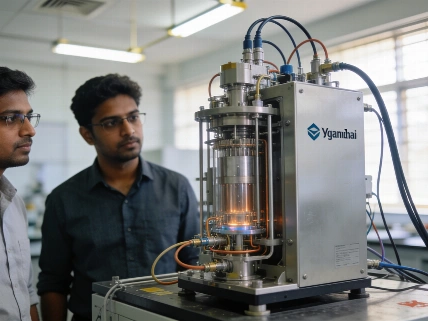
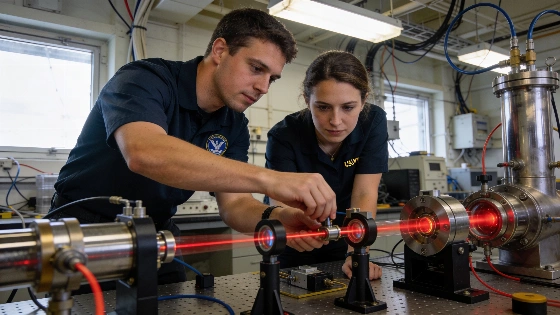
One of the QSI's primary technical goals is to translate cold-atom systems-such as ultra-cold rubidium atom interferometers-into deployable sensors for navigation, positioning, and timing in environments where GPS is unavailable or unreliable. These quantum sensors are being engineered for shipboard accelerometers, gyroscopes, gravimeters, and atomic clocks, with the aim of reducing navigational drift during extended maritime operations. The laboratory's focus on cold-atom interferometry reflects a broader trend in defense research, where quantum-enhanced measurement precision is sought for both strategic and tactical applications.
Quantum Computing and Algorithms
The QSI is also developing quantum software and algorithms tailored to Navy operational requirements, including logistics, advanced materials modeling, fluid dynamics, and weather forecasting. Rather than building proprietary hardware, the institute is leveraging commercial quantum computing platforms to test application-specific algorithms. This approach is consistent with recent efforts by other US research consortia to integrate quantum computing into defense and logistics workflows, as seen in initiatives such as the deployment of trapped-ion and photonic quantum systems for regional research and workforce development-an effort described in a recent Science Report article on quantum network integration.
Networking and Materials Infrastructure
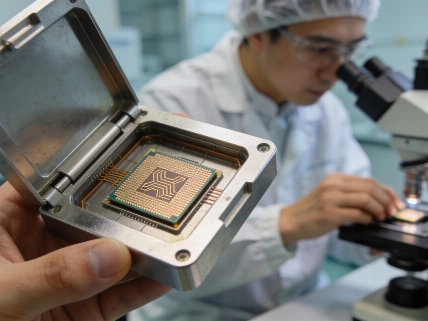
NRL's QSI is a partner in the Washington Metropolitan Quantum Network Research Consortium (DC-QNet), which is advancing fiber-based quantum communication and distributed quantum sensing nodes. The institute's materials and photonics program is focused on engineering quantum materials, integrated photonic devices, and sub-Kelvin device packaging to enable the transition from laboratory discovery to ruggedized defense hardware. These efforts are intended to address the persistent challenge of moving quantum technologies from controlled laboratory environments to operational field conditions, where vibration, temperature variation, and electromagnetic interference can degrade performance.
Workforce and Operational Challenges
To support the Department of Defense's Quantum and Battlefield Information Dominance (Q-BID) priority, the QSI is investing in workforce development through postdoctoral fellowships and inter-agency partnerships. The institute's roadmap emphasizes the need for a domestic quantum workforce capable of sustaining US technological capabilities in contested maritime and defense environments. However, the transition from laboratory prototypes to deployable quantum systems remains constrained by engineering limitations, including device packaging, calibration stability, and the integration of quantum subsystems with existing military infrastructure.
For context, quantum navigation systems based on cold-atom interferometry typically operate at temperatures below 1 microkelvin and require precise control of magnetic and optical fields. Laboratory prototypes have demonstrated sensitivity improvements over classical sensors, but field deployment introduces additional noise sources and reliability challenges. Quantum communication testbeds in the DC-QNet consortium are currently limited by fiber loss, detector efficiency, and the need for robust quantum memories to enable entanglement distribution over metropolitan distances.
Quantum sensing refers to the use of quantum states-such as superposition and entanglement-to enhance measurement precision beyond classical limits. In cold-atom interferometers, atoms are cooled to near absolute zero and manipulated with lasers to create interference patterns sensitive to acceleration, rotation, or gravitational gradients. The resulting devices can, in principle, provide navigation and timing information independent of satellite signals. However, maintaining quantum coherence and suppressing environmental noise are major engineering challenges, especially outside laboratory settings. The practical utility of quantum sensors and networks will depend on advances in device packaging, error mitigation, and integration with conventional systems.