South Korean firm SDT will fabricate trapped-ion quantum processing units based on Open Quantum Design's open-source hardware, aiming to make reproducible quantum computers accessible to research and defense users worldwide
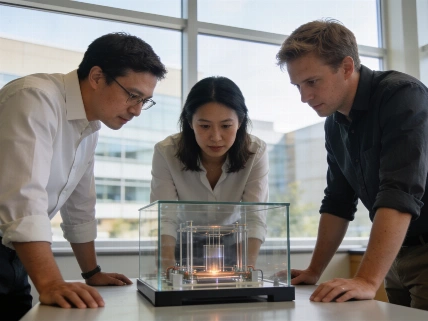
South Korean quantum equipment developer SDT has entered a partnership with Canadian non-profit Open Quantum Design (OQD) to manufacture and assemble trapped-ion quantum processing units (QPUs) based on OQD's open-source hardware blueprints. The agreement, announced at Quantum Korea 2026, positions SDT as the primary hardware manufacturing partner responsible for translating OQD's detailed schematics into physical devices and integrating the necessary control infrastructure for operational quantum computers.
Trapped-Ion Hardware and Open-Source Schematics
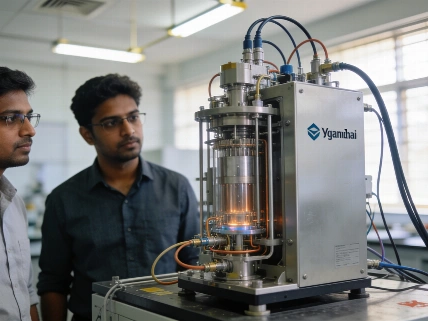
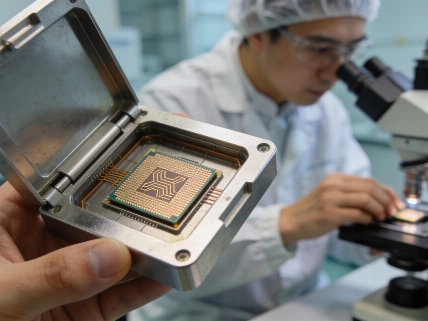
OQD's open-source platform provides comprehensive designs for full-stack trapped-ion quantum computers, including ultra-high vacuum (UHV) chambers, microfabricated surface ion-trap electrodes, laser control optics, and open software stacks. By making these schematics publicly available, OQD aims to lower barriers to entry for research groups and institutions seeking to build or study quantum hardware. SDT's role involves fabricating and assembling complete QPU modules, constructing control electronics, and co-developing user-interface software to support reproducibility and accessibility for universities, research laboratories, and defense agencies.
Manufacturing and Integration Challenges
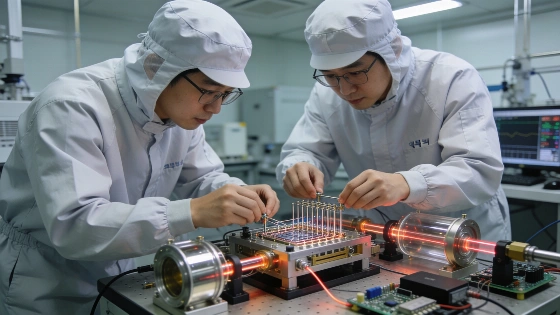
Translating open-source designs into reliable hardware presents significant engineering challenges. Trapped-ion QPUs require precise fabrication of ion-trap electrodes, stable UHV environments, and integration of laser-based control systems. Achieving high-fidelity quantum operations depends on minimizing noise, maintaining vacuum quality, and ensuring stable optical alignment. SDT's manufacturing responsibilities extend to building control electronics and integrating software interfaces, with the goal of enabling reproducible assembly and operation across different sites. The company has also joined the preferred-supplier network for LightFlow, a cloud-based platform for designing and manufacturing free-space optical systems, further supporting the production of optical subsystems and ion-trap assemblies for OQD hardware.
Hybrid Quantum-Classical Infrastructure
In parallel with its hardware manufacturing activities, SDT is deploying its QuREKA Quantum Computing as a Service (QCaaS) platform to support hybrid CPU-GPU-QPU research in South Korea's bio-pharmaceutical sector. Operating from its Quantum-AI Hybrid Data Center in Seoul, QuREKA integrates CUDA-Q toolchains with local superconducting QPUs, IonQ trapped-ion systems, and high-performance classical emulators such as QPerfect's MIMIQ engine. This infrastructure is intended to accelerate computational tasks in molecular modeling, protein structure analysis, and drug candidate discovery, though the practical advantage of current quantum hardware for these applications remains subject to ongoing benchmarking and verification. For context on regional quantum infrastructure initiatives, see this report on quantum startup hubs in Andhra Pradesh.
Supply Chain and Global Access
The partnership between SDT and OQD is led by SDT CEO Ji-won Yoon and OQD Co-Founder & CEO Greg Dick. The alliance is intended to expand OQD's open-source quantum ecosystem into the ASEAN region and South America, while strengthening SDT's position in the global quantum hardware supply chain. By focusing on reproducible, open-source hardware, the collaboration aims to address persistent challenges in quantum device accessibility, fabrication reproducibility, and supply chain transparency. However, the transition from open-source schematics to reliable, scalable quantum processors remains constrained by fabrication yield, device variability, and the complexity of integrating high-performance control systems.
Trapped-ion quantum computers use individual ions confined in electromagnetic traps as physical qubits. These systems are controlled using laser pulses to manipulate quantum states and perform logic operations. Achieving high-fidelity quantum gates requires precise control of electromagnetic fields, stable vacuum conditions, and accurate laser alignment. While trapped-ion platforms are known for long coherence times and high gate fidelities in laboratory settings, scaling up to larger, reproducible systems introduces engineering challenges in fabrication, calibration, and error management. Open-source hardware initiatives seek to make these challenges more transparent and accessible, but reproducibility and practical utility depend on both technical execution and sustained infrastructure support.