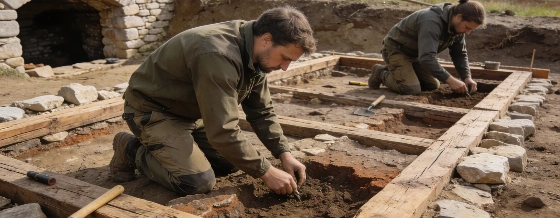
Archaeological research at Neuenstadt am Kocher in southwestern Germany reveals that a Roman planned settlement was likely abandoned after just a few decades, with evidence pointing to instability along the empire's frontier as a possible cause
Archaeological investigations at Neuenstadt am Kocher in Baden-Württemberg, Germany, are reshaping understanding of Roman settlement dynamics along the empire's northern frontier. Recent research led by the State Office for Monument Preservation (LAD) indicates that the Roman town, established in the second or third century CE, was occupied for only about two generations before being abandoned. This unusually brief occupation period is now a central focus for researchers seeking to understand the pressures facing communities near the Roman border during the third century.
Excavation and Settlement Layout
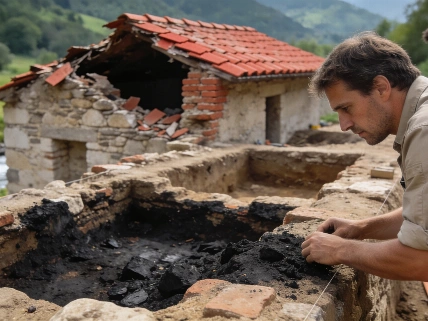
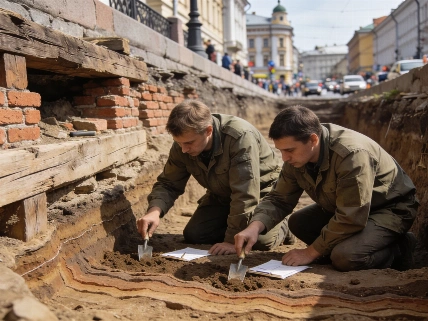
The Neuenstadt site was first identified in the 1980s and has since become a long-term research project. Archaeologists have confirmed that the settlement was deliberately planned, with a regular layout rather than organic growth from an earlier community. Excavations have concentrated on both public and private structures, including a rectangular timber-framed house measuring approximately 9.5 by 12.5 meters. The limited quantity of material culture recovered from these buildings suggests that occupation was short-lived and that the settlement did not reach the scale or permanence seen in other Roman towns of the region.
Earlier phases of research mapped the extent and organization of the settlement, while current work is focused on the central residential and commercial districts. The evidence points to a community that may have attracted merchants and craftspeople, likely encouraged to settle along the Kocher River. However, the archaeological record indicates that both private homes and public buildings were used for only a limited period, with little evidence for long-term accumulation of domestic or commercial debris.
Frontier Instability and Abandonment
The abandonment of Neuenstadt is interpreted in the context of growing insecurity along the Roman Empire's Upper Germanic-Rhaetian Limes, a fortified frontier system bordering Germanic territories. During the third century CE, this region experienced increasing raids and instability, which may have undermined the viability of newly established settlements close to the border. The pattern at Neuenstadt is consistent with other sites where occupation was curtailed by external threats and shifting imperial priorities.
Material evidence from Neuenstadt, including the scarcity of refuse and the absence of later occupation layers, supports the hypothesis that the settlement was not gradually depopulated but rather abandoned within a relatively short timeframe. Archaeologists estimate that the site was inhabited for only several decades, likely corresponding to two generations or less. This finding aligns with broader research on the vulnerability of frontier communities during periods of military and political crisis. Comparable patterns of rapid settlement decline have been documented elsewhere, such as in the fortified settlements of medieval Galich, where new archaeological evidence has prompted a reassessment of occupation chronology (see analysis of Galich's defensive phases).
Ongoing Research and Future Questions
Current excavations at Neuenstadt are targeting a stone cellar structure, with completion expected in 2026. Researchers hope that further analysis of this feature will yield additional information about the economic activities, household composition, and social organization of the settlement's inhabitants. The project aims to clarify whether the community's decline was primarily driven by external threats, economic factors, or a combination of pressures unique to the Roman frontier zone.
While the settlement's short lifespan limits the available archaeological record, it also provides a rare opportunity to examine a planned Roman community that failed to develop into a lasting urban center. The evidence from Neuenstadt offers a detailed snapshot of the challenges faced by civilian populations living in proximity to the empire's shifting borders during a period of heightened instability.
Understanding the chronology and causes of settlement abandonment in frontier regions requires careful integration of archaeological, environmental, and historical data. At Neuenstadt, the absence of later occupation layers and the limited accumulation of material culture are key indicators of rapid decline. These patterns must be interpreted alongside evidence from other sites and broader regional trends to build a nuanced picture of life and risk on the edge of the Roman world.
Chronological interpretation in archaeology often relies on a combination of direct dating methods, such as radiocarbon analysis, and contextual evidence from stratigraphy and artifact typology. At sites like Neuenstadt, where organic material suitable for radiocarbon dating may be scarce, researchers depend heavily on the association of artifacts, construction techniques, and settlement layout with securely dated regional patterns. The integration of multiple lines of evidence is essential for reconstructing occupation sequences and understanding the factors that shaped the rise and fall of ancient communities.