Quantinuum has released its first public quarterly results after a $1.7 billion IPO, reporting a sharp rise in revenue and new partnerships for deploying trapped-ion quantum hardware in cloud and hybrid supercomputing environments
Quantinuum has published its first quarterly financial results as a public company, following a $1.7 billion initial public offering in June 2026. The company reported $8.00 million in revenue for the second quarter, a 279% increase compared to the same period in 2025. This growth was attributed to increased enterprise use of its quantum computing services, including cloud access and developer tools. However, the company also reported a GAAP net loss of $596.52 million, largely due to one-time non-cash stock compensation expenses and IPO-related costs. At the end of the quarter, Quantinuum held $2.11 billion in cash and short-term investments, reflecting the recent IPO proceeds.
Trapped-Ion Hardware and Cloud Integration
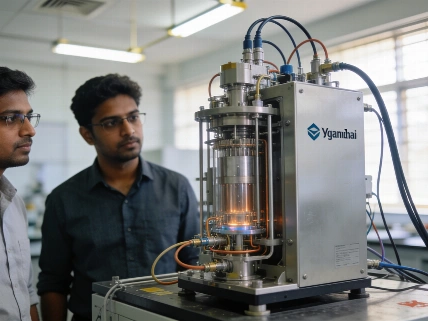
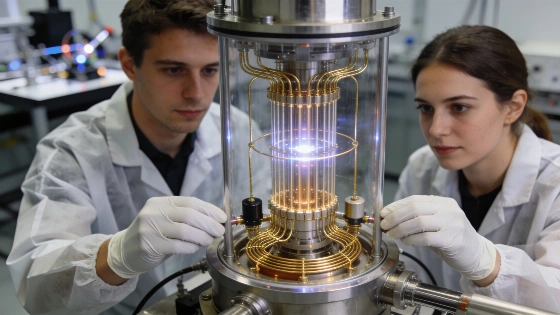
The central technical development highlighted in this quarter's report is Quantinuum's partnership with Oracle to deploy its Helios trapped-ion quantum system within Oracle Cloud Infrastructure (OCI) data centers. According to the company, this integration is intended to allow direct connection between Helios quantum processors and OCI's classical compute, storage, and security services, supporting hybrid quantum-AI workloads. The Helios system is based on trapped-ion technology, which uses individual ions confined and manipulated with electromagnetic fields as physical qubits. Quantinuum reported achieving near 99.999% logical qubit fidelity on Helios using a new family of quantum error correction codes, though independent verification of this figure is not yet available.
Financial Metrics and Engineering Challenges
Quantinuum's financial results reflect both rapid revenue growth and substantial operating losses. The company's operating expenses reached $563.02 million for the quarter, with the majority attributed to non-cash stock compensation triggered by the public listing. Adjusted gross profit, excluding these one-time items, was $4.94 million, corresponding to a 61.7% adjusted gross margin. Adjusted EBITDA loss stood at $68.31 million. The company's guidance for full-year 2026 projects revenue between $28 million and $32 million, but ongoing losses are expected as engineering and scaling challenges remain unresolved. The company also announced partnerships with Hewlett Packard Enterprise for hybrid supercomputing and with a global electronics manufacturer to develop supply chain and manufacturing infrastructure for future quantum charge-coupled device (QCCD) systems.
Roadmap, Error Correction, and Application Progress
Quantinuum reported progress on its hardware roadmap, including the return of the trap chip for its next-generation Sol system, scheduled for 2027, and ongoing prototyping for the Apollo platform targeted for 2029. The company claims to have demonstrated "five-nines" logical fidelity on Helios, but the details of the error correction code, number of physical qubits per logical qubit, and the number of error-correction cycles were not disclosed in the financial report. The developer ecosystem has expanded to 180 organizations on the Nexus cloud platform, and new tools for error suppression and developer onboarding have been introduced. Quantinuum also described advances in quantum algorithms, including a parallel phase-estimation method for molecular property calculations and AI-driven quantum simulation of magnetic materials, though these results have not yet been independently benchmarked against classical methods.
Manufacturing and Policy Initiatives
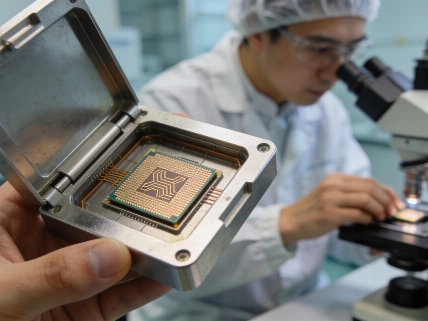
In addition to technical milestones, Quantinuum has signed a letter of intent with the U.S. Department of Commerce's CHIPS R&D Office to support onshore manufacturing and supply chain resilience for trapped-ion quantum hardware. This move aligns with broader U.S. policy efforts to localize advanced semiconductor and quantum device production. The company's manufacturing partnerships are intended to address the engineering bottlenecks that limit scaling from laboratory prototypes to deployable quantum systems. Similar efforts to integrate quantum hardware with classical supercomputing infrastructure have been reported by other companies in the sector, including recent developments in annealing and gate-model quantum platforms described in a previous Science Report article.
Quantum error correction is a central challenge for all quantum computing platforms. Physical qubits-such as the trapped ions used in Quantinuum's Helios system-are highly sensitive to noise and environmental disturbances, which cause errors during computation. Logical qubits are constructed by encoding information across multiple physical qubits using error-correcting codes, allowing some errors to be detected and corrected. Achieving high logical fidelity requires not only low physical error rates but also stable operation over many error-correction cycles and robust decoding algorithms. While reported logical fidelities above 99.999% are promising, the practical utility of these systems depends on reproducibility, scalability, and the ability to run useful algorithms at scale. Independent benchmarking and transparent reporting of error rates, code distances, and correction cycles are essential for evaluating progress toward fault-tolerant quantum computing.