NASA and SpaceX are monitoring a spent Falcon 9 upper stage expected to strike the Moon near Einstein and Bell craters, using ground and space-based telescopes to gather data and refine tracking methods
A used Falcon 9 upper stage from a commercial lunar mission is on course to collide with the Moon on August 5, 2026, in a region near the Einstein and Bell craters. NASA and SpaceX are jointly tracking the object's trajectory, aiming to observe the impact and collect scientific data on the resulting crater and ejecta. The event poses no risk to Earth, but offers a rare opportunity to study the effects of artificial impacts on the lunar surface.
Trajectory and Mission Context
The Falcon 9 upper stage was launched on January 15, 2025, carrying Firefly Aerospace's Blue Ghost 1 lunar lander as part of NASA's Commercial Lunar Payload Services (CLPS) initiative. After successfully deploying its payload, the stage entered a high Earth orbit. Over subsequent months, gravitational perturbations and solar activity altered its path, eventually setting it on a collision course with the Moon. NASA and SpaceX have maintained communication regarding the stage's evolving trajectory, and independent astronomers first identified the impact risk using publicly available tracking data.
NASA's Center for Near Earth Object Studies at the Jet Propulsion Laboratory later confirmed that the upper stage has a 100% probability of impacting the lunar surface. The impact is projected to occur near the Moon's terminator-the boundary between lunar day and night-where surface features are sharply defined by shadows. The event is expected to create a crater approximately 18 meters wide and 4 meters deep, dispersing dust and rock outward from the site.
Observation Plans and Scientific Goals
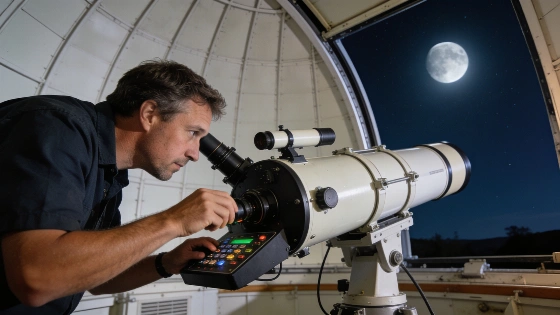
NASA's Meteoroid Environments Office at Marshall Space Flight Center will attempt to observe the impact in real time using ground-based telescopes, though visibility will depend on local weather and lighting conditions. In addition, NASA's Lunar Reconnaissance Orbiter (LRO) and the ShadowCam instrument aboard South Korea's Korea Pathfinder Lunar Orbiter are scheduled to image the impact site before and after the event, subject to orbital timing and illumination constraints. It may take several days for high-resolution images to be downlinked and analyzed.
Artificial impacts on the Moon are rare compared to the daily influx of natural meteoroids, but they provide controlled conditions for studying impact processes. The energy released by the Falcon 9 stage is comparable to that of a typical meteoroid strike, which occurs on the Moon roughly every six days. By observing the resulting ejecta plume and crater formation, scientists hope to refine models of lunar geology and better understand how the surface responds to high-velocity impacts.
Debris Mitigation and Policy Considerations
While the disposal of upper stages on the lunar surface is not always planned, it is considered a technically acceptable and safe method for missions operating in low lunar orbit. Controlled impacts allow mission operators to predict and track the final disposition of hardware, reducing the risk of uncontrolled debris in cislunar space. NASA has emphasized its commitment to responsible disposal practices that protect Earth, its orbital environment, and other planetary bodies.
Similar cases of spent rocket stages impacting the Moon have occurred in the past, and the scientific community continues to assess the implications for both lunar science and long-term mission safety. For a detailed account of how a Falcon 9 upper stage can end up on a lunar collision course, see this analysis of orbital dynamics and mission planning.
Limits and Uncertainties
The precise timing and location of the impact depend on ongoing tracking and modeling, and observational opportunities may be limited by lunar lighting and spacecraft positioning. The event will not be visible to the unaided eye from Earth, and the availability of high-resolution imagery will depend on the schedules of orbiting spacecraft. While the impact will disturb a small area of the lunar surface, it is not expected to interfere with current or planned science operations in the region.
Any data collected from this event will help researchers improve techniques for tracking space objects and understanding the consequences of artificial impacts, informing future mission planning and planetary protection policies.
To interpret the results of lunar impact observations, it is important to understand how telescopes and spacecraft detect and image transient events. Ground-based telescopes rely on reflected sunlight and favorable geometry to capture brief flashes or plumes, while orbiters like LRO use high-resolution cameras to map surface changes before and after an impact. The timing, angle, and lighting of each observation affect the quality and scientific value of the data, and careful calibration is required to distinguish new features from pre-existing terrain. These methods allow scientists to reconstruct the sequence and effects of impact events, but also highlight the challenges of monitoring dynamic processes on the Moon's airless surface.