

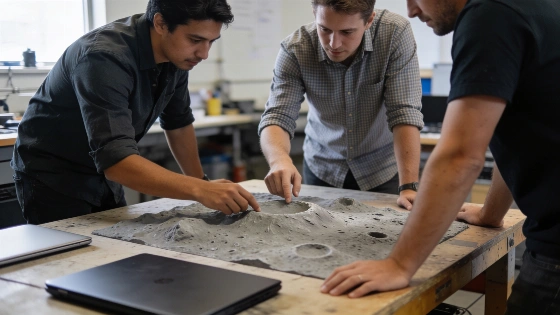
Teams at 593 events used NASA and partner-agency open data to tackle 14 space and Earth science challenges as registration reached 181,835 for a fifth consecutive year of growth
At local events on Nov. 14 and 15, teams had two days to turn NASA data into projects addressing one of 14 defined challenges. Their work ranged across space exploration and Earth science, drawing on open data from NASA and partner space agencies.
Record participation
The challenge drew 181,835 registered participants to 593 events around the world. Registrations rose 59% from the previous year, marking the fifth consecutive year of increased participation. NASA engagement branch chief Amy Kaminski said, "We're thrilled to see more than 180,000 people tackling these challenges and helping to accelerate our ability to find solutions."
Since the event began in 2012, more than 600,000 people from over 190 countries have taken part. Local volunteers organize events, where participants with varied skills-including coding, science, design, storytelling and technology-form teams and submit projects before a common deadline. For local-event teams, the 2026 submission cutoff was Nov. 15 at 11:59 p.m. local time.
Projects entered judging after the event, with 10 global winners expected to be announced in January 2027. In Bangladesh, organizers reported 4,657 registrations across nine cities and more than 600 teams for the 2026 edition. The country has also produced global award-winning teams: Team Olik won the 2018 Best Use of Data award for Lunar VR, and Team Ecorangers reached the 2024 global final.
Data from partners
Teams worked with NASA open data and information from 17 international space agency partners, which NASA identified as Artemis Accords signatories. They included Angola National Space Programme Management Office (GGPEN); Bahrain Space Agency; Brazilian Space Agency (AEB); Canadian Space Agency (CSA); European Space Agency (ESA); Indian Space Research Organisation (ISRO); Italian Space Agency; Japan Aerospace Exploration Agency (JAXA); Korea AeroSpace Administration (KASA); Mohammed Bin Rashid Space Center of the United Arab Emirates; National Space Activities Commission of Argentina (CONAE); Nigeria's National Space Research and Development Agency; Paraguayan Space Agency; Senegalese Space Studies Agency; Spanish Space Agency; Turkish Space Agency; and UK Space Agency.
Challenge authors
Three partner agencies also developed challenge prompts. GGPEN wrote one, while AEB and CONAE also authored challenges, giving those agencies a role in shaping the problems teams addressed.
NASA's open-data hackathon invites people from many disciplines to work together on problems on Earth and in space. Kaminski said the event brings people with varied skills to NASA datasets and lets them work on issues relevant to both. The challenge's open-data approach also featured in earlier coverage of access for participants with different skill levels.







