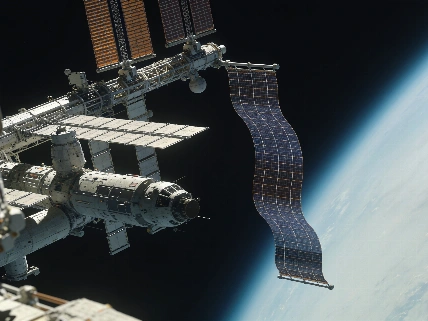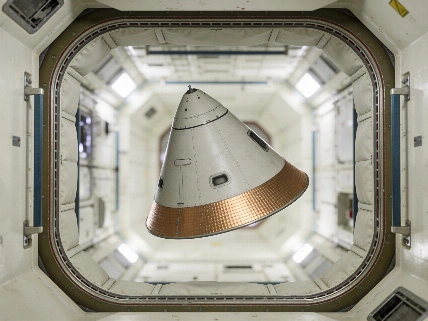
The 2026 NASA Space Apps Challenge brings teams together to work with the agency's free data. Its November event is open to people without programming experience and includes more than 500 local events
More than 500 local events will give participants a place to work on problems created by NASA subject matter experts. Teams will use the agency's free and open data during the two-day challenge, which takes place Nov. 14 and 15.
Launched in 2012, the NASA Space Apps Challenge has grown into an international hackathon. Local organizers in Alba Iulia, Romania, reported that more than 487,000 people from 190 countries and territories have taken part over the challenge's history, describing it as the world's largest annual global hackathon in their event announcement.
Who can take part
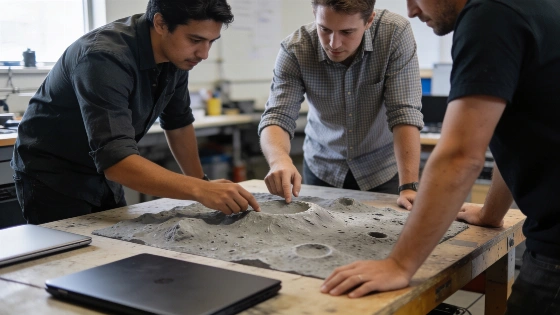
Programming experience is not required. Students, scientists, engineers, designers, storytellers, technologists and space enthusiasts of all ages can contribute skills to a team. The event is designed as a collaborative problem-solving exercise, with participants choosing a challenge that interests them.
NASA's Nicky Fox, associate administrator of the Science Mission Directorate at NASA Headquarters in Washington, has framed the challenge around using NASA data to support exploration and ideas that may also benefit life on Earth. That is an invitation to work with agency data, rather than evidence that participants' proposed solutions will be adopted or used in a mission.
Three areas of exploration
The 2026 challenge covers three broad areas. One concerns returning humans to the Moon through the Artemis program and Moon Base planning. Another looks toward missions farther into the solar system. The third supports a wider understanding of the universe through astrophysics.
Some lunar challenges address surface operations near the Moon's South Pole. Others involve managing constraints such as sunlight and communications windows, or assessing the logistics and science of extended stays. System-level models may also explore outpost operations and astronaut health and safety. These are planning and analysis problems, not claims that participants' work will be flight-tested.
NASA's Mars-related challenges include concepts for surface operations and combining data from multiple missions. Other tasks examine choices involved in deep-space mission design or monitoring health during long-duration travel. The broader exploration portfolio also includes destinations such as Jupiter's moon Europa and Saturn's moon Titan, although not every challenge concerns those worlds.
A related lunar materials effort has examined a composite made from biodegradable plastic and simulated planetary dust, covered in an earlier report. That work is distinct from the Space Apps event; the announcement does not connect the material to a specific challenge.
Data and astrophysics
Astrophysics challenges focus on access to mission data and tools for visualizing changes in the sky. One mission named in the announcement is the Spectro-Photometer for the History of the Universe, Epoch of Reionization and Ices Explorer (SPHEREx), which is conducting a full-sky spectral survey. NASA is also developing and deploying observatories to investigate cosmic evolution and populations of exoplanets, or planets beyond our solar system.
Local events have their own formats and awards alongside the global challenge. In Alba Iulia, organizers announced €6,000 in prizes: €3,000 for first place, €2,000 for second and €1,000 for third. Local winners may be nominated for global evaluation, and global winners are invited to a NASA facility to present their projects to the international Space Apps community.
Cairo's local event has been held annually since 2015. Egyptian organizers reported more than 25,000 participants over that period, over 115 local wins and more than 40 teams advancing to global consideration. Egyptian teams achieved global wins in 2024 and 2025, according to Al-Nahar Egypt.
Teams select a challenge and submit a project for evaluation; local winners may advance to global judging, where projects are considered alongside entries from other countries. Participants can register through the NASA Space Apps Challenge and select a local event and a problem to address.
Open data means information is made available for others to examine and use. For a space science project, that can let participants develop ways to explore observations collected by missions, but analysis tools do not replace the instruments or validate a scientific conclusion on their own. The meaning of any result depends on the data, methods and limitations involved.