Conducted from June to August 2001, the study divided 80 local and crossbred cattle by tick and piroplasm status and assessed blood measures; the available account begins a result but ends before its details are given
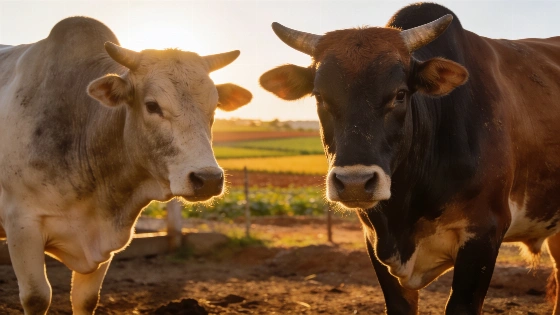
From June to August 2001, researchers studied 40 local nondescript cattle and 40 crossbred animals in Malakand Agency. They examined tick infestation and piroplasm infection and assessed associated blood measurements.
Sample and Groups
Within each cattle type, group A had no infestation or infection; group B had ticks alone. Group C had piroplasm infection alone, while group D had both. Each group contained 10 animals, making 80 cattle across the two types.
Blood Measures
The blood work included total erythrocyte count (TEC) and total leukocyte count (TLC). Researchers also estimated haemoglobin (Hb), measured erythrocytic sedimentation rate (ESR), and recorded differential leukocytic count (DLC). Piroplasms include blood protozoa; babesiosis, for example, is caused by Babesia species, including the cattle pathogens B. bovis and B. bigemina.
Tick and Pathogen Research
Tick identification has also been studied using molecular methods in Pakistan. A 2022 paper in the Pakistan Veterinary Journal examined large ruminants in Pothohar using internal transcribed spacer 2 (ITS2) nucleotide-sequence analysis. Its authors were Farkhanda Jabeen, Muhammad Mushtaq, Mazhar Qayyum, Murtaz ul Hasan, Muhammad Arif Zafar, Aayesha Riaz and Farooq Nasir, primarily affiliated with PMAS Arid Agriculture University, Rawalpindi. The Pothohar study provides a separate example of genetic approaches to tick taxonomy.
In another regional molecular survey, PCR detected Theileria annulata in 51 of 88 cattle sampled in Malakand (57.9%). The survey also reported detections in Upper Dir (46/75; 61.3%), Lower Dir (54/90; 60%), Peshawar (40/80; 50%), Charsadda (52/112; 46.4%) and Bajaur (51/110; 46.34%). These PCR findings measure detection of the parasite and are distinct from tick infestation or blood-count changes.
A separate study of 2,548 crossbred Friesian × Sahiwal cattle on two farms in Lahore reported Babesia bigemina as the most prevalent organism, followed by Theileria annulata and Anaplasma marginale. The Lahore cattle study examined a different cattle population and setting from the Malakand research.
Findings Reported
The study set out to identify prevalent tick species and the piroplasms transmitted by them. Its account begins to report a significant decrease in the haematological examination, but ends before identifying the affected measure or giving further results.