Kerri Smith is an environment and Earth science editor covering marine ecology, biodiversity, animal movement and the pressures affecting ocean ecosystems. She focuses on how field observations, tracking data and laboratory methods support conservation decisions and where uncertainty limits the conclusions.
Kerri Smith studied marine biology at the University of Southampton, developing a practical foundation in ocean ecology, field sampling and the analysis of marine environments. She later worked with a coastal monitoring programme, a wildlife data project and a scientific publishing team covering biodiversity and environmental change. At Science Report, she writes and edits coverage of marine mammals, animal migration, food webs, protected areas, sustainable fisheries, ocean warming and marine pollution. Her editorial approach examines how evidence was collected, whether observed patterns reflect long-term ecological change and how confidently researchers can connect human pressures to effects on individual species or ecosystems. She also pays close attention to the limitations of tracking data, stable-isotope measurements and environmental sampling when translating research into conservation recommendations.
Areas of Expertise
Marine BiologyThe scientific study of marine organisms, their habitats and their interactions within ocean environments.
Conservation BiologyThe study of biodiversity loss and the protection of species, habitats, ecological interactions and natural systems.
Isotope AnalysisAn analytical method used to investigate diet, movement, food webs and environmental conditions through differences in isotopic composition.
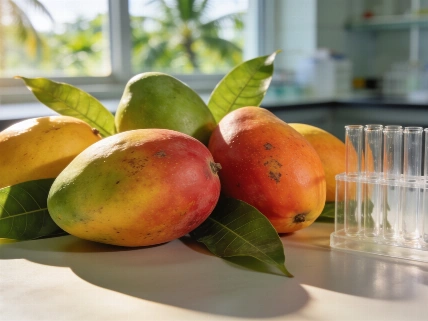
Researchers examined nine Southern Vietnamese mango cultivars and found that ITS sequences separated their groups, while 22 SCoT primers produced 305 polymorphic bands useful for distinguishing individual samples
Kerri Smith, Climate, Environment and Earth Science Editor at Science Report.