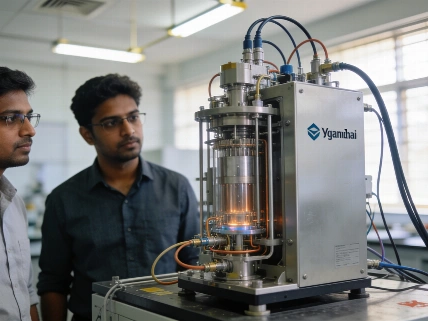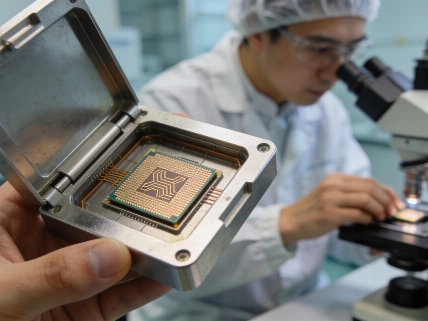

A new Israeli consortium led by Allot Ltd. brings together industry and academic partners to develop and test quantum-resistant communication protocols for optical, satellite, and mobile networks
Israel has established a national consortium focused on developing quantum-resistant communication protocols, with Allot Ltd. appointed as both founding member and chair. The initiative, supported by the Israel Innovation Authority's Technological Infrastructure Division, brings together multinational technology companies, defense contractors, and six major Israeli research universities. The consortium's goal is to address the emerging threat posed by future quantum computers to current cryptographic systems, particularly in critical infrastructure and telecommunications.
Consortium Structure and Participants
The Post-Quantum Communications (PQC) Consortium includes commercial partners such as Allot Ltd., NVIDIA, Elta Systems, Ceragon, Gilat Satellite, RAD Data Communications, Heqa, Classiq, and Ribbon Communications. Academic involvement spans Technion, Bar-Ilan University, Hebrew University, Ben-Gurion University, Open University, and University of Haifa. The consortium is governed by Allot VP CTO Dr. Yaakov Stein, who leads both the Consortium Board and the Scientific Committee, coordinating research and development across corporate and university teams.
Technical Scope and Research Focus
The consortium's research targets the security of multi-layer telecommunications infrastructure against "harvest now, decrypt later" attacks and the anticipated capabilities of cryptanalytically relevant quantum computers. Efforts are divided between evaluating post-quantum cryptography (PQC) software algorithms, investigating physical-layer quantum key distribution (QKD), and exploring hybrid architectures that combine mathematical PQC with optical quantum key exchange. The work spans several OSI networking layers, including optical transport, Ethernet, IP routing, 5G/6G mobile cores, data center interconnects, satellite channels, and commercial cloud communications.
Policy Drivers and International Context
This initiative aligns with global policy trends, as governments increasingly require critical infrastructure operators and telecom providers to migrate toward NIST-standardized post-quantum algorithms and hybrid quantum-safe architectures. The Israeli consortium's approach reflects a broader international effort to anticipate the risks posed by quantum computing to existing cryptographic systems. Similar concerns have driven research and industrial collaboration elsewhere, such as the recent partnership between Quantinuum and Quanta Computer to develop scalable trapped-ion quantum hardware, as discussed in Science Report's coverage of modular quantum processor manufacturing.
Engineering Challenges and Next Steps
While the consortium's formation marks a significant organizational step, the technical challenges remain substantial. Quantum key distribution protocols, for example, require specialized photonic hardware and are sensitive to loss and noise in real-world networks. Post-quantum cryptographic algorithms, though designed to resist attacks from quantum computers, must be implemented and tested for performance, interoperability, and side-channel resistance across diverse network environments. The integration of hybrid systems-combining mathematical and physical-layer protections-introduces further complexity in both engineering and standardization. The consortium's progress will depend on rigorous experimental validation, cross-institutional collaboration, and ongoing adaptation to evolving cryptographic standards.
Quantum-safe communication refers to the development and deployment of protocols and systems that remain secure even in the presence of large-scale quantum computers. While quantum key distribution leverages quantum mechanics to detect eavesdropping and distribute encryption keys, post-quantum cryptography involves new mathematical algorithms designed to withstand attacks from quantum computers but runs on conventional hardware. Both approaches face practical challenges: QKD requires specialized optical infrastructure and is limited by distance and loss, while post-quantum algorithms must be robust against both quantum and classical attacks and compatible with existing network systems. Hybrid architectures seek to combine the strengths of both, but their real-world security and scalability remain active areas of research.