AGIBOT has published the WORLD 2026 dataset, offering over 11000 real-world robot task trajectories-including failures and human interventions-to support reinforcement learning and embodied AI beyond curated demonstrations
Robots rarely learn from perfection alone. AGIBOT's latest move-open-sourcing the WORLD 2026 dataset-puts the spotlight on what most robotics datasets omit: the messy, failure-prone reality of physical machines operating outside the lab. By making thousands of real-world robot attempts, breakdowns, and human interventions public, AGIBOT is challenging the field to confront the limits of current reinforcement learning and embodied AI.
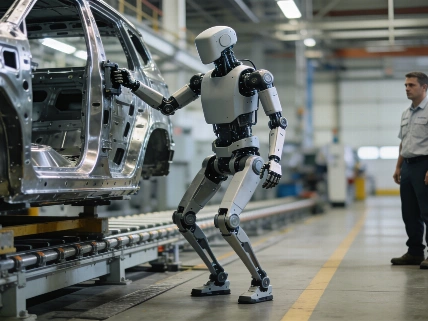
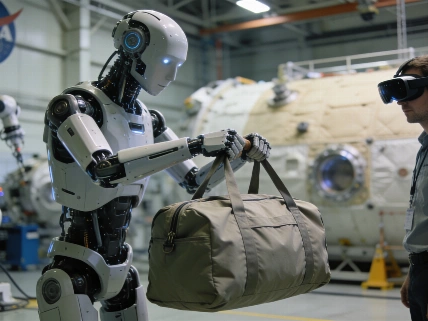
Unlike conventional datasets that showcase only successful expert demonstrations, WORLD 2026 documents the full spectrum of robot behavior. The dataset includes 11,430 real-world trajectories from 14 industrial and household tasks, capturing not just polished task completions but also failed attempts, autonomous rollouts, and moments when human operators had to step in. This breadth is rare in robotics, where failure data is often filtered out or left unpublished.
AGIBOT's release arrives on the heels of its strong showing at the second World Humanoid Robot Games, where the company's robots collected 46 medals-18 of them gold-during their international competition debut. But the dataset, not the medals, may prove the more consequential contribution. By exposing where robots falter and how humans recover control, AGIBOT is inviting researchers to build systems that can adapt to unpredictable environments, not just repeat rehearsed routines.
Inside the dataset
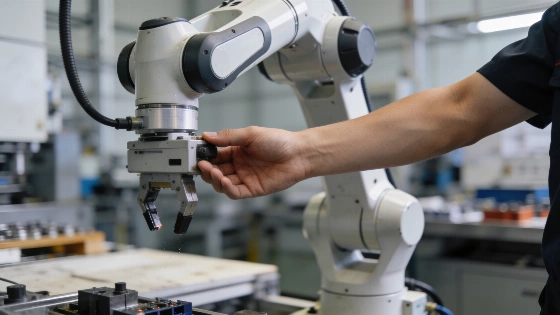
The WORLD 2026 Theme 3 dataset is structured around three types of trajectories. First are expert demonstrations: human operators performing tasks in real-world settings, providing reference executions for learning algorithms. Second are autonomous policy rollouts, where robots attempt tasks independently after training-successes and failures are both included, with 1,024 successful and 1,369 failed rollouts documented. Third are human-in-the-loop corrections, which record the robot's actions before, during, and after a human intervenes to recover from an error or complete a stalled task.
Each trajectory is annotated with task progress, completion status, error types, environmental disturbances, and the timing and nature of human interventions. This level of detail enables researchers to analyze not just what went wrong, but how and when recovery was possible. The dataset's focus on real-world deployment-rather than simulation or cherry-picked successes-marks a shift toward more transparent and accountable robot learning.
Learning from mistakes
Robotics research has long relied on curated demonstrations, often masking the brittleness of systems when exposed to the variability of real environments. WORLD 2026's inclusion of failed attempts and human corrections offers a rare window into the actual learning process. Robots in the dataset encounter unexpected obstacles, deviate from intended actions, and require human assistance-scenarios that are routine in deployment but underrepresented in published data.
For reinforcement learning and embodied AI, this means algorithms can now be trained and evaluated on data that reflects operational reality, not just idealized performance. The dataset's structure allows for the study of failure modes, recovery strategies, and the limits of current autonomy. It also highlights the ongoing necessity of human oversight, even as robots become more capable.
Broader context and limitations
AGIBOT positions WORLD 2026 as part of a larger open-source initiative, with plans to expand the resource with additional datasets and benchmarks. The company's approach echoes a growing recognition in robotics that progress depends on confronting-not concealing-failure. Comparable efforts, such as the Berkeley Humanoid Lite project, have also emphasized open access and real-world testing, but AGIBOT's focus on annotated failure and intervention data is unusually explicit.
However, the dataset's value will depend on how representative its tasks and environments are of broader industrial and household applications. Without independent validation or external benchmarking, it remains unclear how well findings will generalize. The company has not disclosed whether the data includes rare or safety-critical failure cases, nor how interventions were standardized across operators. As with most open-source releases, the burden of critical evaluation now shifts to the research community.
AGIBOT's decision to publish not just robot successes but also their breakdowns and recoveries is a necessary corrective to the field's tendency toward selective reporting. By making the full learning process visible, the company is forcing a reckoning with the realities of robot deployment: autonomy remains conditional, human oversight is indispensable, and progress depends on learning from what goes wrong as much as from what goes right. The real test will be whether researchers and developers use this data to build robots that can handle the unpredictable, not just the ideal.
Reinforcement learning is a machine learning approach where agents-such as robots-learn to make decisions by interacting with their environment and receiving feedback in the form of rewards or penalties. In robotics, this often involves trial-and-error exploration, with the agent adjusting its behavior to maximize successful outcomes. However, real-world deployment introduces complexities absent from simulation: sensor noise, mechanical wear, unexpected obstacles, and the need for human intervention. Datasets that include both failures and corrections are essential for developing algorithms that can adapt to these realities, rather than overfitting to curated successes.