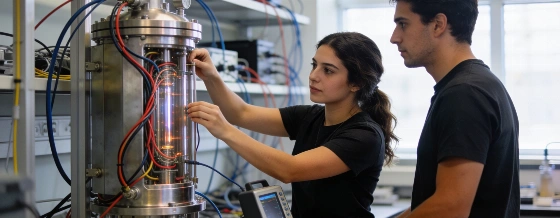
California has allocated $9.74 million to strengthen quantum research and workforce development in Southern California, supporting new infrastructure, shared testing, and regional coordination led by UCLA and partner institutions
California has committed $9.74 million in state funding to accelerate the development of quantum research infrastructure and workforce pipelines across Southern California. The investment, part of a broader $48.5 million allocation under the California Jobs First Regional Investment Initiative, is intended to support high-growth technology sectors by enhancing regional coordination, research facilities, and shared quantum testing capabilities. The initiative is led by the University of California, Los Angeles (UCLA), with additional leveraged co-investment of $30 million from external partners.
Regional Quantum Cluster
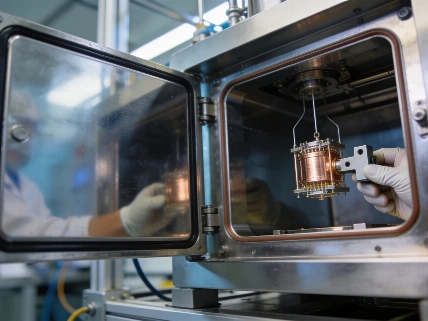
The Southern California quantum cluster, designated as Regional Cluster #7, spans Los Angeles County, Orange County, and the Southern Border Region including San Diego. The cluster's strategy focuses on expanding both quantum hardware and software capacity, with UCLA serving as the coalition lead. The funding supports the development of shared quantum testing infrastructure, multi-region research coordination, and the creation of new talent pipelines to address the growing demand for quantum expertise in both academic and industrial settings.
Project Awards and Workforce Initiatives
Within the cluster, two major sub-initiatives have been funded. California State University San Marcos received $2,137,920 for the SoCal Quantum Alliance for Development: Initialize, a workforce development program designed to increase accessibility to quantum education and provide hands-on training for students entering the field. UCLA was awarded $7,604,150 for the SoCal Quantum Alliance for Development: Cohere, Entangle, Excite, which aims to coordinate ecosystem support, expand shared quantum testing infrastructure, and facilitate access to quantum-focused venture capital. Projects were selected based on geographic equity, alignment with the California Economic Blueprint, and their potential to combine state grants with outside capital for high-road job creation.
Economic Impact and Federal Alignment
The $48.5 million statewide rollout covers 18 projects across eight economic regions and is projected to create approximately 20,000 direct and indirect jobs. All regional plans have been formally designated as Comprehensive Economic Development Strategies (CEDS) by the U.S. Economic Development Administration, enabling quantum coalitions to seek additional federal matching funds. This approach is intended to strengthen the region's position in the national quantum ecosystem and support the transition from laboratory research to scalable technology platforms.
Comparative Context and Sector Challenges
California's investment in quantum infrastructure reflects a broader trend of public funding aimed at bridging the gap between research and practical deployment. Similar efforts have been observed in other regions, such as the National Science Foundation's support for quantum sensing initiatives, including a $37.5 million renewal for the University of Chicago-led QuBBE, as reported in Science Report's coverage of NSF-funded quantum sensing for biomedicine. However, the transition from research funding to operational quantum systems remains constrained by technical challenges in device fabrication, error rates, and the need for specialized workforce training. The California initiative addresses these barriers by integrating workforce development with infrastructure investment, but the effectiveness of these measures will depend on sustained collaboration between universities, industry, and government agencies.
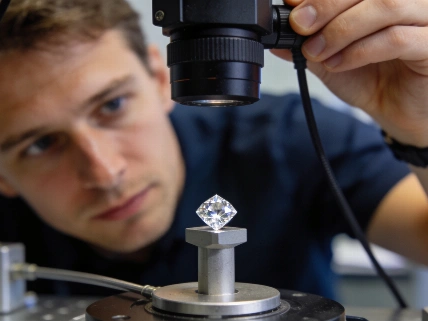
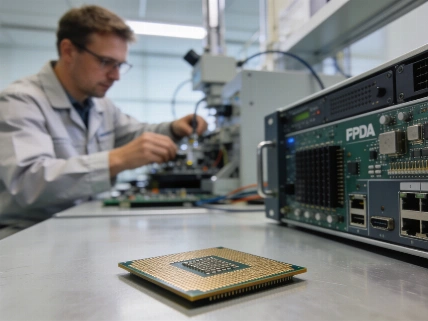
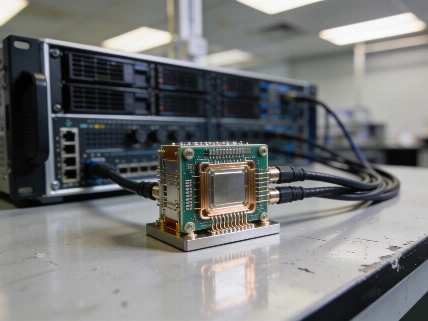
Quantum research infrastructure encompasses the physical and organizational systems required to develop, test, and deploy quantum devices and technologies. This includes specialized laboratories, cryogenic systems, nanofabrication facilities, and shared testing platforms that enable researchers to characterize qubit performance, gate fidelity, and error rates under controlled conditions. Effective infrastructure is essential for reproducible experiments, device benchmarking, and the training of a technically skilled workforce. As quantum technologies move from laboratory prototypes toward scalable systems, the availability and accessibility of such infrastructure become critical factors in determining regional and national competitiveness in the quantum sector.