NASA Glenn has opened a full and open competition for Phase 1 of a proposed Aerospace Power Systems Laboratory in Cleveland, with Phase 1 proposals due October 30, 2026; the procurement record does not yet confirm an award, construction or a facility budget.
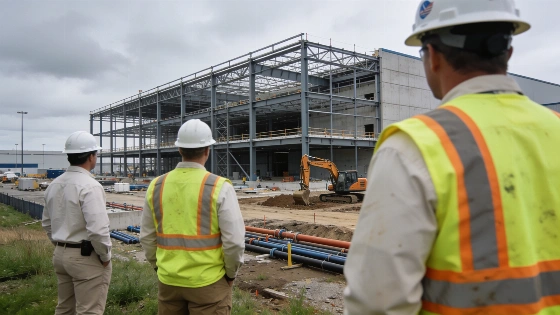
NASA Glenn Research Center is asking industry to compete for Phase 1 of a proposed Aerospace Power Systems Laboratory in Cleveland. The project would combine a new laboratory with site-work infrastructure and supporting systems for testing and developing power technologies tied to NASA's current and future mission needs.
The procurement concerns design and construction rather than an operating facility. NASA has not announced that the laboratory is complete or that testing has begun. The federal opportunity record describes a full and open competition under North American Industry Classification System code 236220, with a small-business size standard of $45 million. The record identifies a procurement opportunity, not a selected contractor, an award amount or an active laboratory.
The available SAM.gov record was updated on October 5, 2026, but that update does not establish that the contract has been awarded, the project cancelled or construction started. No independent report from Reuters, the Associated Press, Bloomberg, the Financial Times or another leading news organization has confirmed a winning bidder, a project budget or contractor reactions. Those details therefore remain unverified.
The planned work would take place both on-site at NASA Glenn and off-site at contractor facilities. That arrangement places the project at the intersection of laboratory design, construction and aerospace engineering while leaving the final technical approach to the competitive procurement process. As in other large engineering programs, the future facility's value would depend on measurable requirements such as electrical performance, thermal conditions, reliability, safety and repeatability of testing; none of those final performance targets is specified in the available record.
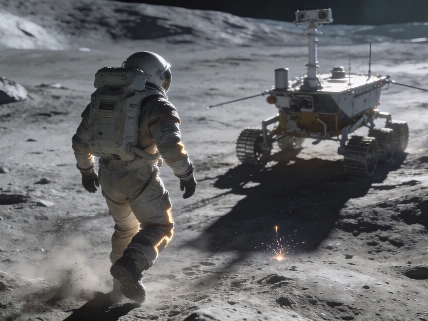
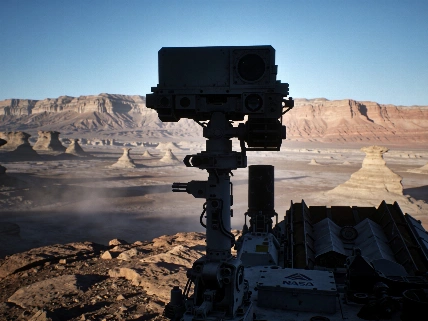
Power systems are a practical constraint across space missions. They must support instruments, communications, thermal control and other spacecraft functions within limits set by mass, reliability and available energy. NASA's announcement connects Glenn's power expertise to the Artemis program, the Moon Base and exploration of Mars and beyond, but it does not claim that the proposed laboratory has already produced a technology or enabled a specific mission.
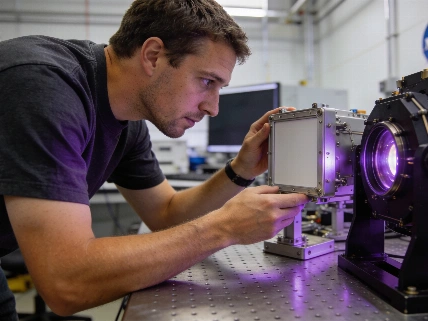
In engineering terms, a ground laboratory can provide a controlled environment for characterizing components and integrated systems before flight qualification. Such work may involve comparing designs under defined operating conditions, but the solicitation supplies no measurements, sample sizes, statistical analyses, confidence intervals or peer-reviewed experimental results from the future facility. This is an infrastructure proposal, not a report of a new scientific discovery.
The broader research context includes work on energy conversion, storage, power electronics and thermal management at institutions such as MIT, while journals including Nature publish peer-reviewed studies across related energy and materials fields. Those research activities should not be conflated with the Cleveland procurement: no laboratory study, named lead researcher or peer-reviewed finding is attached to this solicitation. An overview of relevant energy research is available through the MIT energy research program.
Proposals are due by Oct. 30, 2026, at 1 p.m. EST. NASA anticipates making an award on Dec. 16, 2026, although that date is a planned procurement milestone rather than a completed contract outcome. Questions must be submitted in writing to contracting officer John Christel by Oct. 12, 2026, and NASA is encouraging offerors to send them early.
Offerors must submit their materials through NASA's Enterprise File Sharing and Sync Box, known as EFSS Box, which the agency identifies as a FedRAMP Moderate certified platform. The submission requirement is procedural, but it is also a concrete condition of participation: a proposal sent through another route would not satisfy the stated process.
The procurement timeline is already more specific than the laboratory's scientific output. NASA has supplied a deadline, a projected award date, a classification code and a submission channel, while the available record does not provide a budget, construction schedule, floor area, equipment list or final performance targets. The federal procurement record should therefore be read as the authoritative status reference for the opportunity, not as evidence that the facility already exists.
The proposal should not be read as evidence that a particular power technology has been selected or that NASA has resolved the engineering problems associated with lunar or Martian missions. No winning contractor has been identified in the available record, and no experimental result is attached to the solicitation.
That limitation does not make the project unimportant. Testing capacity is part of the chain between a promising power-system design and hardware that can be considered for a mission, but a laboratory proposal is only the beginning of that chain. The immediate news is that NASA Glenn is opening the competition and setting the terms under which industry can respond; the scientific and engineering value will depend on the facility eventually delivered and the work carried out there.
NASA's broader crew and exploration plans have also included separate transportation decisions, as earlier coverage of the scheduled Crew-13 mission illustrates. The power laboratory procurement belongs to a different layer of mission architecture: it concerns the ground-based capability to test systems rather than a launch or flight milestone.
NASA Glenn is also associated with other future lunar-technology procurements, including a NextSTEP-3 application in which the Glenn Research Center is identified as the responsible purchasing organization. Separately, a lunar-communications project involving Glenn has been reported as receiving an approximately $38 million contract for Modulate Space Corporation. That is a distinct program and does not confirm financing or an award for the Aerospace Power Systems Laboratory.
For readers tracking NASA's exploration plans, the clearest interpretation is therefore restrained but significant: Glenn is seeking to expand the infrastructure behind power-system development, not announcing a finished laboratory or a breakthrough. The dates and procurement rules are firm features of the current solicitation, while the facility's eventual design, contractor, budget and technical results remain unsettled.
In this context, a test laboratory is not itself a spacecraft instrument. It is a controlled ground environment in which power systems can be examined before they are considered for mission use, allowing engineers to compare designs against defined requirements and operating conditions. The announcement establishes NASA's intent to procure that capability, but it provides no measurements from the future facility and no evidence yet that any mission hardware has benefited from it.