Xanadu has released a technical roadmap outlining its plans to scale photonic quantum hardware, reduce photon loss, and implement error correction, with the goal of reaching over 1,000 logical qubits by 2031 in networked quantum data centers
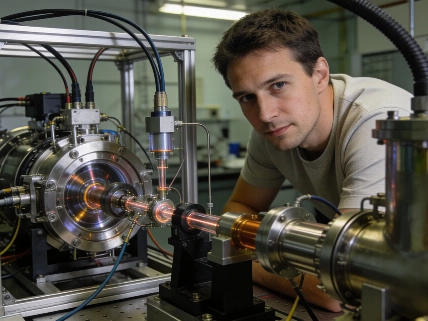
Xanadu, a developer of photonic quantum computing systems, has published a detailed technical roadmap describing its projected path toward large-scale, fault-tolerant quantum computing. The company's plan, presented by its executive team, sets out milestones for hardware performance, error correction, and commercialization through 2031. The roadmap focuses on transitioning from current photonic chip manufacturing to the deployment of networked quantum data centers capable of supporting logical qubits at scale.
Photon Loss and Error Correction
Central to Xanadu's approach is the reduction of photon loss, a dominant error source in photonic quantum computing. The company aims to lower aggregate component photon loss from a factor of 24.1 times above the error-correction threshold in 2026 to the threshold itself by 2030. This reduction is critical for enabling effective quantum error correction, which Xanadu plans to implement using a concatenated scheme: Gottesman-Kitaev-Preskill (GKP) state encoding combined with quantum low-density parity-check (qLDPC) codes. The roadmap projects that logical error rates could improve from 10⁻³-10⁻⁸ at the initial fault-tolerance threshold (expected around 2028-2029) to 10⁻¹⁶ by 2030, provided that photon loss targets are met and error-correction codes perform as anticipated.
Hardware Scaling and Facilities
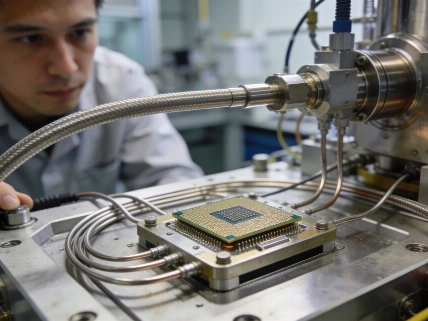
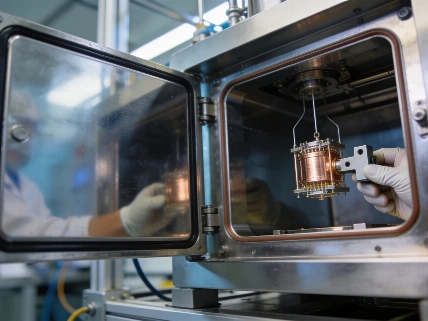
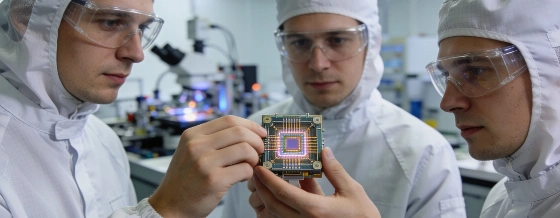
To support these technical goals, Xanadu is constructing a 158,000-square-foot facility in Toronto, named "Inception," which includes 65,000 square feet of cleanroom space for photonic integration, chip packaging, and module assembly. The company's hardware roadmap includes the construction of a dedicated qubit fabrication line between 2026 and 2027, followed by the launch of a quantum data center with up to 200 logical qubits by 2029. The plan then calls for scaling to 500 logical qubits in 2030 and surpassing 1,000 logical qubits by 2031, contingent on continued progress in loss reduction, fabrication, and error correction. Tooling partners for the facility include ASMPT, Bluefors, DISCO, EVG, FiconTEC, and MPI, reflecting the need for advanced photonic and semiconductor manufacturing capabilities.
Software Ecosystem and Commercialization
Alongside hardware development, Xanadu continues to expand its open-source PennyLane software platform, which serves as a hardware-agnostic framework for quantum algorithm development. According to the company, PennyLane has been adopted by 30.8% of surveyed quantum developers in the past year, ranking second globally behind IBM's Qiskit. The platform is used in over 1,890 public code repositories and sees approximately 1.1 million package installs per month, supporting 51 backend devices. PennyLane is integrated into research and development collaborations with more than 150 universities and commercial partners, including Lockheed Martin, Rolls-Royce, Toyota, Volkswagen, AMD, and Mitsubishi Chemical Group. Xanadu identifies four main software revenue streams: enterprise training, applied algorithm research, cloud quantum services, and hardware-driven sales.
Capital Resources and Industry Context
As of June 30, 2026, Xanadu reports a total of approximately US $686 million in available capital, including US $312.8 million in cash and equivalents, a US $140.2 million grant from the Government of Canada, and US $232.8 million in remaining equity facility capacity. The company states that this funding is sufficient to support operations through its near-term milestones, including the planned commercialization of quantum data center services in 2029-2030. Xanadu's roadmap and capital position reflect a broader trend in the quantum industry, where companies are seeking to bridge the gap between laboratory-scale demonstrations and scalable, fault-tolerant systems. For comparison, other quantum hardware developers are also pursuing specialized fabrication and error-correction strategies, as seen in efforts to integrate quantum-resistant cryptography into application-specific silicon, such as those described in recent coverage of post-quantum ASIC development.
While Xanadu's roadmap sets ambitious targets for logical qubit counts and error rates, the realization of these milestones will depend on sustained advances in photonic integration, loss management, error-correction implementation, and large-scale system engineering. The company's projections remain subject to the technical and manufacturing challenges that have historically limited the scalability of quantum hardware platforms.
In quantum computing, a physical qubit is a controllable quantum system-such as a photon, ion, or superconducting circuit-that can encode quantum information. However, physical qubits are highly susceptible to errors from noise, loss, and imperfect control. Logical qubits are constructed by encoding information across multiple physical qubits using quantum error-correcting codes, allowing the system to detect and correct certain errors without destroying the encoded information. Achieving a low logical error rate requires both high-fidelity physical operations and error-correction codes that can handle the dominant error mechanisms, such as photon loss in photonic systems. The transition from a handful of logical qubits to hundreds or thousands is a central challenge for the field, as it demands not only improved device performance but also scalable manufacturing, control, and decoding infrastructure.