UC Berkeley and QuantrolOx have agreed to a five-year collaboration to develop automated, reproducible control and calibration workflows for superconducting quantum processors using machine learning and open-access testbeds
The University of California, Berkeley has entered a five-year partnership with QuantrolOx, a developer of quantum automation software, to address persistent engineering barriers in scaling superconducting quantum computers. The agreement, effective from July 2026, establishes a framework for integrating UC Berkeley's open-access superconducting qubit testbeds with QuantrolOx's machine-learning-driven Quantum EDGE software suite. The collaboration aims to move quantum hardware operations beyond manual laboratory procedures toward automated, standardized workflows that can be reproduced across devices and sites.
Superconducting Qubit Testbeds
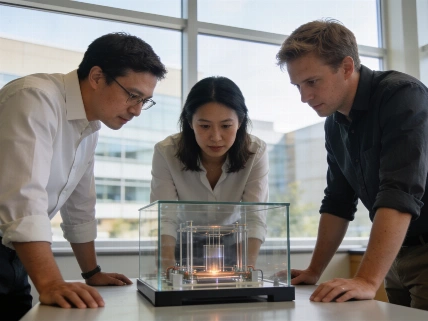
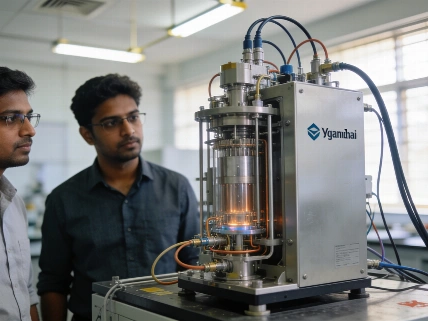
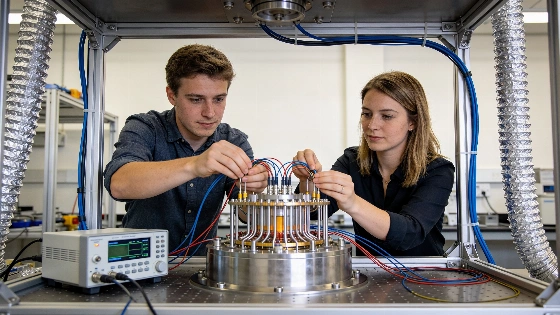
UC Berkeley's Department of Physics and the Roger Herst Quantum Nexus will provide physical testbeds based on superconducting qubits-quantum bits realized in circuits cooled to millikelvin temperatures. These testbeds are designed for open, "white-box" access, allowing researchers and industry engineers to directly evaluate device performance, calibration, and control under realistic laboratory conditions. The partnership will use these platforms to validate commercial calibration, measurement, and control software in hardware, rather than relying solely on simulation or isolated device tests.
Automated Control and Calibration
QuantrolOx's Quantum EDGE software suite applies machine learning and agent-based artificial intelligence to automate the calibration and operation of quantum processors. The collaboration will focus on integrating end-to-end workflow automation, including materials research, quantum Process Design Kits (PDKs), Electronic Design Automation (EDA), quantum processing unit (QPU) packaging, quality assurance, and failure analysis. By unifying these steps in a single data architecture, the project seeks to reduce manual intervention, minimize calibration drift, and improve reproducibility across different hardware generations.
Technical and Educational Objectives
The initiative targets five main domains: workflow automation, integrated quantum control architecture, physics-aware AI calibration, workforce development, and scientific community convenings. In addition to technical integration, the partnership will expand experimental training for hardware engineers through QuantrolOx's Quantum EDGE Academy and the VIDYAQAR open-architecture test platforms. The Roger Herst Quantum Nexus will serve as a shared innovation space, hosting joint seminars, technical workshops, and reciprocal researcher visits to foster collaboration between academic and industrial teams.
Addressing Bottlenecks in Quantum Hardware
One of the central challenges in scaling superconducting quantum computers is the transition from bespoke laboratory setups to automated, production-ready systems. Manual calibration and device variability remain significant obstacles to reproducibility and commercial deployment. By validating software-driven calibration and control directly on physical processors, the partnership aims to establish standardized data pipelines and runtime environments. This approach is intended to address operational bottlenecks such as crosstalk compensation, parallelized pulse execution, and real-time qubit characterization. Similar efforts to integrate quantum hardware and networking infrastructure have been reported elsewhere, such as the deployment of trapped-ion and photonic nodes on regional quantum networks described in recent coverage of EPB's quantum network initiative.
While the agreement sets out a non-binding framework, the technical roadmap depends on successful integration of machine learning with hardware-level control and the ability to generalize calibration routines across device types. The collaboration does not guarantee commercial deployment but represents a step toward addressing reproducibility and automation-key requirements for practical quantum computing at scale.
Superconducting qubits are quantum bits implemented in circuits made from superconducting materials, typically aluminum or niobium, cooled to temperatures near absolute zero. These devices exploit quantum effects such as superposition and entanglement, but their performance is limited by decoherence, noise, and calibration drift. Automated calibration uses algorithms to tune device parameters, compensate for crosstalk, and maintain high-fidelity operation over time. Achieving reproducible, automated control is essential for scaling quantum processors beyond laboratory prototypes and toward systems capable of running useful algorithms reliably.