Four quantum technology ventures have signed agreements to establish operational bases, R&D centers, and control system manufacturing in Tamil Nadu, aiming to expand the region's quantum hardware and software capabilities
The Government of Tamil Nadu has formalized agreements with four quantum technology companies to establish new operational and research centers across the state, marking a coordinated effort to strengthen India's regional quantum hardware and software infrastructure. The announcements were made during the Vetri Tamil Nadu Investment Conclave 2026 in Chennai, where the state outlined its ambition to become a significant contributor to quantum research and manufacturing.
Superconducting and Hybrid Quantum Systems
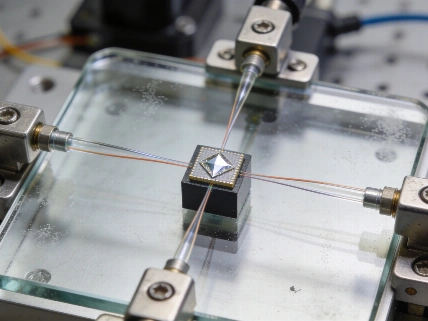
Among the projects, Quantum Integrated Machines will set up a major operational hub in Chengalpet, focusing on superconducting quantum processing unit (QPU) hardware. The company plans to collaborate with the Indira Gandhi Centre for Atomic Research (IGCAR) to advance device fabrication and experimental research on superconducting qubits. This partnership is expected to address challenges in coherence, control, and device reproducibility, which remain central obstacles for scaling up superconducting quantum processors.
TriQuanta Labs, which already operates in Hyderabad and Amaravathi, will expand into Chennai with a new engineering and R&D center. The facility will target hybrid quantum-classical software stacks and hardware orchestration, reflecting the growing need for integrated systems that combine quantum processors with classical control and error mitigation. The expansion is intended to support both algorithm development and hardware-software co-design, a critical area for near-term quantum applications.
Control Electronics and Semiconductor Integration
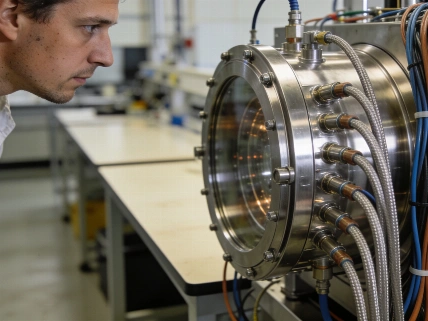
Quntrolsphere, a Chennai-based venture, will focus on the design and manufacture of precision control electronics, cryogenic hardware, and signal-processing systems for quantum computing and communication. Reliable control electronics are essential for operating quantum devices at millikelvin temperatures, where noise and signal integrity directly affect qubit fidelity and measurement accuracy. The company's plans include developing instrumentation compatible with both superconducting and semiconductor-based quantum platforms.
In parallel, Aheesa Digital Innovations has committed to a ₹250 crore (approximately $30 million USD) investment in a chip-design facility in Chennai. The facility will manufacture indigenous networking silicon, supporting both quantum and advanced classical computing infrastructure. This aligns with broader state efforts to localize semiconductor supply chains and reduce dependence on imported components for critical technologies.
Investment Scale and Policy Context
The quantum agreements are part of a larger investment initiative announced at the conclave, where Chief Minister C. Joseph Vijay reported the signing of 97 Memoranda of Understanding (MoUs) totaling over ₹67,000 crore (about $8.0 billion USD). These commitments span space technology, data centers, semiconductors, and quantum engineering, reflecting a policy emphasis on high-technology sectors. While the quantum projects are at an early stage, the state's approach mirrors national and international trends in building quantum ecosystems through public-private partnerships and targeted infrastructure investment.
Efforts to expand quantum education and workforce capacity are also underway in other regions. For example, a recent initiative in Andhra Pradesh saw a cloud-based quantum computing platform integrated into a college curriculum, as described in this report on quantum education partnerships. Such programs highlight the importance of skills development alongside hardware and research investment.
Technical and Engineering Challenges
Despite the scale of announced investments, significant technical hurdles remain before quantum hardware developed in Tamil Nadu can contribute to practical quantum computing or communication. Superconducting QPUs require stable operation at cryogenic temperatures, with coherence times and gate fidelities that must improve to support error correction and scalable computation. Control electronics must minimize noise and crosstalk, while semiconductor integration demands high-yield fabrication and robust device packaging. The success of these initiatives will depend on sustained engineering progress, reproducible device performance, and the ability to integrate quantum and classical systems at scale.
At present, no detailed technical specifications, device counts, or performance benchmarks have been released for the planned facilities. The timeline for operational deployment and independent verification of hardware remains uncertain. As with other national quantum programs, the transition from laboratory prototypes to useful, error-corrected quantum processors is likely to require years of coordinated research, engineering, and workforce development.
Quantum computing hardware relies on the precise control and measurement of quantum states, typically encoded in physical qubits such as superconducting circuits or semiconductor spins. Achieving useful computation requires not only increasing the number of controllable qubits but also improving their coherence times, gate fidelities, and error rates. Error correction schemes encode logical qubits across multiple physical qubits to detect and correct errors, but this introduces significant overhead and engineering complexity. The development of reliable control electronics, cryogenic infrastructure, and scalable fabrication processes is essential for moving from laboratory demonstrations to practical quantum systems. Progress in these areas will determine how quickly regional investments translate into operational quantum technologies.