BLOQ Quantum and Srirama Engineering College have agreed to integrate a cloud-based quantum computing platform into the college's curriculum, aiming to expand quantum software skills and research capacity in Andhra Pradesh
BLOQ Quantum Pvt Ltd, a quantum technology developer based in Kerala, has signed an agreement with Srirama Engineering College in Tirupati, Andhra Pradesh, to introduce a dedicated quantum computing education and research program. This partnership is the first of its kind in the Tirupati region and is designed to provide engineering students and faculty with direct access to quantum software tools, practical training, and research opportunities using BLOQ Quantum's cloud-based platform.
Cloud Platform Integration
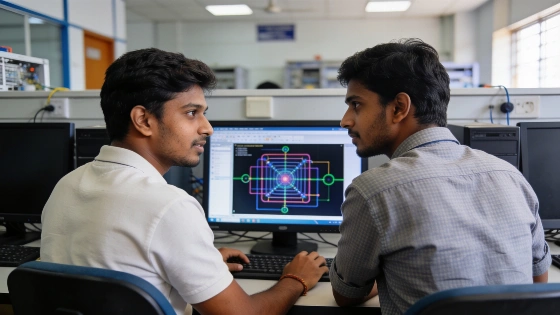
Under the agreement, Srirama Engineering College will incorporate the BLOQ Quantum Computing Platform into its teaching and research activities. The platform offers hands-on experience in quantum circuit programming, algorithm design, and simulation, with a particular emphasis on quantum machine learning (QML) applications. Students and faculty will be able to construct and test quantum circuits, explore algorithmic design, and simulate quantum processes in a controlled environment, supporting both coursework and independent research projects.
Technical Training and Research
The collaboration includes a framework for joint academic research, technical workshops, and workforce training in quantum technologies. Key elements of the program involve applied QML, practical quantum circuit workflows, and exposure to quantum algorithm development. The agreement also outlines plans for joint patent activity and industry-oriented publications, aiming to build a regional talent pool with skills relevant to emerging quantum industries. The initiative is led by Sreekuttan L S, CEO of BLOQ Quantum, alongside Srirama Engineering College's leadership, including Chairman Mannem Ramireddy and Principal Dr. K. Jayachandra.
National Context and Regional Impact
This institutional partnership aligns with India's National Quantum Mission (NQM), which seeks to expand quantum education and technical expertise beyond major metropolitan centers. By focusing on tier-2 and tier-3 academic hubs, the program aims to address the shortage of quantum-trained professionals and support the development of a broader quantum ecosystem in India. The integration of cloud-based quantum platforms into undergraduate and postgraduate curricula is intended to lower barriers to entry for students who may not have access to advanced laboratory hardware.
Comparison with Other Regional Initiatives
The BLOQ Quantum-Srirama Engineering College partnership follows a broader trend of regional quantum education and innovation efforts in India. For example, a recent initiative involving the Ratan Tata Innovation Hub, WISER, and QISE is working to expand quantum research and startup activity across Andhra Pradesh, as described in a recent Science Report article. These efforts collectively reflect a shift toward distributed quantum capacity-building, with an emphasis on workforce development and integration with national research priorities.
Quantum computing education typically involves both theoretical instruction and practical experience with quantum software platforms. Physical quantum computers remain limited in availability and scale, so most training relies on cloud-based simulators that allow users to design and test quantum circuits without direct access to hardware. These platforms can model the behavior of a small number of qubits, enabling students to explore quantum algorithms, error sources, and circuit design. However, simulation is constrained by classical computational resources, and real-world quantum hardware introduces additional challenges such as noise, decoherence, and calibration drift. As a result, cloud-based education provides foundational skills but does not fully replicate the complexities of operating or engineering physical quantum devices.