A new analysis suggests certain bacteria and fungi from Earth may persist in cryptobiotic states on the lunar surface, especially in shadowed polar regions, raising questions for future crewed missions and planetary protection
New research indicates that a handful of hardy terrestrial microbes could potentially survive on the Moon's surface, at least in a dormant state, if shielded from the harshest solar radiation. The findings, published in Science Advances, highlight the resilience of specific bacteria and fungi commonly associated with human spaceflight and raise new considerations for planetary protection as lunar exploration accelerates.
Microbial Survivability in Lunar Environments
Previous studies have generally concluded that the Moon's surface is inhospitable to life, with intense ultraviolet (UV) radiation and extreme temperature swings posing major threats to microbial survival. However, the latest analysis revisited this assumption by comparing laboratory data on the resistance of three bacterial and two fungal species-organisms frequently detected on crewed spacecraft-to detailed maps of lunar surface conditions. The researchers focused on the Moon's polar regions, where sunlight remains low on the horizon and permanently shadowed areas can trap water ice and reduce UV exposure.
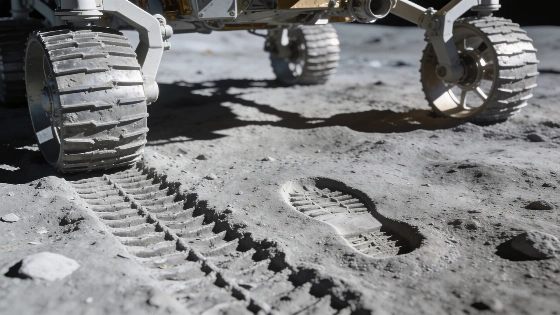
By overlaying microbial survivability data with lunar UV and thermal maps, the team identified specific locations near both lunar poles where environmental conditions could allow microbes to persist in a cryptobiotic state. In this dormant phase, the organisms would not grow or reproduce but could potentially reactivate if exposed to more favorable conditions. The study suggests that even minimal shielding-such as a bootprint, rover track, or shallow depression-might be sufficient to create a microhabitat where some microbes could endure for extended periods.
Implications for Lunar Exploration and Planetary Protection
The prospect that terrestrial microbes could survive on the Moon has direct implications for upcoming missions, including NASA's Artemis III, which aims to land astronauts near the lunar south pole. As human activity on the Moon increases, so does the risk of unintentionally introducing Earth life to lunar environments. The study's authors emphasize the need for careful consideration of contamination risks, especially in regions where water ice and other volatiles may be present.
Planetary protection protocols are designed to prevent biological contamination of other worlds, both to preserve their scientific value and to avoid interfering with potential indigenous processes. The new findings suggest that even routine surface operations-such as walking, driving, or deploying equipment-could inadvertently create protected niches for microbial survival. This raises questions about how best to balance exploration goals with the responsibility to minimize biological impact.
Ancient Impacts and the Moon as a Biological Archive
Beyond the risk of modern contamination, the study also considers the possibility that ancient impacts may have delivered Earth rocks containing microbes to the Moon over geological timescales. If so, the lunar poles could serve as a kind of deep freeze, preserving fragments of Earth's biological history in a stable, low-temperature environment. This idea echoes recent efforts to map the Moon's surface in detail, such as the release of a comprehensive lunar geologic map by Chinese researchers, which provides new context for understanding the distribution of potential microhabitats (see related coverage).
Future experiments are expected to test the survivability of a broader range of microbes under simulated lunar conditions, and upcoming missions may include dedicated payloads to monitor biological persistence on the Moon. For now, the evidence supports the view that the Moon is not entirely sterile and that its most sheltered regions could preserve traces of life-whether delivered by astronauts, robotic explorers, or ancient planetary collisions.
Limits and Uncertainties
While the study identifies plausible scenarios for microbial persistence, it does not demonstrate active growth or reproduction of any organism on the Moon. The analysis relies on laboratory measurements of microbial resistance and remote sensing data of lunar surface conditions, rather than direct in situ experiments. The actual duration of microbial survival, the likelihood of reactivation, and the potential for biological activity remain open questions. Further, the diversity of microbial species and the complexity of lunar microenvironments mean that the true risk of contamination is difficult to quantify without additional targeted research.
As lunar exploration enters a new phase, the challenge will be to refine planetary protection strategies in light of evolving evidence, balancing scientific opportunity with the need to preserve the Moon's unique environment for future study.
Cryptobiosis is a physiological state in which an organism's metabolic processes are reduced to an undetectable level, allowing it to survive extreme environmental stress such as desiccation, freezing, or radiation. Many bacteria and fungi can enter cryptobiosis in response to harsh conditions, resuming normal activity only when the environment becomes more favorable. On the Moon, cryptobiotic survival would require protection from intense UV radiation and extreme temperature fluctuations, conditions that may be met in permanently shadowed regions or beneath surface features that provide even minimal shielding. Understanding cryptobiosis is central to assessing the true limits of life in space and the risks associated with planetary contamination.