A Falcon 9 rocket is set to deploy three AST SpaceMobile BlueBird satellites from Cape Canaveral, expanding a low Earth orbit constellation designed to deliver broadband directly to standard smartphones.
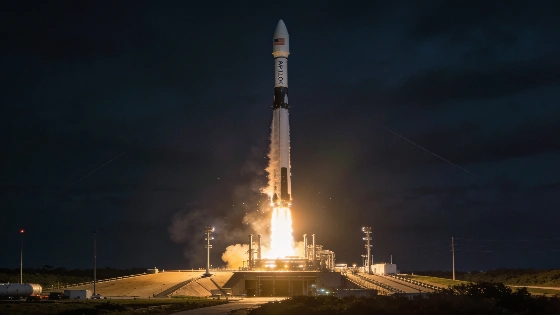
SpaceX is preparing to launch three BlueBird satellites for AST SpaceMobile, marking a significant step in the deployment of a commercial direct-to-cell network in low Earth orbit. The mission, scheduled for early August 5, will use a Falcon 9 rocket to deliver the satellites from Cape Canaveral Space Force Station, Florida, into their operational orbit. This launch continues the expansion of a constellation intended to provide broadband connectivity directly to unmodified mobile devices, bypassing the need for ground-based cell towers.
Mission Overview
The Falcon 9 launch window opens at 3:42 a.m. EDT (07:42 GMT) and extends for 96 minutes. The rocket will carry BlueBird satellites 11, 12, and 13, each designed to operate in low Earth orbit (LEO). The first stage of the Falcon 9 is expected to return to Earth approximately 8.5 minutes after liftoff, aiming for a landing on the drone ship "A Shortfall of Gravitas" in the Atlantic Ocean. According to SpaceX, this will be the 30th flight for this particular booster, which previously supported the BlueBird 8-10 mission in June 2026.
Deployment of the three satellites is planned to occur over an 11-minute period, beginning 53.5 minutes after launch. The satellites will join an existing group of ten BlueBird spacecraft, with the most recent trio launched on June 17, 2026. The addition of these next-generation satellites is expected to nearly double the number of advanced BlueBirds in orbit, following the loss of BlueBird 7 earlier in the year due to a launch anomaly.
Satellite Design and Capabilities
AST SpaceMobile's BlueBird satellites are engineered to deliver broadband internet directly to standard smartphones without hardware modification. The initial "Block 1" satellites feature communications arrays that, when deployed, span 64.4 square meters. The newer, next-generation BlueBirds-beginning with BlueBird 6, launched in December 2025-are equipped with antennas covering 223 square meters, significantly increasing their communication capacity.
Currently, four next-generation BlueBirds (numbers 6, 8, 9, and 10) are operational in LEO. The new satellites are designed to provide nearly double the peak download speeds of the earlier Block 1 models, which have demonstrated rates up to 98.9 megabits per second to standard smartphones. The company aims to initiate beta services for space-based cellular broadband later in 2026, contingent on successful deployment and commissioning of the new satellites.
Network Expansion and Scientific Context
The BlueBird constellation is part of a broader trend toward commercial satellite networks capable of delivering direct-to-device connectivity. Unlike traditional satellite communications, which often require specialized terminals, the BlueBird system targets unmodified consumer smartphones. This approach could extend coverage to remote or underserved regions where terrestrial infrastructure is limited or absent.
As the constellation grows, AST SpaceMobile faces technical challenges related to satellite deployment, orbital management, and spectrum coordination. The company's progress is being closely watched by both the telecommunications and space science communities, as it may influence future standards for satellite-based mobile networks. For readers interested in the broader context of Falcon 9 missions and their varied outcomes, a detailed account of a Falcon 9 upper stage's trajectory toward the Moon can be found in this related analysis of orbital dynamics.
Deployment Timeline and Remaining Uncertainties
Following launch, the Falcon 9 upper stage will release the BlueBird satellites into their designated orbits over an 11-minute sequence. Each satellite must then complete a commissioning phase, including deployment of its large antenna array and verification of communication systems. Only after these steps will the satellites be able to contribute to the operational network.
While the launch and initial deployment are critical milestones, the ultimate success of the mission depends on the satellites' ability to achieve stable orbits, maintain reliable communication links, and integrate with the existing constellation. Technical setbacks, such as the earlier loss of BlueBird 7, highlight the risks inherent in deploying large, complex spacecraft in LEO. The company has not yet published independent performance data for the new satellites, and the timeline for full commercial service remains subject to operational testing and regulatory approval.
Understanding the process of orbital insertion is essential for interpreting satellite mission outcomes. After a launch vehicle places a payload into a preliminary orbit, the spacecraft must execute a series of maneuvers to reach its intended operational path. This phase includes precise timing, attitude control, and deployment of critical systems such as antennas or solar arrays. Successful orbital insertion and commissioning are prerequisites for any satellite to begin routine science or commercial operations, and delays or anomalies at this stage can significantly affect mission objectives.