SpaceX has retrieved the Starship upper stage from the Indian Ocean following its Flight 13 test, enabling engineers to examine the vehicle's heat shield and structural integrity after a rare intact splashdown
SpaceX has successfully recovered the upper stage of its Starship launch system from the Indian Ocean, more than a month after the vehicle completed its thirteenth test flight and achieved a controlled splashdown. The retrieval marks the first time a Starship upper stage has survived reentry and ocean landing intact, offering engineers a unique opportunity to study the effects of atmospheric reentry on the spacecraft's heat shield and structure.
Flight 13 and the Splashdown
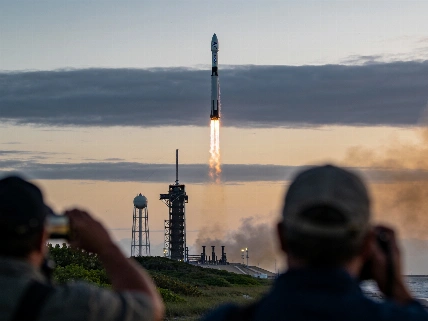
On July 24, 2026, Starship Flight 13 launched from SpaceX's Starbase facility in South Texas. The mission sent the 52-meter-tall upper stage, known as Ship, on a suborbital trajectory lasting approximately one hour. During the flight, Ship deployed 20 Starlink Version 3 satellites as planned and successfully reignited one of its six Raptor engines in space. The vehicle then executed a controlled descent, culminating in a soft splashdown in the Indian Ocean, northwest of Australia's coast. Unlike previous Starship flights, which ended with the upper stage breaking apart during reentry or shortly after impact, Flight 13's Ship remained afloat and structurally intact.
Recovery Operations and Engineering Analysis
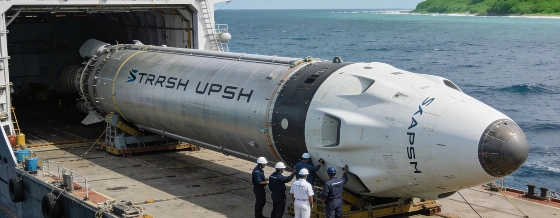
Following the splashdown, SpaceX initiated a complex recovery operation to tow the floating Ship to Christmas Island, an Australian territory located about 1,900 kilometers from the nearest major city. The effort faced significant challenges, including rough seas and logistical constraints, leading to initial doubts about the feasibility of retrieval. However, after several weeks, the vehicle was brought alongside a semi-submersible recovery vessel, which lifted Ship onto its deck for transport. SpaceX engineers conducted preliminary inspections and collected heat shield samples while the vehicle remained at sea, gathering data to inform future design improvements.
Implications for Starship Reusability
The intact recovery of Ship provides SpaceX with direct physical evidence of how the Starship heat shield and structural components withstand the stresses of atmospheric reentry and ocean impact. This information is critical for advancing the Starship program's goal of developing a fully and rapidly reusable launch system. Engineers will continue their analysis once the vehicle arrives back at Starbase in Texas, a journey expected to take several months. The lessons learned from Flight 13's recovery are expected to influence modifications to future Starship vehicles, particularly in heat shield design and recovery procedures.
Context in Commercial Spaceflight
The Starship program's progress is being closely watched by the spaceflight community, as successful reusability could significantly reduce launch costs and enable more ambitious missions. The retrieval of Ship follows a series of incremental advances in commercial launch operations, including the use of real-time satellite weather data to optimize mission outcomes, as demonstrated by a recent Mediterranean eclipse cruise that relied on satellite guidance to secure clear skies for astronomical observation (see related coverage). Each operational milestone contributes to a broader understanding of how engineering, environmental, and logistical factors shape the future of space access.
Understanding the process of spacecraft recovery is essential for evaluating the prospects of reusable launch systems. After a controlled splashdown, recovery teams must locate, secure, and transport the vehicle under challenging oceanic conditions. Semi-submersible vessels are often used to lift heavy payloads from the water, minimizing structural stress during retrieval. The ability to inspect hardware that has survived reentry and splashdown provides engineers with direct feedback on material performance, thermal protection, and structural resilience-key factors in the iterative development of next-generation spacecraft.