SEEQC and Taiwan's Quantum Industry Technology Promotion Office have formalized a cross-border partnership to develop and manufacture cryogenic quantum control chips, aiming to integrate U.S. digital quantum IP with Taiwan's advanced semiconductor foundries
SEEQC's latest move to anchor its quantum hardware ambitions in Taiwan's semiconductor ecosystem signals a calculated escalation in the global race to industrialize quantum computing. By signing a Memorandum of Understanding with the Quantum Industry Technology Promotion Office (QITPO) under Taiwan's Ministry of Economic Affairs, SEEQC is betting that the island's foundry infrastructure can deliver the cryogenic integration and packaging capabilities that U.S. quantum startups have struggled to scale domestically.
Engineering Cryogenic Integration
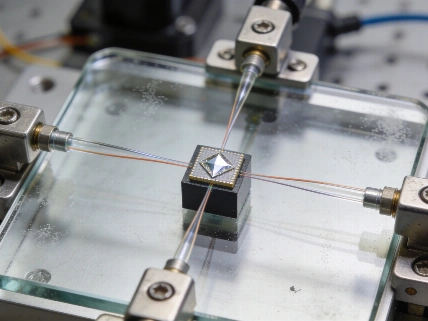
The technical challenge at the heart of this partnership is not simply building more qubits, but embedding digital control and readout electronics directly onto chips operating at temperatures below 1 kelvin. SEEQC's architecture relies on Single Flux Quantum (SFQ) digital circuits and cryogenic CMOS (complementary metal-oxide-semiconductor) interfaces, both of which must function reliably at 4 kelvin or below. This requires fabrication processes and packaging methods that are rare even among leading semiconductor manufacturers.
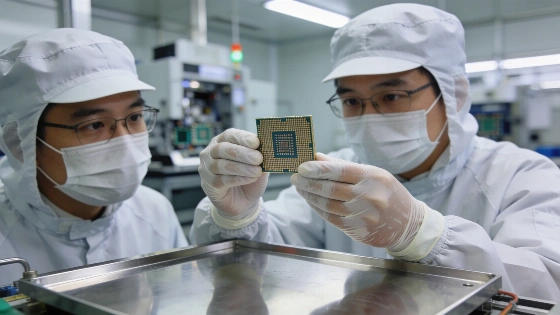
According to the agreement, SEEQC will transfer its U.S.-developed intellectual property for SFQ and cryo-CMOS circuits to Taiwanese foundries capable of sub-10 kelvin chip production. The collaboration aims to leverage Taiwan's expertise in 3D heterogeneous integration and high-density interconnects, enabling the assembly of superconducting quantum processing units (QPUs) with digital control layers in a single cryogenic package. The goal is to reduce the wiring complexity and thermal load that currently limit the scale and reliability of superconducting quantum systems.
Supply Chain Formalization
Unlike previous ad hoc collaborations, this framework is designed to standardize the supply chain for quantum hardware spanning both room-temperature and cryogenic domains. SEEQC's existing relationships with regional suppliers of control electronics will be expanded to include advanced packaging and millikelvin validation, with QITPO coordinating access to Taiwan's academic and industrial foundry network. The agreement was signed at SEMICON Taiwan 2026, shortly after the formal launch of QITPO in April, and is positioned as a cornerstone of Taiwan's national quantum hardware initiative.
While the partnership is still at the memorandum stage, the technical roadmap includes joint development, testing, and commercialization of quantum processing units and application-specific integrated circuits (ASICs) for scalable, fault-tolerant quantum architectures. The parties have not disclosed specific device counts, gate fidelities, or error rates, and no peer-reviewed hardware results have been released. However, the focus on sub-10 kelvin operation and digital SFQ control reflects a shift from laboratory demonstration to manufacturable systems-a transition that has stalled many quantum hardware efforts elsewhere.
Technical and Policy Stakes
SEEQC's strategy mirrors a broader trend of quantum hardware developers seeking to bridge the gap between research prototypes and industrial-scale fabrication. Taiwan's foundry sector, already dominant in classical semiconductor manufacturing, is now being positioned as a global hub for cryogenic quantum components. The QITPO partnership is intended to align with national policy goals of securing a domestic quantum supply chain and attracting international quantum technology investment.
For context, similar efforts to address quantum hardware bottlenecks have emerged in other regions, such as Japan's recent push to develop high-speed optical modules for neutral-atom processors, as reported earlier. The critical difference in the SEEQC-QITPO approach is the explicit focus on integrating digital control at cryogenic temperatures, a step that could determine whether superconducting quantum processors can move beyond laboratory-scale demonstrations.
Unresolved Engineering Barriers
Despite the formalization of this cross-border framework, the technical and commercial risks remain substantial. Manufacturing digital and analog circuits that operate reliably at millikelvin temperatures is a nontrivial engineering problem, with device yield, calibration drift, and thermal management all presenting unresolved obstacles. The absence of published device metrics or independent benchmarking means that the practical impact of this partnership will depend on future hardware results, not policy announcements or supply-chain diagrams.
SEEQC and QITPO have set an ambitious agenda, but the transition from prototype to scalable quantum hardware has repeatedly exposed the limits of both laboratory ingenuity and industrial process control. Until reproducible, high-fidelity devices are demonstrated at scale, the promise of a standardized quantum supply chain remains an aspiration rather than an established fact. The real test will be whether Taiwan's foundries can deliver the process stability and integration quality that quantum error correction and fault tolerance demand-requirements that have so far eluded even the most well-funded quantum hardware teams.
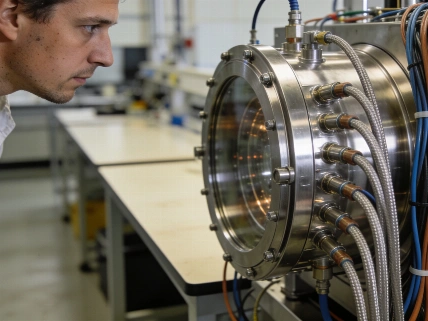
Superconducting quantum processors operate at temperatures near absolute zero, typically below 20 millikelvin, to maintain quantum coherence and suppress thermal noise. Integrating digital control electronics at these temperatures is essential for scaling up qubit numbers, as conventional room-temperature wiring introduces heat and signal loss that limit system size. Single Flux Quantum (SFQ) circuits use quantized magnetic flux to represent digital bits, enabling ultrafast, low-power control compatible with cryogenic operation. However, fabricating and packaging these hybrid chips requires specialized processes and materials, and even minor variations in device yield or thermal performance can undermine system reliability. The transition from laboratory demonstration to manufacturable quantum hardware depends on solving these integration and reproducibility challenges at scale.