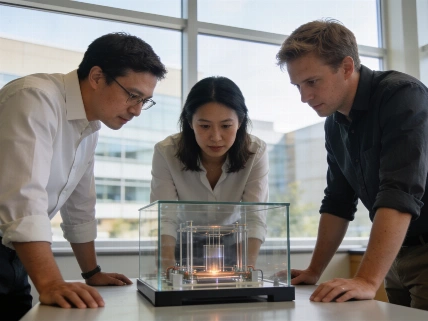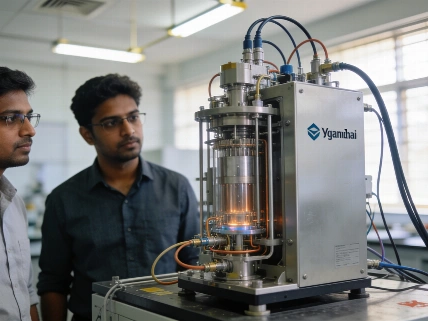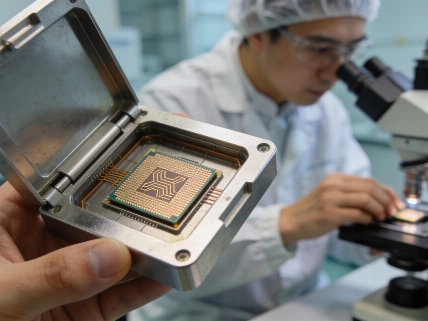
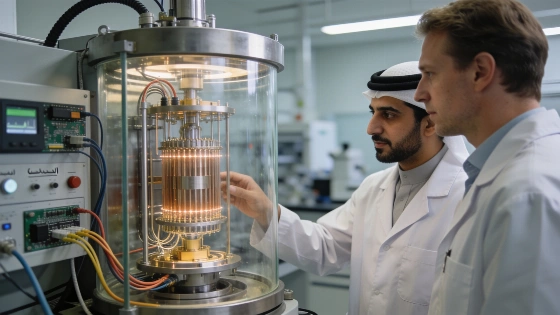
Pasqal and KACST have launched a multi-year research program in Saudi Arabia to test quantum hardware for post-quantum cryptography, integrating neutral-atom processors with national infrastructure and focusing on quantum-secure key generation and algorithm validation
Pasqal, a developer of neutral-atom quantum processors, and Saudi Arabia's King Abdulaziz City for Science and Technology (KACST) have formalized a multi-year research collaboration aimed at advancing quantum technology research and post-quantum cryptography (PQC) readiness across the Kingdom. The agreement, executed through KACST's National Center for Quantum Technologies (NCQT), will combine Pasqal's quantum hardware and cloud-access platform with Saudi Arabia's national research infrastructure, including integration with the Aramco Quantum Compute Hub in Dhahran and KACST's central facilities in Riyadh.
Quantum Hardware and Cryptography Integration
The collaboration is structured to address three main technical areas: post-quantum cryptography, quantum-secure key generation, and the development of cross-domain quantum algorithms. The research program will focus on designing, testing, and packaging cryptographic algorithms that are resistant to quantum-enabled decryption attacks. This includes the generation of cryptographic keys suitable for both classical and quantum computing environments, with key management and validation taking place at the NCQT facility in Riyadh. The partnership aims to connect Saudi researchers directly to Pasqal's neutral-atom quantum processors and cloud execution pipelines, enabling hands-on experimentation with quantum hardware for cryptographic applications.
National Infrastructure and Commercial Pathways
Saudi Arabia's national quantum infrastructure will play a central role in the project, with the NCQT and KACST's R&D facilities providing the physical and technical foundation for hardware integration and algorithm testing. The collaboration also includes plans for a joint venture with Eleven Ventures to develop enterprise PQC solutions tailored to the Saudi market, aligning with the country's Vision 2030 strategy for deep technology commercialization. The program builds on previous regional deployments, such as the installation of a neutral-atom quantum computer at Saudi Aramco's Dhahran data center, and is intended to support the expansion of quantum research and commercialization across the Middle East and North Africa (MENA) region.
Technical Evidence and Remaining Challenges
As quantum hardware platforms progress toward higher qubit counts and improved error rates, the urgency for quantum-resistant cryptographic solutions is increasing for critical infrastructure, financial institutions, and government networks. The research program will evaluate the performance of candidate PQC algorithms on Pasqal's neutral-atom hardware, but the current generation of devices remains in the noisy intermediate-scale quantum (NISQ) regime, with error rates and coherence times that limit the depth and reliability of implemented circuits. While the collaboration is positioned to accelerate the validation of PQC schemes, the transition to fault-tolerant quantum computing-required for large-scale cryptanalysis-remains a significant engineering challenge. The program's outcomes will depend on the ability to benchmark algorithm performance, manage noise, and integrate quantum and classical cryptographic workflows within Saudi Arabia's research infrastructure.
Regional Context and Related Initiatives
The agreement was announced in Riyadh at the King Salman Science Oasis, coinciding with the LEAP 2026 technology conference. The initiative is part of a broader effort to convert academic quantum research into commercial offerings for the Middle Eastern market, in line with Saudi Arabia's Vision 2030 objectives. The regional push for post-quantum security is not unique to Saudi Arabia; similar efforts are underway internationally, including hardware-based PQC deployments for defense networks as described in recent coverage of UK and Five Eyes infrastructure upgrades. The Saudi program distinguishes itself by integrating neutral-atom quantum hardware directly into national research and enterprise environments, providing a testbed for both cryptographic research and workforce development.
Understanding the distinction between quantum and post-quantum cryptography is essential in this context. Post-quantum cryptography refers to classical cryptographic algorithms designed to resist attacks from future fault-tolerant quantum computers, while quantum cryptography leverages quantum phenomena such as entanglement and superposition for secure communication. Current PQC algorithms can be implemented on conventional hardware, but their security assumptions are based on mathematical problems believed to be hard for both classical and quantum computers. The transition to quantum-resistant infrastructure requires not only algorithm selection and standardization, but also careful integration, performance benchmarking, and ongoing evaluation as quantum hardware capabilities evolve.