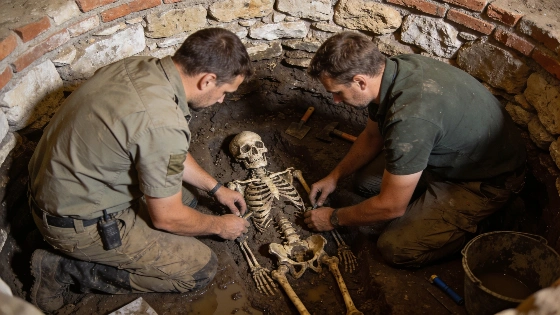
Archaeologists have examined 43 skeletons from a Roman-period well in Osijek, Croatia. The absence of trauma suggests these individuals may have died during a third-century epidemic, offering new insight into ancient disease and burial practices.
Archaeological analysis of a mass burial in Osijek, eastern Croatia, has identified the remains of at least 43 individuals deposited in a Roman-era well. The site, excavated in 2008 near the ancient necropolis of Mursa, presents a rare opportunity to investigate the demographic and health impacts of epidemic disease in the Roman Empire's provinces during the third century CE.
Excavation and Context
The well, located adjacent to the Roman necropolis, was originally constructed during the city's occupation as Mursa, a military and administrative center founded in the second century CE. Archaeologists recovered the commingled remains of adults and children of both estimated sexes, with no evidence of major skeletal trauma or perimortem injury. This contrasts with previous discoveries at the site, where two other wells contained the remains of young males exhibiting violent injuries consistent with battle-related deaths, likely associated with the Battle of Mursa in 260 CE.
In the current burial, the demographic profile includes both adults and children, suggesting a cross-section of the civilian population rather than a group of combatants. The absence of weapon injuries or defensive wounds, combined with the hasty deposition in a disused well, points toward a rapid mortality event rather than organized funerary treatment.
Evidence for Epidemic Mortality
Bioarchaeological examination revealed that the skeletons displayed only non-lethal conditions such as osteoarthritis and dental caries, with a few possible cases of tuberculosis and scurvy. No direct skeletal evidence of infectious disease was observed, but the lack of trauma and the mixed age and sex profile are consistent with mass mortality from an epidemic. Historical sources document the Plague of Cyprian, a major epidemic that affected the Roman Empire in the mid-third century CE, including military populations along the Danube. While the precise pathogen remains unidentified, hemorrhagic fever and smallpox have been proposed as possible causes.
At least 43 individuals were recovered from the well, representing a minimum number of persons based on the commingled remains. The sample includes both adults and children, with preservation sufficient for osteological and paleopathological assessment. The context of rapid, non-funerary deposition in a reused well aligns with emergency responses to epidemic outbreaks documented in other Roman contexts.
Interpretation and Ongoing Research
The working hypothesis advanced by the research team is that the individuals were victims of a sudden epidemic, possibly the Plague of Cyprian, rather than casualties of violence or organized execution. DNA analysis is underway to clarify the population origins of the deceased and to search for molecular evidence of infectious pathogens. These results may help determine whether the individuals were local residents or included conscripted soldiers from other regions of the Roman Empire.
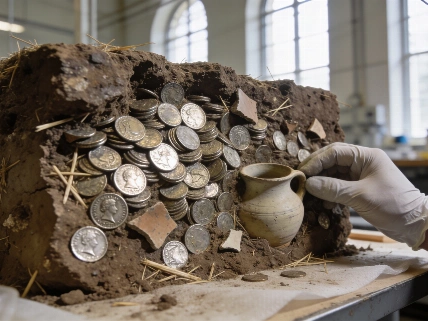
Comparative studies of mass burials from epidemic contexts are increasingly important for understanding the social and health consequences of ancient pandemics. Recent discoveries elsewhere in the Mediterranean, such as the recovery of a Classical-period skeleton and associated coins near Aspendos, Turkey, have also highlighted the diversity of mortuary responses to crisis events (Classical-period burial and coin finds in Turkey).
Limitations and Uncertainties
Despite the suggestive demographic and contextual evidence, the absence of direct skeletal markers for acute infectious disease limits the certainty of diagnosis. Many epidemic pathogens do not leave identifiable traces on bone, especially when death occurs rapidly. The lack of grave goods and the use of a well for deposition further complicate interpretation, as these practices may reflect both emergency conditions and local mortuary customs. The research remains preliminary, with full results pending publication and completion of genetic and biomolecular analyses.
Ethical considerations are central to the study of mass burials, particularly when destructive sampling for DNA or pathogen analysis is proposed. The research team has indicated that further contextualization and consultation will be necessary as the investigation proceeds.
Understanding the diagnosis of epidemic disease in archaeological populations requires careful distinction between direct and indirect evidence. Most infectious diseases, especially those causing rapid death, do not produce skeletal lesions visible to the naked eye. Bioarchaeologists rely on demographic patterns, burial context, and, increasingly, ancient DNA and pathogen biomarker analysis to infer the presence of epidemic events. The absence of trauma and the inclusion of all age groups in a single deposit are important clues, but definitive identification of a specific disease agent depends on molecular evidence, which is often limited by preservation and contamination challenges.