Crypto4A Technologies has achieved FIPS 140-3 Level 3 validation for its QASM cryptographic module, marking the first time a hardware security module supporting NIST-standardized post-quantum algorithms has met this security benchmark
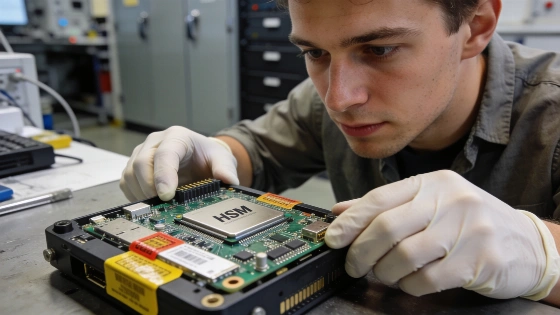
Crypto4A Technologies, a Canadian developer of cryptographic hardware, has received FIPS 140-3 Level 3 validation from the National Institute of Standards and Technology (NIST) for its QASM module. This module forms the core of the company's QxHSM hardware security platform and is designed to support the full suite of NIST-standardized post-quantum cryptography (PQC) algorithms. The certification marks the first time a hardware security module (HSM) with native quantum-safe algorithm support has achieved this level of security validation under the updated FIPS 140-3 standard.
Device Architecture and Algorithm Support
The QASM module is engineered to execute NIST-approved PQC algorithms, including ML-KEM (FIPS 203) for key exchange, ML-DSA (FIPS 204) for digital signatures, and SLH-DSA (FIPS 205), as well as stateful hash-based signature schemes such as LMS. These algorithms are intended to resist attacks from both classical and future quantum computers, addressing the anticipated vulnerabilities of current public-key cryptography. The QxHSM platform integrates these algorithms at the hardware level, enabling secure key generation, storage, and management for digital identity, financial transactions, and critical infrastructure.
Security Features and Validation
FIPS 140-3 Level 3 certification requires hardware modules to demonstrate robust identity-based authentication, logical separation of key management, and automatic zeroization of sensitive data in response to physical tampering. The QASM module incorporates physical tamper detection and response mechanisms, as well as cryptographic agility, allowing organizations to migrate from legacy algorithms such as RSA and ECC to post-quantum standards without replacing hardware or disrupting operations. The certification process involved independent testing and validation by NIST-accredited laboratories, confirming compliance with the latest federal security requirements.
Integration and Industry Context
Crypto4A reports that its validated module will be integrated into DigiCert's DigiCert ONE platform, supporting high-assurance digital signing, certificate issuance, and automated public key infrastructure (PKI) workflows. This integration is intended to address the risk of "harvest now, decrypt later" attacks, in which encrypted data is collected today for decryption by future quantum computers. The company positions its QxHSM and QxVault platforms as immediately deployable hardware roots of trust for governments, defense, and critical infrastructure operators facing regulatory deadlines for post-quantum migration. The announcement follows a period of increased industry focus on quantum-safe cryptography, as seen in recent hardware and algorithmic developments. For context, efforts to advance quantum hardware have also included AI-driven quantum circuit generation on large-scale trapped-ion processors, as described in a recent Science Report article.
Engineering Limitations and Open Questions
While the FIPS 140-3 Level 3 validation establishes a recognized security baseline, the practical deployment of post-quantum cryptography in hardware remains subject to ongoing engineering challenges. These include the performance and integration of new algorithms, the need for secure migration strategies, and the management of hybrid cryptographic environments during the transition period. The certification does not address the long-term cryptanalytic resilience of the selected algorithms, which will depend on continued cryptanalysis and potential advances in quantum computing. Independent field testing and broader industry adoption will be necessary to assess the operational reliability and scalability of quantum-safe HSMs in diverse environments.
Post-quantum cryptography refers to cryptographic algorithms designed to remain secure against attacks by both classical and quantum computers. Unlike quantum key distribution, which relies on quantum physical effects, post-quantum algorithms are implemented on conventional hardware and are standardized by organizations such as NIST. The transition to post-quantum cryptography involves not only algorithm selection but also secure implementation, hardware integration, and careful management of legacy systems. FIPS 140-3 is a U.S. federal standard specifying security requirements for cryptographic modules, with Level 3 requiring strong physical and logical protections. Achieving this certification for a quantum-safe HSM represents a step toward preparing digital infrastructure for the eventual arrival of large-scale quantum computers capable of breaking current public-key schemes.