The CUSP report sets out four pillars for U.S. quantum development, as its estimates show a wide gap in cleanroom costs and a smaller federal funding commitment than China's
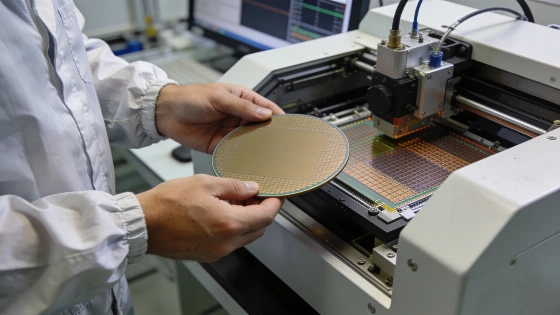
U.S. cleanroom construction averages an estimated $800 to $1,000 per square foot, while the report puts China's cost at about $150. The estimates appear in the preliminary report Defining the American Quantum Era, released in Washington, D.C., on November 10, 2026, by the Commission on U.S. Quantum Primacy (CUSP), convened by the Special Competitive Studies Project (SCSP).
Costs and capacity
CUSP says the United States retains strengths in fundamental research, quantum software and operational cloud platforms. But high fabrication costs and gaps in cryogenic supply chains could weigh on commercial competitiveness. The commission's central argument is that scientific leadership does not automatically translate into leadership in deployment or industrial production; it calls for factories, foundries and suppliers able to turn research advances into reliable systems.
The report estimates that U.S. entities operated 39 to 73 deployed quantum computers in 2025, compared with China's 15 to 18. Its funding estimates point in the opposite direction: China's public investment is about $3 billion annually, against approximately $1 billion in U.S. federal funding. CUSP frames quantum primacy as the capacity to convert scientific advances into sustained strategic advantage across quantum technologies.
Four proposed pillars
The roadmap organizes recommendations under Discovery, Development, Deployment and Scale. It proposes dedicated funding tracks for foundational research, alongside hardware-software co-design modeled on the Department of Energy's Exascale Computing Project. A proposed National Institute of Standards and Technology (NIST)-led public-private effort would develop interoperability standards and benchmarks across quantum platforms, including multi-QPU benchmarks.
For deployment, CUSP recommends DOE Grand Challenges to establish repeatable hybrid quantum-classical workflows, as well as accelerated post-quantum cryptography migration for critical infrastructure and state and local governments. Its Scale pillar calls for a National Quantum Foundry Access Program to broaden access to specialized fabrication and packaging infrastructure, and proposes using Defense Production Act Title III authorities to support shared microfabrication facilities. These are recommendations in a preliminary strategic framework, not binding regulations, appropriations or procurement decisions.
Supply chain exposure
The report says domestic production of specialized components needs protection before bottlenecks constrain commercial growth. It identifies radio-frequency electronics and optical modulators as areas for federal attention. Cryogenic isotopes, including helium-3, are another supply concern. These inputs, alongside cooling equipment and control hardware, are part of the broader infrastructure required to build and operate quantum systems.
Following international export controls, estimated dilution refrigerator production in China grew about 58% between 2021 and 2025, compared with 35% growth in the United States, according to the report. Dilution refrigerators provide the extremely low temperatures required by many superconducting quantum-computing systems. An industry assessment separately described proposals for distributed quantum modules and tighter post-quantum migration schedules.
CUSP is co-chaired by U.S. Senators Todd Young (R-IN) and Ben Ray Luján (D-NM), alongside SCSP President Ylli Bajraktari. Its executive membership includes IBM and Google Quantum AI, as well as IonQ and SandboxAQ. DARPA and Los Alamos National Laboratory are represented; Sandia National Laboratories and the University of Maryland are also on the commission. The commission's preliminary report sets out a framework spanning research, development, deployment and industrial scale. A comprehensive final report is scheduled for spring 2027 and is expected to add implementation and infrastructure details, including legislative provisions, workforce initiatives and budget proposals.