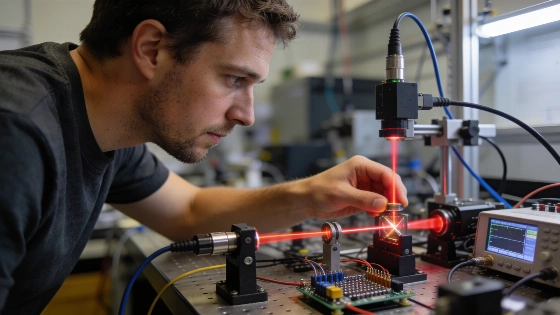
Venture investor Russ Fein discusses the technical and operational factors shaping quantum hardware investment, highlighting Colorado's research infrastructure and the challenges of benchmarking quantum devices
As quantum technology moves from laboratory research toward commercial deployment, the infrastructure supporting hardware development has become a decisive factor for investors and engineers. Russ Fein, a venture investor now based in Colorado, has concentrated his recent efforts on quantum hardware and control systems, with a particular focus on the region's growing ecosystem of research institutions and companies. Fein's investment approach emphasizes the technical maturity of products, the operational readiness of teams, and the practical challenges of scaling quantum devices beyond proof-of-concept demonstrations.
Quantum Hardware and Control Systems
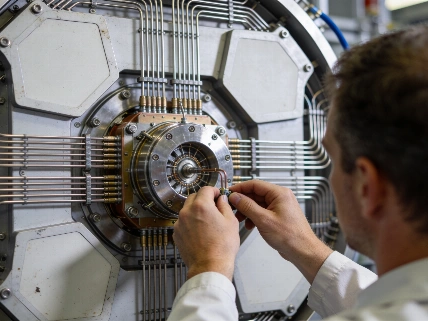
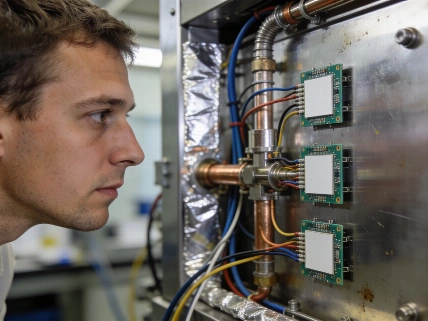
Fein's portfolio includes Colorado-based Vescent, a company specializing in control electronics and laser systems for quantum applications. Vescent develops hardware such as frequency combs and optical clocks, which are essential for stabilizing and manipulating quantum states in experimental and applied settings. The company's upcoming optical clock product is designed to provide high-precision timekeeping, a capability that underpins both quantum sensing and quantum communication protocols. Fein's dual role as investor and CFO at Vescent reflects a hands-on approach to evaluating technical progress and operational execution in quantum hardware startups.
Benchmarking and Engineering Challenges
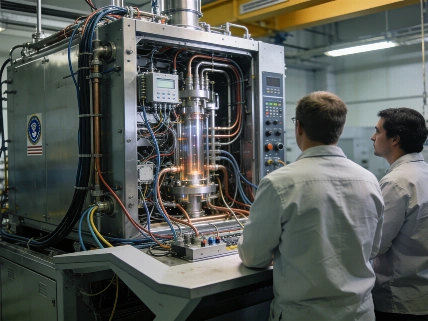
One of the persistent challenges in quantum technology investment is the difficulty of benchmarking hardware performance in a way that is both meaningful and comparable across platforms. Fein notes that many investors and observers conflate quantum hardware with software, underestimating the complexity of device engineering and the extended lifecycle required to move from laboratory prototype to deployable system. Key metrics such as gate fidelity, coherence time, and error rates are often reported under idealized conditions, making it difficult to assess real-world performance or to compare devices built on different physical platforms. The need for robust error correction remains a central engineering hurdle, as current devices are limited by noise, calibration drift, and environmental instability.
Colorado's Quantum Ecosystem
Colorado's quantum ecosystem is anchored by institutions such as the University of Colorado Boulder and the National Institute of Standards and Technology (NIST), which have established research programs in quantum optics, atomic clocks, and precision measurement. The region supports a collaborative network of companies and researchers, facilitating the transfer of technical knowledge and the development of specialized components. Recent government initiatives have increased funding for quantum research and infrastructure, but the translation of this investment into scalable, reliable hardware remains an open question. The collaborative environment in Colorado has enabled startups to access both technical expertise and early-stage capital, but the path from prototype to product continues to require sustained engineering effort and operational discipline.
Investment Criteria and Industry Trends
Fein's investment strategy prioritizes companies that address foundational needs in the quantum supply chain-often described as "picks and shovels" for the industry. This includes hardware for state preparation, control, and measurement, as well as supporting electronics and photonic components. He advises quantum entrepreneurs to articulate clear go-to-market strategies and to demonstrate operational readiness, rather than relying on speculative projections of quantum advantage. The complexity of quantum hardware development, combined with the need for reproducible performance and robust error correction, means that successful companies must integrate expertise in physics, engineering, and manufacturing. As quantum technology matures, the distinction between laboratory demonstration and deployable system will become increasingly important for both investors and end users.
Recent developments in quantum education and workforce training, such as the integration of quantum software into business school curricula, reflect the growing recognition that technical and operational skills are essential for the field's advancement. For example, a partnership between Superpositions and the European Business Institute of Luxembourg aims to provide students with direct access to quantum software platforms and real hardware backends, as described in this report on quantum curriculum integration. Such initiatives highlight the need for interdisciplinary training and the importance of bridging the gap between research and application.
Quantum error correction is a central concept in the development of practical quantum computers and sensors. Unlike classical error correction, which can often rely on redundancy and simple parity checks, quantum error correction must contend with the fragility of quantum states and the no-cloning theorem, which prevents straightforward duplication of information. Error-correcting codes encode logical qubits across multiple physical qubits, allowing certain types of errors to be detected and corrected without directly measuring the quantum information itself. Achieving low logical error rates requires high-fidelity gates, stable operating conditions, and real-time decoding, all of which remain active areas of research and engineering. The ability to implement effective error correction will determine whether quantum devices can move beyond laboratory demonstrations to deliver reliable performance in real-world applications.