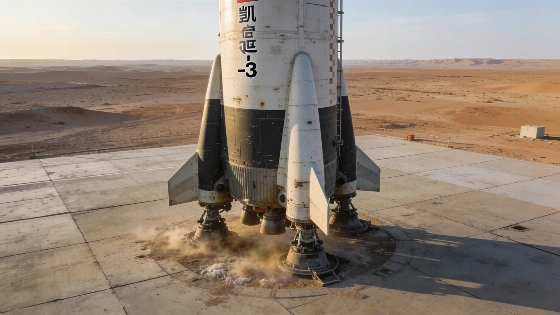
LandSpace's Zhuque-3 rocket has become the first privately built Chinese orbital-class launcher to successfully land its first stage, marking a significant step for reusable launch technology in China
China's commercial space sector has reached a new technical milestone with the successful landing of the Zhuque-3 rocket's first stage, operated by Beijing-based company LandSpace. The achievement marks the first time a privately developed Chinese orbital-class rocket has returned its booster to the ground intact, signaling progress toward routine reusability in the country's launch industry.
Milestone for Reusable Launchers
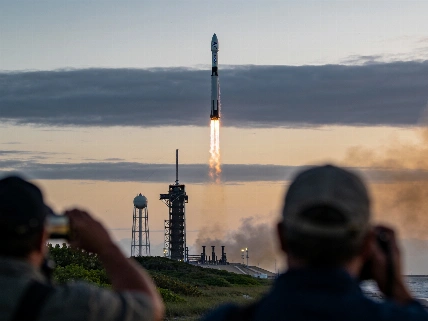
The Zhuque-3 mission lifted off from the Dongfeng Commercial Space Innovation Pilot Zone in northwest China at 7:35 p.m. EDT on August 18, 2026 (2335 GMT; 7:35 a.m. August 19 Beijing time). After completing its primary mission of delivering the Honghu 03 satellite to orbit, the rocket's first stage executed a controlled descent and landed upright on solid ground using deployable landing legs. This approach mirrors the method pioneered by SpaceX's Falcon 9, which has demonstrated the operational value of reusable boosters in reducing launch costs and turnaround times.
While China's state-owned China Aerospace Science and Technology Corporation (CASC) previously recovered a Long March 10B booster using a net system at sea, LandSpace's landing is the first by a private Chinese company and the first on land. The Zhuque-3's successful recovery follows an earlier attempt in December 2025, when the booster was lost due to abnormal combustion during descent. This time, both the orbital insertion and the booster recovery were completed as planned.
Technical Details and Performance
Zhuque-3 is a two-stage rocket standing 66 meters tall, with a reusable first stage and an expendable upper stage. The vehicle is powered by engines burning liquid methane and liquid oxygen-a combination known as "methalox"-which is also used by SpaceX's Starship. Zhuque-3 can deliver up to 18,300 kilograms to low Earth orbit, placing it in a similar performance class to Falcon 9, which can lift approximately 22,800 kilograms to the same orbit using kerosene and liquid oxygen.
The mission's payload, Honghu 03, was developed by Hongqing Technology and was successfully deployed to its designated orbit. The booster's return to land was enabled by a set of landing legs and a controlled descent profile, demonstrating the engineering maturity required for future reusability. LandSpace described this flight as a transition from demonstration to engineering application, with the recovery validating both the design and operational reliability of the Zhuque-3 system.
China's Push for Reusability
The Zhuque-3 landing is part of a broader effort within China to develop reusable launch vehicles, a trend that has reshaped the economics of spaceflight globally. Alongside LandSpace, several other Chinese companies-including CAS Space, Deep Blue Aerospace, Galactic Energy, iSpace, Orienspace, and Space Pioneer-are pursuing rockets with recoverable first stages. State-owned CASC is also developing reusable variants in its Long March 10 and 12 series, though not all recovery attempts have succeeded to date.
Reusable launchers are seen as essential for increasing launch cadence and reducing costs, especially as China expands its ambitions in lunar and planetary exploration. The rapid progress in commercial and state-backed reusability efforts reflects a competitive environment, with private firms now demonstrating capabilities once limited to major government programs.
Comparisons and Remaining Challenges
While Zhuque-3's design and mission profile draw clear parallels with SpaceX's Falcon 9, important differences remain. The use of methalox propellant offers potential advantages in engine performance and environmental impact, but operational experience is still limited compared to Falcon 9's more than 600 successful landings since 2015. The Zhuque-3's second flight marks a significant step, but routine reusability will require further demonstration of rapid refurbishment and reliable turnaround.
As China's commercial launch sector matures, the technical and regulatory challenges of reusability will remain in focus. The country's growing launch activity also raises questions about mission safety and planetary protection, topics that have drawn attention in other contexts such as NASA's ongoing work to address Martian dust hazards for future crewed missions, as discussed in Science Report's recent coverage of Mars surface operations.
With multiple private and state-backed companies now pursuing reusable rockets, China's next steps will likely involve scaling up flight rates, refining recovery techniques, and integrating lessons from both domestic and international experience.
Rocket reusability refers to the ability to recover and refurbish major components of a launch vehicle-typically the first stage booster-after flight, allowing them to be flown again on subsequent missions. Achieving reliable reusability requires precise control during descent, robust landing systems, and rapid post-flight inspection and maintenance. The approach has transformed launch economics by reducing hardware costs and enabling higher launch frequencies, but it also introduces new engineering and operational challenges, including wear on engines, structural fatigue, and the need for rigorous quality assurance between flights.