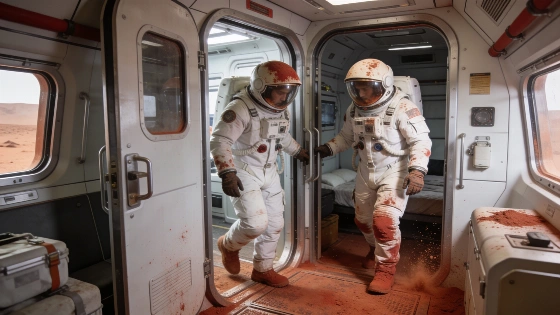
NASA's Martian Dust Limit Working Group has reviewed the health risks posed by Mars dust, which contains carcinogenic silica and heavy metals, and is developing exposure standards and mitigation strategies for future crewed missions
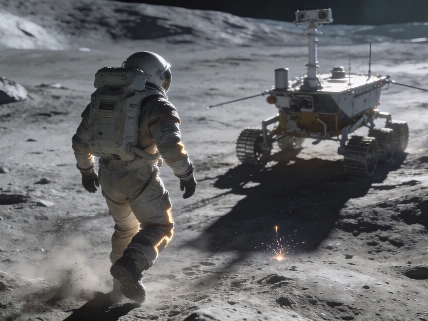
As NASA advances plans for human missions to Mars, the agency is confronting a significant engineering and biomedical challenge: how to protect astronauts from the toxic dust that pervades the Martian surface. Unlike the Moon, where abrasive dust caused unexpected problems for Apollo crews, Mars presents a different set of hazards, including fine particles laced with carcinogenic silica and heavy metals. The Martian Dust Limit Working Group, convened by NASA in early 2026, has begun to define exposure standards and evaluate mitigation strategies based on current knowledge and operational constraints.
Assessing Martian Dust Hazards
The Martian Dust Limit Working Group brought together specialists in space medicine, toxicology, geology, and habitat design to review the available evidence on dust toxicity and exposure pathways. Their report emphasizes the need to balance conservative health protection with the realities of mission architecture and scientific uncertainty. The group recommends that exposure standards be periodically updated as new data from Mars missions and laboratory studies become available, ensuring that crew health remains a priority as exploration progresses.
Martian dust is composed of particles that are generally more rounded than lunar dust, but it contains additional chemical hazards. Notably, perchlorates-highly reactive chlorine compounds-are present in Martian soil, along with silica and a range of heavy metals. These substances are known to pose risks to human health, particularly when inhaled or ingested over extended periods. The working group's findings underscore that Mars dust is not uniquely or catastrophically toxic, but the closed, low-humidity habitats planned for Mars missions could increase the risk of airborne exposure.
Engineering Controls and Exposure Risks
One of the main engineering challenges is preventing dust from entering crew habitats. Even with careful suit and airlock design, some dust is expected to be brought inside after each extravehicular activity. Once inside, fine particles can remain suspended in the air, especially in the low-humidity environment of a Mars habitat, increasing the likelihood of inhalation. NASA engineers are evaluating filtration systems and cleaning protocols to minimize airborne dust and reduce the time astronauts must spend on maintenance.
In addition to inhalation risks, there is concern about the potential for toxic compounds to enter the food chain if crops are grown in Martian soil. Some researchers suggest that astronauts could be exposed to higher levels of hazardous chemicals through locally grown food than through airborne dust alone. The need for robust monitoring and prevention strategies is clear, as is the importance of learning from lunar missions, where dust caused significant wear on equipment and irritation to crew members.
Scientific Uncertainty and Future Research
Despite decades of robotic exploration, no authentic airborne Martian dust samples have been returned to Earth for direct analysis. Current standards rely on analog studies using lunar dust, Mars simulants, and chemical data from rover instruments. The lack of returned samples limits the ability to fully characterize the health risks and develop targeted countermeasures. According to the National Academy of Sciences, understanding the onset and evolution of Martian dust storms and their effects on human physiology and hardware longevity remains a top research priority.
Sample return missions could provide critical data, but the timeline for returning existing Mars samples to Earth remains uncertain. In the meantime, mission planners are treating dust mitigation as a core design requirement, integrating prevention, monitoring, and rapid removal into habitat systems. This approach reflects lessons learned from previous missions and the recognition that dust management is essential for both crew safety and mission success. For context, recent findings from NASA's Spirit rover have also highlighted the complexity of Martian soil chemistry, as seen in new analyses of ancient water activity on Mars.
As Mars exploration advances, the interplay between engineering, biomedical research, and planetary science will shape how future crews confront the persistent challenge of Martian dust. Ongoing studies and future sample returns are expected to refine exposure limits and inform the next generation of mitigation technologies.
Understanding the risks posed by Martian dust requires knowledge of how fine particles behave in closed environments and how their chemical composition interacts with human physiology. Inhaled dust can penetrate deep into the lungs, where reactive minerals and heavy metals may cause inflammation or long-term health effects. Effective mitigation depends on accurate characterization of particle size, shape, and chemistry, as well as the development of filtration and cleaning systems tailored to the unique conditions of Mars habitats. As with all planetary exploration, the limits of current evidence mean that standards must remain adaptable as new data emerge.