Pasqal and Eleven Ventures have announced a joint venture to install and operate neutral-atom quantum processors in Saudi Arabia, aiming to build local quantum computing infrastructure and develop a regional technical workforce
Pasqal, a developer of neutral-atom quantum computing hardware, and the Saudi Arabian investment platform Eleven Ventures have agreed to form a joint venture named Pasqal Arabia. The initiative is intended to deploy, operate, and scale neutral-atom quantum processors within Saudi Arabia and the broader Middle East and North Africa (MENA) region. The announcement coincided with a Saudi state visit to France and is positioned as part of Saudi Arabia's Vision 2030 strategy to establish sovereign high-performance computing and artificial intelligence infrastructure.
Neutral-Atom Quantum Hardware
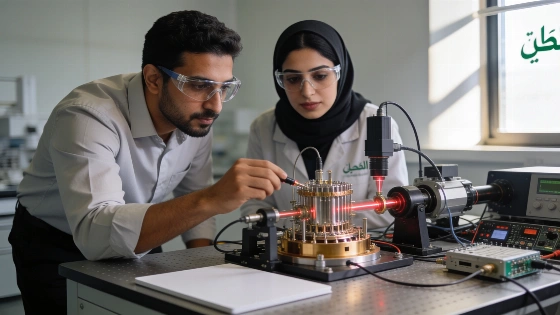
Neutral-atom quantum processors use arrays of individual atoms, typically trapped and manipulated by laser fields, to encode and process quantum information. This hardware platform is one of several competing approaches to quantum computing, with proponents citing potential advantages in connectivity and scalability. Pasqal's systems are based on controlling the quantum states of neutral atoms, which can be arranged in flexible geometries and manipulated with optical tweezers. The company has previously demonstrated quantum simulation capabilities and is now seeking to move beyond laboratory prototypes toward operational deployments.
On-Premises Deployment and Workforce Development
Unlike cloud-based quantum computing services, the Pasqal Arabia joint venture aims to install quantum processors directly within Saudi facilities. This approach is intended to provide local enterprises and government agencies with direct access to quantum hardware, integrated alongside classical high-performance computing and AI systems. The joint venture also plans to establish technical training programs to develop a domestic workforce capable of operating and maintaining these systems. According to the announcement, HRH Prince Abdulaziz Bin Turki Bin Talal, founder of Eleven Ventures, will chair the board of Pasqal Arabia, and the venture will build on existing regional relationships, including Pasqal's prior work with Saudi Aramco.
Commercialization and Technical Challenges
Pasqal Arabia's stated focus includes on-premises deployment, integration with AI workflows, and local talent development. However, the technical and engineering challenges of scaling neutral-atom quantum processors remain significant. Key issues include maintaining high-fidelity quantum control, minimizing decoherence, and ensuring reliable operation over extended periods. The announcement did not specify the number of qubits, gate fidelities, or error rates expected in the initial deployments, nor did it provide a timeline for operational readiness. Pasqal is currently pursuing a public listing on the Nasdaq through a business combination with Bleichroeder Acquisition Corp. II (Nasdaq: BBCQ), but independent technical documentation and peer-reviewed performance data for large-scale systems have not yet been released.
Regional Context and Industry Benchmarks
The move to establish sovereign quantum infrastructure in Saudi Arabia reflects a broader trend among national governments seeking to localize advanced computing capabilities. While neutral-atom systems offer a promising route to scalable quantum hardware, no platform has yet demonstrated fault-tolerant logical qubits or practical quantum advantage on commercially relevant problems. For context, recent advances in quantum processor benchmarking have highlighted the importance of independent verification and fair comparison with classical supercomputers. For example, IBM and its partners recently demonstrated quantum processors performing tasks beyond the reach of leading classical systems, as discussed in a recent Science Report analysis of quantum-classical verification. The practical utility of neutral-atom systems will depend on their ability to achieve similar levels of performance, reliability, and independent validation.
Neutral-atom quantum computing relies on trapping and manipulating individual atoms-often rubidium or cesium-using laser fields to create controllable qubits. These atoms are arranged in configurable arrays, and quantum gates are implemented by inducing interactions between selected pairs or groups. The main engineering challenges include achieving high gate fidelity, suppressing decoherence from environmental noise, and scaling up the number of controllable atoms without introducing excessive error. While neutral-atom platforms offer flexible connectivity and the potential for large-scale arrays, the transition from laboratory demonstration to reliable, fault-tolerant operation remains an open problem across all quantum hardware platforms. Understanding the distinction between physical qubits (the actual atoms or devices used) and logical qubits (error-corrected units capable of reliable computation) is essential for evaluating progress toward practical quantum computing.