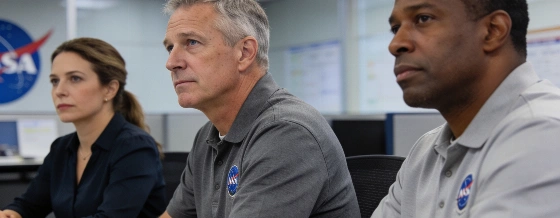
NASA has launched a nationwide workforce initiative with seven State Hubs across the United States designed to connect students with technical skills, credentials, and hands-on aerospace experience.
NASA has moved its State Hubs for Skilled Technical Workforce initiative from selection to implementation. At Space Center Houston on Sept. 15, 2026, agency leaders met with project teams and state and federal partners to begin coordinating programs intended to prepare students for technical jobs across the aerospace sector.
NASA selected the seven projects in August 2026, representing California, Colorado, Florida, Georgia, Minnesota, Texas, and Utah. The September meeting marked the start of the practical phase, but it was not evidence that the participating programs had already produced graduates or aerospace hires. The initiative is now entering the stage in which awardees must finalize their approaches and begin delivering training, tools, and other resources.
The seven projects are backed by approximately $10.5 million in combined funding and are planned as multiyear efforts. That figure describes the total investment across seven organizations, not a per-student expenditure or a measured return on investment. NASA has not yet published enrollment targets, comparison groups, confidence intervals, p-values, or employment outcomes that would allow the initiative's effectiveness to be assessed statistically.
Each Hub will shape its programs around the aerospace industries and workforce priorities of its state rather than follow one federal template. That structure matters because technical occupations, employers, education providers, and available credentials differ substantially by region. NASA's approach is therefore closer to a distributed workforce-development network than to a single national curriculum.
The Florida project illustrates that design. Project ORBIT, managed by Space Florida, is intended for middle- and high-school students and will support the expansion of career and technical education programs. It also includes plans for a statewide portal connecting workers with aerospace employers, an infrastructure element that could help translate classroom preparation into information about vacancies, qualifications, and career pathways. The project's public description is summarized in NASA's Florida update.
Utah's Hub is led by Southern Utah University and is designed to connect school-based career and technical education with colleges and employers. Regional reporting identifies welding, machining, electrical work, and advanced manufacturing among the practical fields involved. These occupations are essential to aerospace production and maintenance because flight hardware must be fabricated, inspected, assembled, tested, and serviced to demanding specifications. The Utah model is described in regional Utah reporting.
That structure matters because the technical workforce is not distributed evenly across the country. The projects are expected to connect students with skills and practical experience that reflect local hiring needs while giving state partners a framework for working with NASA and other institutions. The intended outcome is a clearer pipeline from secondary education to postsecondary training, recognized credentials, and employment.
The Houston meeting focused on the mechanics of building that pipeline. Project leaders presented their Hub concepts and examined workforce needs, technical skill sets, credentials, and hiring trends. NASA also brought agency, state, and federal partners together to identify where existing programs fail to connect. In workforce science, those links are important because participation in a class does not by itself demonstrate mastery, credential attainment, or transition into a job.
Several obstacles were placed on the table: limited coordination among industry, community colleges, and state economic-development organizations; difficulty expanding programs beyond small local efforts; and persistent misconceptions about manufacturing work. These are operational problems, not simply gaps in classroom instruction. A student may receive training yet still lack a clear route to a credential, an employer, or sustained hands-on experience.
NASA associate administrator Elaine Ho has framed the initiative as a priority because the space economy is accelerating across the country. Her position presents the Hubs as a bridge between education systems and employers rather than as a standalone science-outreach campaign. The same distinction is important in scientific reporting: the initiative concerns the infrastructure that prepares people to build and operate aerospace systems, not a new spacecraft, instrument, or experimental result.
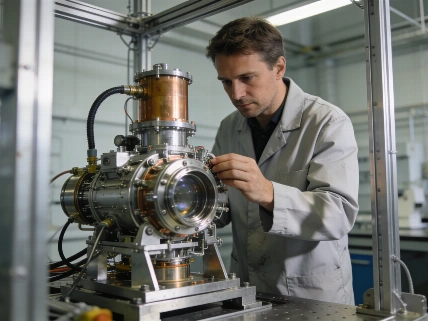
The technical tasks supported by aerospace employers span welding, precision machining, electrical systems, electronics, quality assurance, materials handling, and advanced manufacturing. They also require measurement discipline, traceability, safety procedures, and documentation. In a flight program, a component is not considered ready merely because it has been fabricated; it must be inspected, tested, and qualified against requirements. State Hubs can contribute to that preparation by exposing students to realistic equipment, procedures, and workplace expectations.
The awardees are now expected to finalize their approaches and begin delivering programming, tools, and resources in the coming months. The announcement does not say that those programs are already operating or that participating students have entered aerospace jobs. At this stage, the concrete achievement is the creation of a seven-project network and the start of coordination among its partners.
That distinction is important. NASA's stated objective is to help students develop technical skills and hands-on experience for the aerospace workforce, but the evidence available so far describes an implementation plan rather than measured results. A rigorous evaluation would need consistent definitions of participation, training hours, credential completion, practical assessments, retention, and employment. It would also need to report the size and characteristics of the student cohorts and explain how outcomes are compared across states or with similar students outside the program.
Without those data, it would be premature to claim that the Hubs have solved regional labor shortages or improved aerospace productivity. Future reports could become more informative if they distinguish inputs, such as funding and equipment, from outputs, such as completed courses and credentials, and longer-term outcomes, such as job placement and retention. That evidence standard is consistent with the transparent reporting expected by institutions such as NASA and by peer-reviewed scientific journals including Nature.
The effort also follows NASA's earlier interest in state-based training infrastructure. Its current approach is broader than a single proposed academy because the Hubs are being tailored to separate state priorities. Readers can place that shift alongside NASA's earlier academy plan without confusing a proposal for an operating program.
In practical terms, a State Hub is a regional education and workforce partnership rather than a NASA facility or a new research mission. It is meant to align instruction with local aerospace demand while connecting students to credentials and applied experience. That distinction keeps the kickoff in perspective: NASA has established a framework for workforce development, not yet demonstrated its final impact.
The agency's strongest decision is its emphasis on partnerships and measurable technical preparation. The initiative's credibility will depend on what the seven Hubs deliver after the launch event: whether students can access the programs, whether training leads to recognized credentials, whether employers participate consistently, and whether public reporting eventually shows durable educational and employment outcomes.