IonQ's trapped-ion quantum processors will be accessible to Canadian researchers and SMEs through the FABrIC Quantum Computing Sandbox, expanding direct cloud access to commercial quantum hardware for algorithm testing and development
IonQ has signed a Memorandum of Understanding with CMC Microsystems to provide access to its trapped-ion quantum computing hardware through Canada's FABrIC Quantum Computing Sandbox. This agreement is intended to allow Canadian academic researchers, post-secondary institutions, and small-to-medium enterprises (SMEs) to run quantum algorithms on IonQ's commercial systems via cloud-based infrastructure. The integration is part of a broader effort to connect Canadian quantum software teams with operational hardware, supporting both research and early-stage application development.
Trapped-Ion Processors and Cloud Access
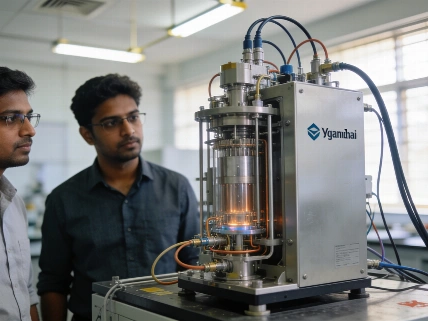
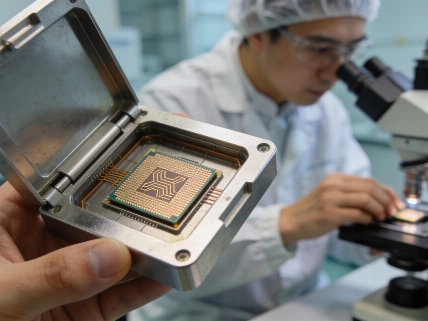
The FABrIC Quantum Computing Sandbox, managed by CMC Microsystems and funded by the Canadian government's $217 million CAD Strategic Response Fund, offers cloud credits of up to $100,000 per project. Participating teams receive technical engineering support to deploy and test quantum algorithms on commercial hardware. IonQ's trapped-ion processors, which use electromagnetic fields to confine and manipulate individual atomic ions as qubits, are now among the available platforms. These systems are known for high-fidelity gate operations and long coherence times, making them a reference point for benchmarking quantum algorithms in chemistry, materials science, finance, and logistics.
Intellectual Property and Research Autonomy
Under the terms of the Quantum Computing Sandbox, all intellectual property generated during project work remains with the participating researchers or companies. Neither CMC Microsystems nor the hardware providers claim rights to the resulting IP. This framework is designed to encourage open experimentation and lower barriers for Canadian teams seeking to explore quantum computing's potential without restrictive licensing or ownership conditions.
National Strategy and Industry Context
The collaboration is led by IonQ Vice President of Global Strategy Lisa Lambert and CMC Microsystems CEO Gordon Harling. It forms part of Canada's national quantum technology strategy, which aims to expand domestic access to quantum infrastructure and accelerate workforce development. The FABrIC initiative is one of several national programs supporting quantum research and commercialization. Similar efforts to integrate commercial trapped-ion hardware into research and education environments have been reported elsewhere, such as the agreement between Quantinuum and Quanta Computer to develop scalable trapped-ion systems for enterprise use, as described in a recent Science Report article.
Technical and Engineering Considerations
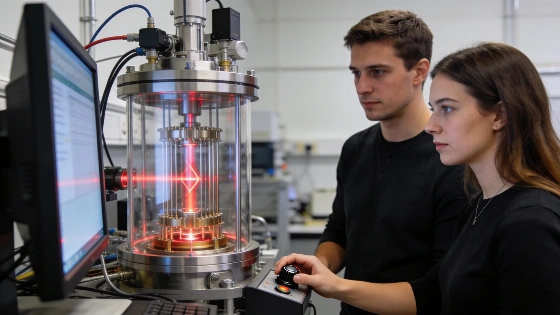
IonQ's trapped-ion quantum computers operate by encoding quantum information in the internal states of atomic ions, typically held in ultra-high vacuum and manipulated with laser pulses. These systems are characterized by gate fidelities above 99% for single- and two-qubit operations, with coherence times on the order of seconds. However, scaling up the number of controllable qubits and maintaining low error rates across larger circuits remain significant engineering challenges. The cloud-access model allows researchers to test algorithms on real hardware, but current devices are still limited in qubit count and circuit depth compared to the requirements for fault-tolerant quantum computing. The Sandbox program provides a controlled environment for benchmarking, error analysis, and algorithm development, but does not yet offer access to logical qubits or full error-corrected computation.
Trapped-ion quantum computers use individual ions as physical qubits, with quantum information stored in their electronic or hyperfine states. Logical qubits, which are protected against errors by encoding information across multiple physical qubits using error-correcting codes, are not yet widely available on commercial systems. The distinction between physical and logical qubits is central to understanding the current limitations of quantum hardware: while physical qubits can be controlled and measured directly, logical qubits are required for scalable, fault-tolerant computation. Most present-day quantum processors, including those accessible through the FABrIC Sandbox, operate in the noisy intermediate-scale quantum (NISQ) regime, where error rates and circuit depth limit the complexity of feasible algorithms. Ongoing research focuses on improving gate fidelity, coherence, and error correction to bridge the gap between laboratory demonstrations and practical quantum advantage.