Four quantum technology companies are deploying hardware and software on ABQ-Net, an open-access entanglement-based quantum network in New Mexico, to evaluate secure communication, sensing, and network protocols under real-world fiber conditions
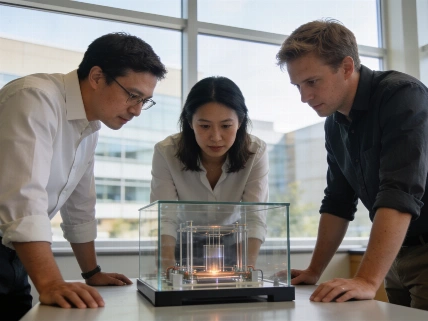
Four commercial quantum technology companies-Infleqtion, Aliro Technologies, Tensora, and Bandelier Technologies-have begun experimental deployments on ABQ-Net, a metropolitan-scale, entanglement-based quantum network testbed in Albuquerque, New Mexico. ABQ-Net is described as the first open-access quantum network of its kind in the United States, providing a live fiber environment for testing quantum communication, sensing, and security protocols without requiring each participant to build their own infrastructure. The network was developed by Qunnect in partnership with Roadrunner Venture Studios and is supported by the New Mexico Technology and Innovation Office as part of a $450 million state initiative to accelerate quantum technology commercialization.
Network Architecture and Physical Systems
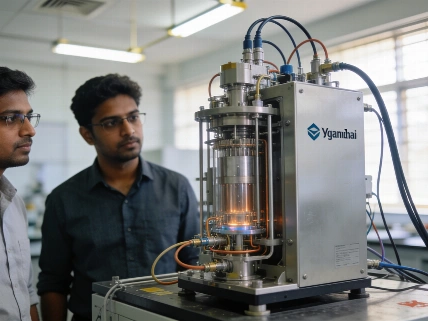
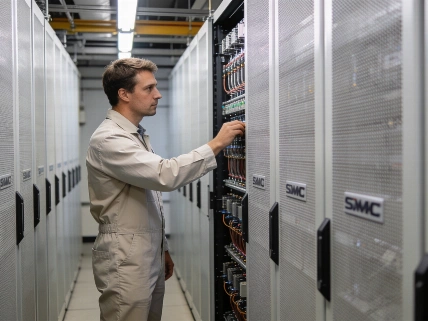
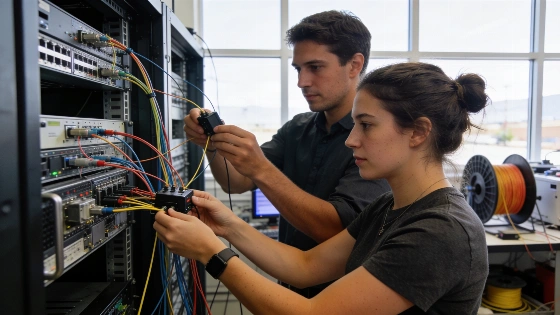
ABQ-Net's initial deployment connects Qunnect's downtown Albuquerque facility with the Center for Integrated Nanotechnologies (CINT), a U.S. Department of Energy site jointly operated by Sandia National Laboratories and Los Alamos National Laboratory. The network uses Qunnect's Carina hardware, which generates entangled photon pairs at room temperature and stabilizes fiber phase dynamically to maintain entanglement over metropolitan distances. The open-access design is intended to allow multiple companies to test quantum devices and protocols on shared infrastructure, with future plans to expand to additional regional hubs such as the Air Force Research Laboratory and the University of New Mexico.
Experimental Deployments and Measurement Goals
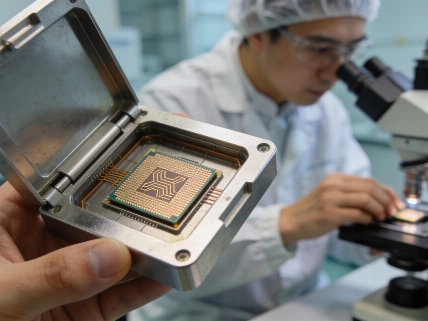
Each participating company is deploying distinct quantum hardware or software workloads to evaluate specific capabilities. Infleqtion is integrating atomic clocks with entangled photons to test timing synchronization for defense applications, including missile defense and autonomous systems. Aliro Technologies is deploying its AlirOS KeyGen stack alongside Qunnect's entanglement distribution hardware to demonstrate real-time, physics-based secure key generation. Tensora is analyzing network datasets to advance quantum-inspired geosensing for geological deformation and infrastructure monitoring. Bandelier Technologies, based in Santa Fe, is evaluating the combination of quantum entanglement and custom AI models to strengthen the security of defense and critical infrastructure networks.
Technical Evidence and Engineering Constraints
While the companies have announced their participation and outlined intended experiments, detailed technical results-including entanglement fidelity, key generation rates, synchronization precision, and sensor sensitivity-have not yet been independently reported. The Carina hardware operates at room temperature, but the stability of entanglement distribution and the impact of metropolitan fiber noise remain key engineering challenges. The open-access model allows for comparative testing of different quantum devices and protocols under identical network conditions, but reproducibility and scalability will depend on the ability to maintain high-fidelity entanglement and low error rates across extended distances and multiple nodes. The network's expansion to additional sites will require further validation of loss, noise, and synchronization performance.
Policy Context and Commercialization Efforts
ABQ-Net forms a central part of New Mexico's broader quantum technology strategy, which includes significant public investment in infrastructure and startup support. The state's $450 million initiative aims to attract quantum hardware, photonics, and software companies to the region, building on earlier funding rounds that supported early-stage firms. For context, six quantum startups previously received $200,000 grants each to establish or expand operations in New Mexico, as detailed in Science Report's coverage of the state's quantum investment program. The ABQ-Net testbed is intended to lower barriers to entry for quantum companies by providing shared access to metropolitan fiber and entanglement distribution infrastructure, but the transition from laboratory demonstration to operational quantum networking remains a significant technical hurdle.
Entanglement is a uniquely quantum phenomenon in which the states of two or more particles become correlated such that the measurement outcome of one immediately determines the outcome of the other, regardless of distance. In quantum networks, entanglement is used to enable secure communication protocols, distributed sensing, and synchronization tasks that cannot be achieved with classical correlations alone. However, distributing entanglement over real-world fiber networks introduces loss, noise, and phase instability, which degrade the fidelity of the entangled state. Maintaining high-fidelity entanglement across metropolitan distances is a central challenge for practical quantum networking, and experimental testbeds like ABQ-Net provide a platform for evaluating device performance, error sources, and engineering solutions under realistic conditions.