IBM has announced plans to acquire HRL Laboratories, aiming to integrate HRL's semiconductor spin qubit research with IBM's quantum computing ecosystem and fabrication infrastructure. The move signals a strategic response to evolving quantum hardware platforms
IBM has announced its intention to acquire HRL Laboratories, a research institution known for its work on semiconductor spin qubits. The proposed acquisition, if completed, would bring HRL's spin-based quantum device research into IBM's quantum computing portfolio, which has so far focused primarily on superconducting qubits. The move reflects a growing recognition that the dominant quantum hardware platform may shift as the field matures, and that companies with established quantum programs are seeking to diversify their technological bets.
Spin Qubits and Device Architecture
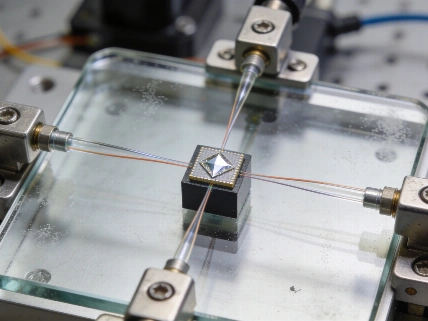
Spin qubits, such as those developed by HRL, use the quantum state of an electron's spin confined in a semiconductor quantum dot to encode information. This approach offers several theoretical advantages over superconducting qubits, including the potential for much higher device density. Because spin qubits can be fabricated using processes similar to those in conventional semiconductor manufacturing, it is plausible that millions of qubits could eventually be integrated on a single chip, provided that coherence, control, and readout challenges are addressed. In contrast, superconducting qubits typically require more physical space per qubit and more complex wiring, which limits scaling on a single chip.
HRL's research has produced prototype devices and control electronics, such as the spinQICK platform, designed for electrostatically defined spin qubits. However, these systems remain at the laboratory stage, with most published results involving small numbers of qubits and limited demonstrations of gate operations and coherence times. The company has presented technical results at conferences, but widespread adoption of its hardware outside a handful of academic groups has not yet occurred.
Strategic Diversification and Industry Context
IBM's move follows a pattern seen across the quantum industry, where large technology companies seek to hedge against missing a major hardware transition. The history of information technology is marked by disruptive shifts in device architecture, such as the move from bipolar to CMOS transistors in classical computing. In quantum computing, the risk of betting exclusively on one modality is significant, as alternative platforms-such as trapped ions, neutral atoms, and spin qubits-continue to advance. Google's acquisition of Quantum Circuits Inc. and investments in neutral atom startups illustrate similar diversification strategies.
IBM's quantum ecosystem is built around its superconducting qubit processors, supported by the Qiskit software stack, cloud-accessible hardware, and partnerships with universities and industry. By acquiring HRL, IBM would gain access to a spin qubit platform that is compatible with standard semiconductor fabrication, potentially allowing integration with advanced foundry infrastructure. This could accelerate the development of large-scale quantum processors if the technical challenges of spin qubit control and error rates can be overcome.
Manufacturing and Integration Challenges
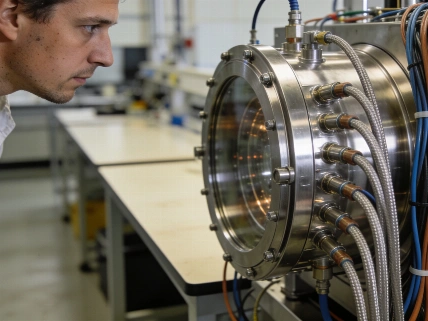
One of the central engineering barriers to scaling quantum processors is the complexity of wiring and control at cryogenic temperatures. Superconducting systems typically rely on coaxial or flexible cables to connect room-temperature electronics to the qubit chip inside a dilution refrigerator. As qubit counts increase, this approach becomes impractical. Efforts to develop cryogenic CMOS (cryoCMOS) and Single Flux Quantum (SFQ) logic circuits aim to bring control electronics closer to the qubit layer, reducing wiring complexity and thermal load. IBM is already collaborating with SEEQC to explore SFQ logic for quantum control, and it is plausible that such technologies could be combined with spin qubit architectures in future devices.
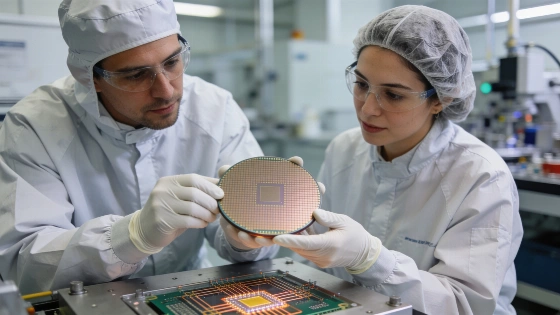
IBM's partnership with the U.S. Department of Commerce to establish the Anderon quantum foundry, leveraging the Albany NanoTech Complex, is likely to play a role in this integration. The foundry's advanced wafer processing capabilities could provide the manufacturing scale and process control needed to move spin qubit devices beyond laboratory prototypes. As seen in other quantum hardware efforts, reproducibility, device yield, and process uniformity remain major hurdles for all platforms.
Cost, Scalability, and Commercial Implications
Cost per qubit is expected to become a decisive factor as quantum hardware matures. While current research focuses on achieving reliable operation and error rates compatible with error correction, future commercial systems will need to deliver large numbers of high-quality qubits at manageable cost. Spin qubits, with their small physical footprint and compatibility with semiconductor manufacturing, offer a plausible path to lower cost per qubit compared to superconducting systems, which may be limited to a few thousand qubits per module before requiring complex networking.
Australian company Diraq has publicly set a target of one dollar per qubit for spin-based devices, highlighting the industry's focus on cost and integration. Achieving such targets will require advances in fabrication, control, and error correction. According to GQI projections, superconducting systems are unlikely to fit more than several thousand qubits in a single module, making the scaling advantage of spin qubits a key consideration for future architectures.
Open Questions and Broader Impact
While the acquisition would bring HRL's spin qubit research under IBM's umbrella, HRL also works in other advanced technology areas, including quantum sensors, materials, MEMS, and high-frequency electronics. IBM's announcement has not detailed plans for these non-quantum-computing activities, leaving open questions about the future of HRL's broader research portfolio. Integrating a research organization with diverse technical programs presents organizational and strategic challenges, and the outcome will depend on IBM's approach to managing and investing in these areas.
The acquisition also reflects a wider trend in quantum technology, where companies seek to position themselves for future shifts in hardware platforms. As demonstrated by the recent activation of a space-qualified optical frequency comb in orbit by QuantX Labs-a milestone covered in our report on optical frequency combs in space-the quantum field is marked by rapid technical progress across multiple platforms, each with distinct engineering and scientific challenges.
As the quantum computing landscape evolves, the integration of spin qubit technology into IBM's ecosystem will be watched closely by researchers and industry stakeholders. The success of this strategy will depend on the ability to translate laboratory-scale devices into reproducible, manufacturable, and error-corrected quantum processors that can compete with or complement existing superconducting systems.
Spin qubits are quantum bits encoded in the spin state of electrons confined within semiconductor quantum dots. Unlike superconducting qubits, which rely on macroscopic quantum states in superconducting circuits, spin qubits operate at the scale of single electrons and can be fabricated using techniques similar to those used in conventional silicon chips. The main technical challenges for spin qubits include achieving long coherence times, high-fidelity gate operations, and scalable readout, all while maintaining compatibility with large-scale semiconductor manufacturing. The distinction between physical and logical qubits is critical: while millions of physical spin qubits may be integrated on a chip, error correction requires encoding logical qubits across many physical devices, and the overall system performance depends on both device quality and error-correction overhead.