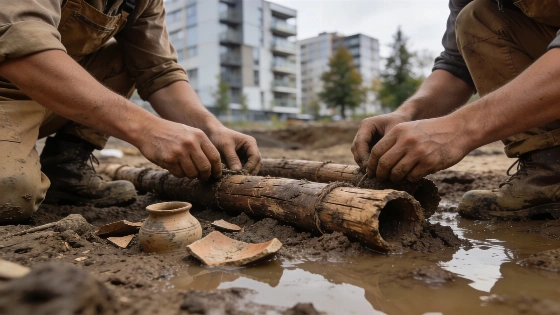
Archaeologists in Kaliningrad's Far Forstadt district have uncovered well-preserved artifacts and infrastructure spanning the 16th to 20th centuries, offering new evidence for daily life, craft production, and urban change in historic Königsberg
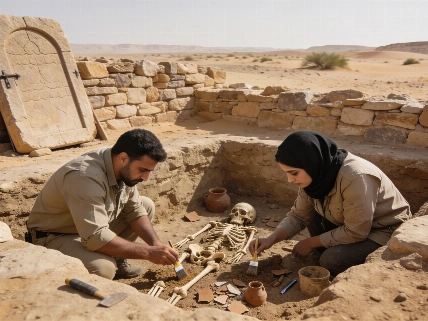
Recent rescue excavations in the Far Forstadt district of Kaliningrad have produced a detailed archaeological record of urban life in the former Prussian city of Königsberg, with finds spanning more than four centuries. The work, conducted in 2026 by the Sambian Archaeological Expedition of the Institute of Archaeology of the Russian Academy of Sciences, focused on a park area bordered by Leninsky Prospekt, Krasnooktyabrskaya Street, and Morekhodnaya Street, ahead of planned redevelopment. This location once formed part of Königsberg's southern medieval suburb, where settlement is documented from at least the 14th century.
Although initial traces of cultural deposits were identified in 2006, repeated surveys led to the site's formal recognition as an archaeological heritage location in 2025. Historical records associate the area with St George's Hospital, which received grazing rights in 1327, and document its later development into a suburb with gardens, workshops, livestock enclosures, and market spaces. By the mid-17th century, the western part of the district was densely built, while the eastern section became a fairground.
Urban Infrastructure and Preservation
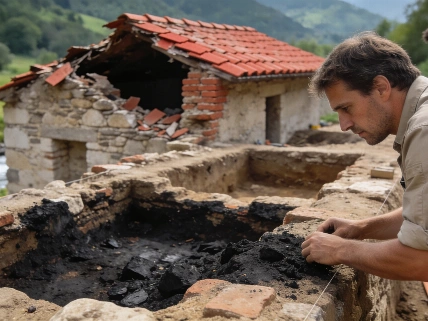
One of the most significant discoveries was a section of the Zug Graben canal, first recorded in 1520. This waterway served as drainage, fire protection, transport, and defense for the suburb before being filled in during the early 19th century. Archaeologists identified a deliberately infilled segment dating to between 1810 and 1815, providing a rare opportunity to study the evolution of Königsberg's urban landscape. The waterlogged soils preserved organic materials that are seldom recovered from urban sites, including wooden water pipes, fences, and corduroy roads-evidence of historical construction techniques and infrastructure.
The excavation yielded a diverse assemblage of artifacts from the 16th to early 20th centuries. These included tableware and pottery, decorative stove tiles, 17th- and 18th-century clay smoking pipes, leather goods, and evidence of textile production such as piles of sheep's wool. Bone-carving waste, unfinished tool handles, and blanks for rosary beads suggest the presence of local craftspeople producing both religious and domestic objects. Several numismatic finds were also recovered, including a Rechenpfennig-a counting token depicting Catherine the Great and attributed to Johann Christian Reich of Nuremberg, likely minted between 1796 and 1800. The presence of an 1897 silver 50 kopeck coin with Tsar Nicholas II further illustrates the district's commercial and cultural connections across Europe and the Russian Empire.
Evidence of Wartime Destruction
Excavators also documented the impact of the Second World War on Königsberg's urban fabric. In the basement of a building destroyed during the RAF incendiary bombing of August 1944, researchers found melted bottles, warped window glass, and fused tableware-direct evidence of the intense heat generated by the attack. The same context contained imported porcelain, fragments of newspapers, Mettlach floor tiles, bricks stamped with regional manufacturers' names, pocket watches, household goods, and Nazi-era stamps. After the war, the ruined building was demolished and replaced by a public park, which inadvertently sealed and preserved centuries of archaeological deposits beneath the modern landscape.
Across the site, the combination of waterlogged preservation and undisturbed postwar overburden has resulted in one of the richest archaeological records yet recovered from the Far Forstadt district. The finds document changes in crafts, trade, livestock farming, domestic life, and urban infrastructure from the 16th century through the city's destruction and transformation into modern Kaliningrad.
Comparative Context and Limitations
The Far Forstadt excavation adds to a growing body of evidence for urban life and material culture in early modern and modern European cities. Comparable discoveries of preserved organic materials and infrastructure have been reported in other waterlogged urban contexts, such as the rare organic artifacts found in a 6th-century BCE necropolis beneath Gragnano, Italy, which also benefited from exceptional preservation conditions (see this report). However, the specific combination of stratified deposits, preserved wooden features, and wartime destruction layers in Kaliningrad provides a unique opportunity to reconstruct the changing urban environment and daily practices over several centuries.
Despite the exceptional preservation, the archaeological record remains incomplete. Not all areas of the former suburb have been excavated, and the survival of organic materials is highly dependent on local soil and hydrological conditions. The interpretation of craft production, trade, and domestic life relies on the association of artifacts within stratified deposits, but disturbance from later construction and wartime destruction complicates the reconstruction of precise activity areas. Laboratory analysis of the finds is ongoing, and further study will be required to clarify the chronology and function of specific features and assemblages.
In total, the 2026 excavation investigated an area of several hundred square meters, recovering thousands of artifacts and structural elements spanning more than 400 years. The stratified deposits included both primary contexts, such as infilled canal segments and undisturbed basements, and secondary deposits resulting from postwar demolition and landscaping. The combination of artifact typology, numismatic evidence, and historical records has allowed researchers to date key features and reconstruct aspects of Königsberg's urban development, but the full extent of the suburb's archaeological potential remains to be explored.
Stratigraphy is central to interpreting urban archaeological sites like Far Forstadt. Stratigraphy refers to the study of layered deposits, where each layer represents a distinct episode of deposition, use, or disturbance. In urban contexts, stratigraphy can be complex, with overlapping construction phases, infilling, demolition, and later landscaping. Careful excavation and documentation of stratigraphic relationships allow archaeologists to reconstruct the sequence of events, associate artifacts with specific periods, and distinguish between primary and secondary contexts. However, disturbance from later activity, such as wartime destruction or modern redevelopment, can complicate the interpretation of stratified deposits and requires cautious analysis to avoid conflating materials from different periods.